
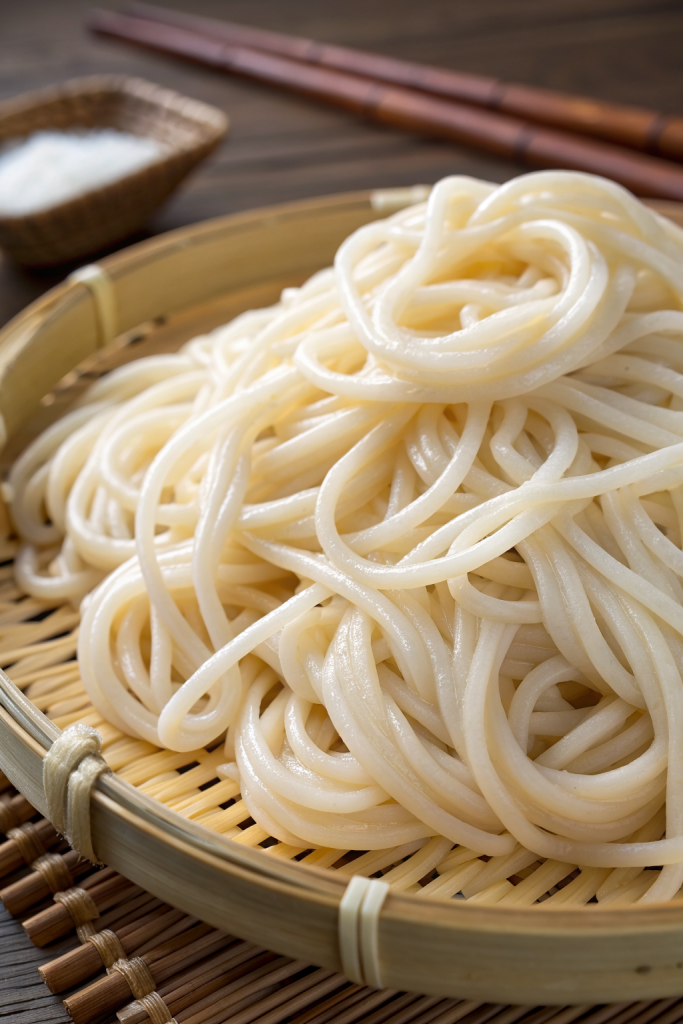
Homemade Udon Noodles Recipe tastes bouncy, chewy, and silky, works great for beginners with about 1 hour of active time, and fits anyone who loves slurpy noodle bowls. I cook this on weeknights when I crave takeout-style udon but want control over ingredients and texture. I grew up in the Midwest with boxed pasta, so every time I knead udon dough by hand, I still feel a tiny bit smug.
Why Make This Homemade Udon Noodles Recipe at Home
Homemade udon noodles give you a thick, chewy texture that dried or frozen noodles rarely match. You control the thickness, chew, and salt level, so the bowl tastes exactly how you like it.
You also use simple pantry ingredients and basic equipment. Once you try this method a couple of times, you knock out a batch faster than a delivery driver reaches your door.
These homemade udon noodles taste springy, chewy, and restaurant-level good, and I now refuse to buy the packaged kind ★★★★★
Ingredients You Need
You only need a few ingredients for this Homemade Udon Noodles Recipe, but each one matters. I will list the basics, then mention easy substitutions and brand notes.
Core ingredients
-
All-purpose flour:
- Use 3 cups (360 g) unbleached all-purpose flour.
- King Arthur, Gold Medal, or Bob’s Red Mill all work well.
- If you want a slightly firmer chew, swap 1 cup with bread flour.
-
Salt:
- Use 2 teaspoons fine sea salt or table salt.
- Avoid flaky salt, since the volume measurement changes too much.
-
Water:
- Use about 1 cup (240 ml) cold water, plus 1 to 2 tablespoons more as needed.
- Cold water helps keep the dough tight and chewy.
-
Cornstarch or potato starch (for dusting):
- Use 2 to 3 tablespoons to coat the dough and cut noodles.
- Potato starch gives a silkier surface, but cornstarch works perfectly.
Optional ingredients
-
Neutral oil (1 teaspoon):
- You can rub a tiny bit of neutral oil on the dough ball to prevent drying.
- Use canola, vegetable, or grapeseed oil.
-
Extra flour for dusting:
- Keep 1 to 2 tablespoons extra flour on the side for the counter and rolling pin.
Pantry shortcuts and substitutions
- If you only have bread flour, use it, then add 1 to 2 teaspoons more water to soften the dough slightly.
- If you only have all-purpose flour with low protein, knead a bit longer to build more structure.
- You can use kosher salt, but crush any large crystals so they dissolve quickly.
Equipment list
You do not need a pasta machine for this Homemade Udon Noodles Recipe, just a few basics.
- Large mixing bowl
- Kitchen scale or measuring cups and spoons
- Rolling pin or a clean wine bottle substitute
- Sharp chef’s knife or pizza cutter
- Plastic wrap or a clean kitchen towel
- Large pot for boiling noodles
- Colander or strainer
- Clean cutting board or large work surface
Tips & Mistakes
- Use cold water so the dough stays firm and chewy instead of soft and sticky.
- Add water slowly, 1 tablespoon at a time, so the dough turns shaggy and stiff, not wet and gluey.
- Knead at least 10 minutes so the gluten develops and the noodles hold their shape.
- Rest the dough at least 30 minutes so it relaxes and rolls out without tearing.
- Dust with starch, not just flour, so the noodles stay separate and smooth during cooking.
- Roll the dough evenly so the noodles cook at the same rate and do not turn mushy in spots.
- Cut the noodles slightly thicker than you think, since they swell in boiling water.
- Salt the cooking water lightly, since the dough already contains salt.
- Do not overcook; taste a strand at 7 minutes and stop when it feels chewy but not raw.
- Rinse cooked noodles in cold water to stop cooking and remove excess starch.
How to Make Homemade Udon Noodles Recipe
Mix the dough
- Add flour and salt to a large mixing bowl.
- Stir to combine so the salt spreads evenly through the flour.
- Pour in about three quarters of the cold water while you stir with chopsticks or a fork.
- Add more water 1 tablespoon at a time until the mixture looks shaggy and holds together when you squeeze it.
Bring the dough together
- Use your hands to press the shaggy dough into a rough ball.
- If dry flour remains at the bottom, sprinkle a tiny bit more water and press again.
- The dough should feel firm, slightly rough, and not sticky.
- If it sticks to your fingers, dust with a teaspoon of flour and knead it in.
Knead until smooth
- Move the dough to a clean work surface.
- Knead by pushing the dough away with the heel of your hand, then folding it back toward you.
- Turn the dough a quarter turn and repeat.
- Continue this motion for 10 to 12 minutes until the dough feels smooth, tight, and elastic.
Rest the dough
- Shape the dough into a ball.
- Lightly coat it with a tiny bit of neutral oil or dust with flour so it does not dry out.
- Wrap it in plastic wrap or cover it with a damp kitchen towel.
- Let it rest at room temperature for 30 to 60 minutes so the gluten relaxes.
Roll the dough
- After resting, unwrap the dough and cut it into 2 equal pieces for easier rolling.
- Keep one piece covered while you work with the other.
- Dust your work surface and rolling pin lightly with flour or starch.
- Roll the dough into a rectangle about 1/8 to 1/4 inch thick, turning and dusting as needed so it does not stick.
Fold and cut the noodles
- Dust the surface of the rolled dough generously with starch.
- Fold the dough into thirds like a letter, or roll it loosely into a log.
- Use a sharp knife to cut strips about 1/4 inch wide for classic thick udon.
- Gently toss the cut noodles in extra starch so they stay separate, then shake off excess.
Repeat with the second half
- Roll out the second piece of dough to the same thickness.
- Dust, fold, and cut it into strips that match the first batch so they cook evenly.
- Toss these noodles in starch as well.
- Set all the noodles on a floured tray while you heat the water.
Boil the udon noodles
- Bring a large pot of water to a strong boil.
- Add a small pinch of salt, since the dough already contains some.
- Drop the noodles into the boiling water and stir gently to separate them.
- Cook 7 to 10 minutes, depending on thickness, until the noodles taste chewy with no raw flour in the center.
Rinse and cool
- Drain the noodles in a colander.
- Rinse them under cold running water while you gently rub them with your fingers to remove extra starch.
- If you plan to serve them hot, dunk them briefly in hot water again right before serving.
- If you plan to serve them cold, keep rinsing until they feel cool and bouncy.
Variations I've Tried
I sometimes mix 1 to 2 tablespoons of whole wheat flour into the dough for a slightly nuttier flavor, though I keep most of it white so the noodles stay tender. I also tried a version with a splash of soy sauce in the dough, but it darkened the noodles more than I liked, so I now keep the seasoning in the broth instead. When I want extra chew, I swap 1 cup of the all-purpose flour with bread flour and knead a couple minutes longer.
I also played with thickness and shape. Very thin cuts turn into something closer to ramen, while extra thick cuts feel almost like knife-cut noodles. My family votes for medium-thick udon with a square edge, so I cut carefully and keep the knife straight.
How to Serve Homemade Udon Noodles Recipe
These homemade udon noodles taste great in hot broth, stir fried with veggies, or served cold with a dipping sauce. For a simple bowl, add them to a light dashi-style broth with soy sauce, a bit of sugar, scallions, and maybe a soft-boiled egg. You can also toss them with sesame oil, soy sauce, grated garlic, and steamed broccoli for a quick weeknight meal. Kids usually love them with a mild miso broth and some shredded chicken or tofu.
How to store
- Short term in the fridge, uncooked: Dust fresh cut noodles heavily with starch, place them in a single layer on a tray, cover tightly, and store up to 24 hours.
- Short term in the fridge, cooked: Rinse cooked noodles, toss lightly with a teaspoon of neutral oil, place in an airtight container, and store up to 3 days.
- Freezer, uncooked: Arrange well dusted noodles in loose nests on a tray, freeze until firm, then transfer to a freezer bag and store up to 2 months.
- Freezer, cooked: Cool completely, portion into freezer bags, press out air, and freeze up to 1 month, though the texture stays best when you freeze them uncooked.
- Reheating: Drop chilled or frozen noodles directly into simmering water or hot broth for 1 to 2 minutes until hot and bouncy again, then serve right away.
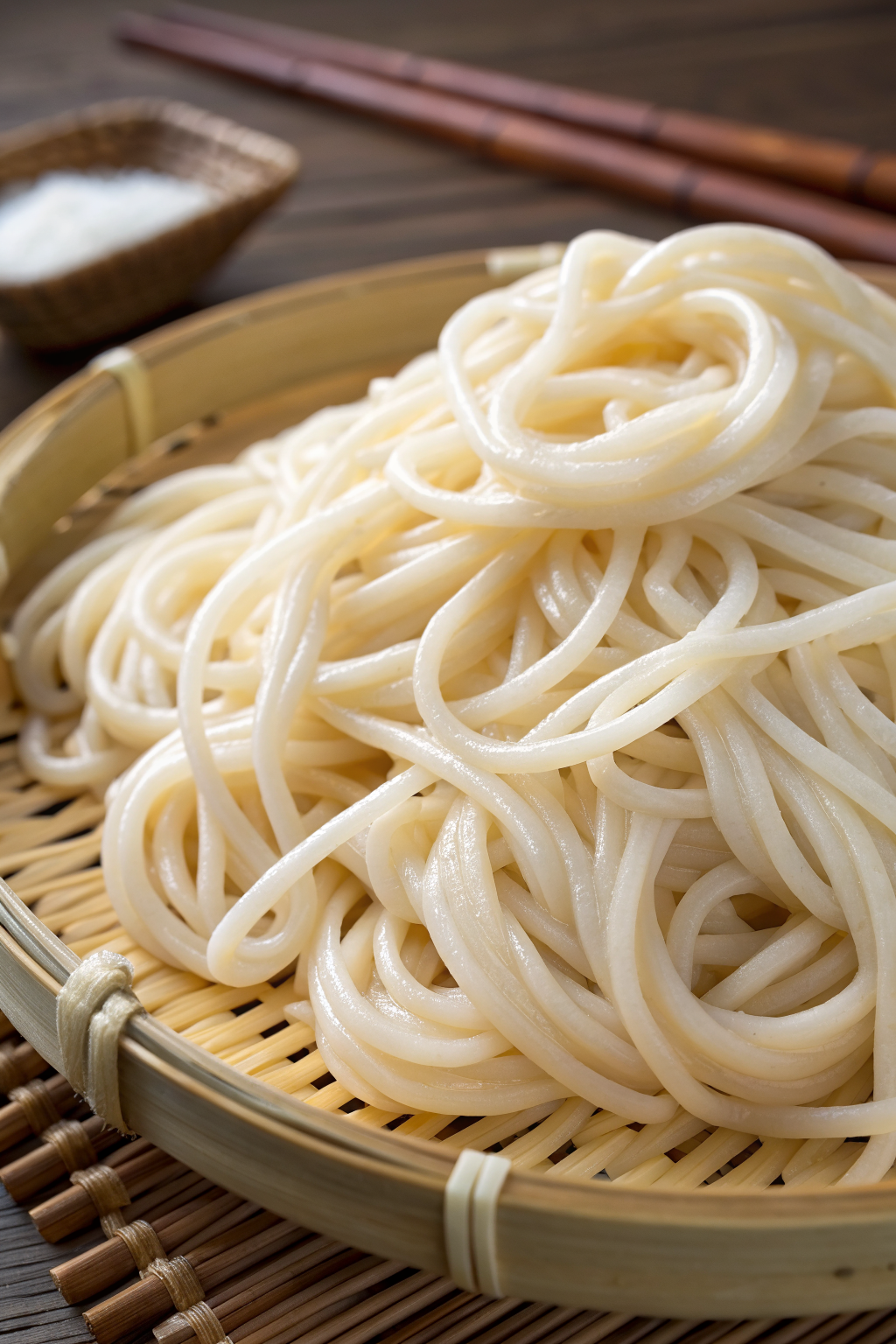
Homemade Udon Noodles Recipe
Ingredients
Instructions
- Add the flour and salt to a large mixing bowl and stir to combine so the salt is evenly distributed.
- Pour in about three quarters of the cold water while stirring with chopsticks or a fork.
- Add more water 1 tablespoon at a time until the mixture looks shaggy and holds together when you squeeze it in your hand.
- Use your hands to press the shaggy dough into a rough ball in the bowl.
- If there is dry flour at the bottom, sprinkle on a tiny bit more water and press again until it comes together.
- The dough should feel firm, slightly rough, and not sticky. If it sticks, dust with a teaspoon of flour and knead it in.
- Transfer the dough to a clean work surface.
- Knead by pushing the dough away with the heel of your hand, then folding it back toward you.
- Turn the dough a quarter turn and repeat this motion for 10 to 12 minutes, until the dough feels smooth, tight, and elastic.
- Shape the dough into a smooth ball.
- Lightly coat it with a tiny bit of neutral oil or dust with flour so it does not dry out.
- Wrap the dough in plastic wrap or cover with a damp kitchen towel and let it rest at room temperature for 30 to 60 minutes so the gluten relaxes.
- Unwrap the rested dough and cut it into 2 equal pieces to make rolling easier.
- Keep one piece covered while you work with the other.
- Lightly dust your work surface and rolling pin with flour or starch.
- Roll the dough into a rectangle about 1/8 to 1/4 inch thick, turning and dusting as needed to prevent sticking.
- Dust the surface of the rolled dough generously with starch.
- Fold the dough into thirds like a letter, or roll it loosely into a log.
- Use a sharp knife to cut the folded dough into strips about 1/4 inch wide for classic thick udon.
- Gently toss the cut noodles in extra starch so they stay separate, then shake off any excess.
- Roll out the second piece of dough to the same thickness as the first.
- Dust, fold, and cut into strips that match the first batch so they cook evenly.
- Toss the noodles lightly in starch and set them on a floured tray while you heat the water.
- Bring a large pot of water to a strong boil and add a small pinch of salt.
- Drop the noodles into the boiling water and stir gently to separate them.
- Cook for 7 to 10 minutes, depending on thickness, until the noodles taste chewy with no raw flour in the center.
- Drain the noodles in a colander.
- Rinse under cold running water, gently rubbing the noodles with your fingers to remove excess starch.
- If serving hot, briefly dunk the noodles in hot water again right before serving. If serving cold, continue rinsing until they feel cool and bouncy.
Notes
Approximate per serving (1/4 of recipe): 370 calories; fat 1 g; saturated fat 0 g; carbohydrates 77 g; fiber 3 g; sugars 1 g; protein 11 g; sodium 1180 mg (from dough and salted cooking water). Values are estimates and will vary based on flour type, salt level, and portion size.
Leave a Reply