
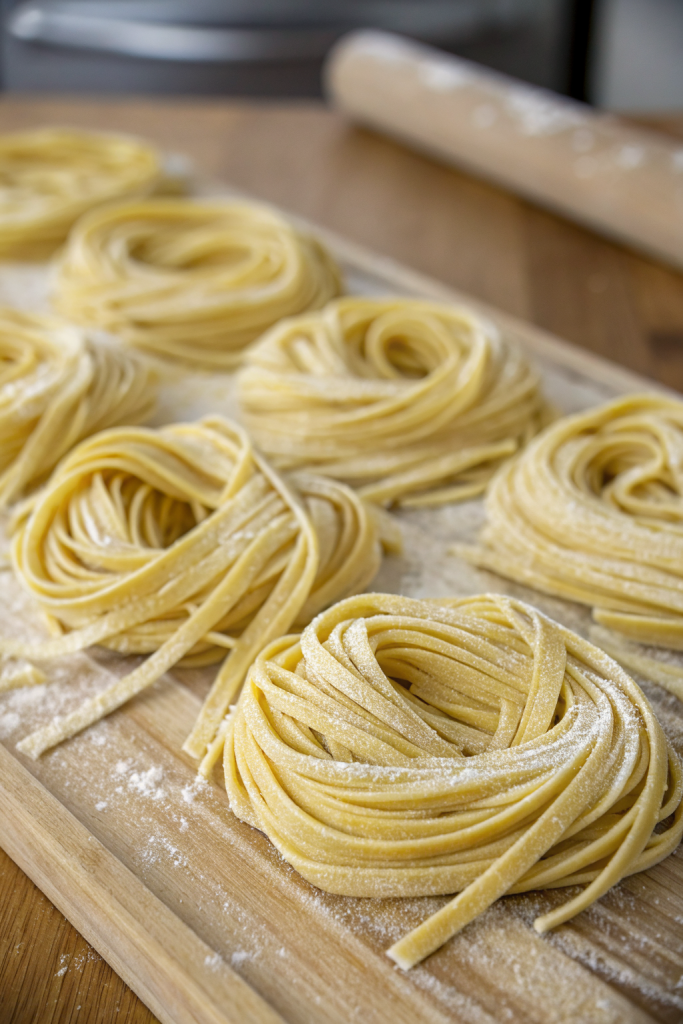
Homemade Ramen Noodles Recipe tastes springy, chewy, and rich with wheat flavor, perfect for anyone who loves a cozy bowl of ramen and has about 1 hour to play in the kitchen. This recipe works for beginners who want a weekend project and for ramen nerds who want more control than store-bought bricks allow. I still remember my first batch sticking to everything in sight, so you already start ahead of me.
Why You Should Try This Homemade Ramen Noodles Recipe
Fresh ramen noodles turn a simple broth into something restaurant-level, even if the broth comes from a carton. The texture beats instant noodles every time, with that satisfying bite you usually only find at a good ramen shop.
You also control every ingredient, which helps if you care about salt levels, flour quality, or avoiding additives. The dough comes together with basic pantry staples, so you skip specialty-store stress and still land on a slurp-worthy bowl.
“These noodles taste bouncy, silky, and way better than anything from a packet, and they totally made my kitchen feel like a tiny ramen shop. ★★★★★”
Ingredients You’ll Need
Core noodle ingredients
-
All-purpose flour, 2 ½ cups (300 g)
- Use unbleached if possible for better flavor.
- You can swap up to 25% with bread flour for extra chew.
-
Vital wheat gluten, 1 tablespoon (optional but helpful)
- This boosts chew and structure, especially with lower-protein all-purpose flour.
-
Kansui (alkaline solution), 1 teaspoon powder or 1 tablespoon liquid
- Powder: I like Sun Noodle or Koon Chun brands.
- If you cannot find kansui, mix ½ teaspoon baked baking soda with 2 tablespoons water as a backup.
-
Fine sea salt, ½ teaspoon
- Table salt works, but use a tiny bit less since it tastes sharper.
-
Water, ½ cup to ⅔ cup (120 to 160 ml), cold
- Start with ½ cup and add more by teaspoons until the dough comes together.
Pantry shortcuts and substitutions
-
No kansui on hand
- Bake regular baking soda on a foil-lined tray at 250°F (120°C) for 1 hour, then store in a jar.
- Use ½ teaspoon of that baked soda in the water to mimic kansui.
-
No vital wheat gluten
- Just skip it and use bread flour instead of all-purpose flour if you want more chew.
-
Whole wheat option
- Replace up to 20% of the flour with whole wheat flour.
- The noodles turn slightly darker and nuttier but still taste great.
Optional flavor add-ins
These do not belong in traditional ramen noodles, but home kitchens allow fun:
- Garlic powder, ¼ teaspoon, for a mild garlicky aroma
- Onion powder, ¼ teaspoon, for extra savoriness
- Turmeric, a pinch, for a light golden color
Use these sparingly so you keep that classic ramen flavor.
Equipment list
- Digital scale (strongly recommended) or measuring cups
- Large mixing bowl
- Small bowl or measuring cup for mixing the alkaline water
- Fork or chopsticks for mixing
- Plastic wrap or a clean kitchen towel
- Rolling pin or pasta machine
- Sharp knife or pasta cutter
- Baking sheet or tray, plus a little extra flour or cornstarch for dusting
- Large pot for boiling noodles
- Colander or spider strainer
Tips & Tricks
- Use a scale for the flour and water so the dough stays consistent and easy to work with.
- Keep the dough on the dry side; ramen dough should feel stiff and slightly crumbly before kneading.
- Rest the dough at least 30 minutes so the flour hydrates and gluten relaxes, which makes rolling easier.
- If the dough fights you while rolling, cover it and let it rest 5 to 10 minutes, then try again.
- Dust the dough sheets lightly with flour or cornstarch so the noodles do not stick when you cut them.
- Cut noodles slightly thicker than you think; they swell a bit in boiling water.
- Boil noodles in plenty of salted water, not directly in the broth, so starch does not cloud your soup.
- Cook in small batches so the noodles do not clump in the pot.
- Taste a strand after 1 minute of boiling and stop when it feels chewy but not raw in the center.
- Rinse briefly under hot tap water after draining if you want to remove extra surface starch.
How to Make Homemade Ramen Noodles Recipe
Mix the alkaline water
- Add kansui (or baked baking soda) and salt to a small bowl.
- Pour in ½ cup cold water and stir until the mixture looks clear and the powder dissolves.
- Set it aside while you prep the flour.
Combine the dry ingredients
- Add flour and vital wheat gluten to a large mixing bowl.
- Whisk or stir with a fork until the gluten blends evenly into the flour.
- Sprinkle in any optional flavor add-ins and mix again so everything distributes well.
Bring the dough together
- Drizzle the alkaline water over the flour while you stir with chopsticks or a fork.
- Stir until the mixture turns shaggy and clumpy; it should not look smooth yet.
- If dry flour remains at the bottom, add extra water 1 teaspoon at a time until no loose flour stays.
- Squeeze a handful of dough; it should hold together without feeling sticky.
Knead the stiff dough
- Turn the shaggy dough onto a clean work surface.
- Press and fold the dough with the heel of your hand, then rotate and repeat.
- The dough feels tough at first, but it softens as you keep going.
- Knead 8 to 10 minutes until the dough feels firm, smooth, and slightly elastic.
If the dough cracks badly, wet your hands lightly and keep kneading until it smooths out.
Rest the dough
- Shape the dough into a ball and wrap it tightly in plastic wrap.
- Let it rest at room temperature for 30 to 45 minutes.
- This rest lets the gluten relax so you roll the dough without a wrestling match.
Divide and pre-flatten
- Unwrap the dough and cut it into 2 or 4 equal pieces, depending on your workspace.
- Keep the pieces you do not use covered so they do not dry out.
- Press each piece into a rough rectangle with your hands so it fits through your pasta machine or rolls easier with a pin.
Roll the dough with a pasta machine
- Set the pasta machine to the widest setting.
- Feed one piece of dough through the rollers while you guide it with your other hand.
- Fold the sheet into thirds like a letter, dust lightly with flour, and run it through the widest setting again.
- Repeat that fold-and-roll step 3 to 4 times to build a smooth, even sheet.
Thin the sheets
- Start lowering the pasta machine setting one notch at a time.
- Run the dough through each setting once, dusting with flour if it sticks.
- Stop when the sheet reaches about 1 to 1.5 millimeters thick, similar to a thin lasagna sheet.
- If the sheet grows too long, cut it in half so you handle it more easily.
Roll the dough by hand (no machine option)
- Place a dough piece on a lightly floured surface.
- Use a rolling pin to push the dough outward from the center, turning it often.
- Aim for a large, thin rectangle about 1 to 1.5 millimeters thick.
- Keep the surface and the top of the dough lightly floured so nothing sticks.
Cut the noodles
- Dust the dough sheet with flour or cornstarch on both sides.
- Fold the sheet loosely into thirds or roll it up like a jelly roll.
- Use a sharp knife to slice noodles about 1 to 2 millimeters wide for thin ramen or 3 millimeters for thicker style.
- Gently shake and separate the strands, then toss them with a bit more flour so they stay loose.
Portion and rest the noodles
- Divide the noodles into individual portions, about 3 to 4 ounces per serving.
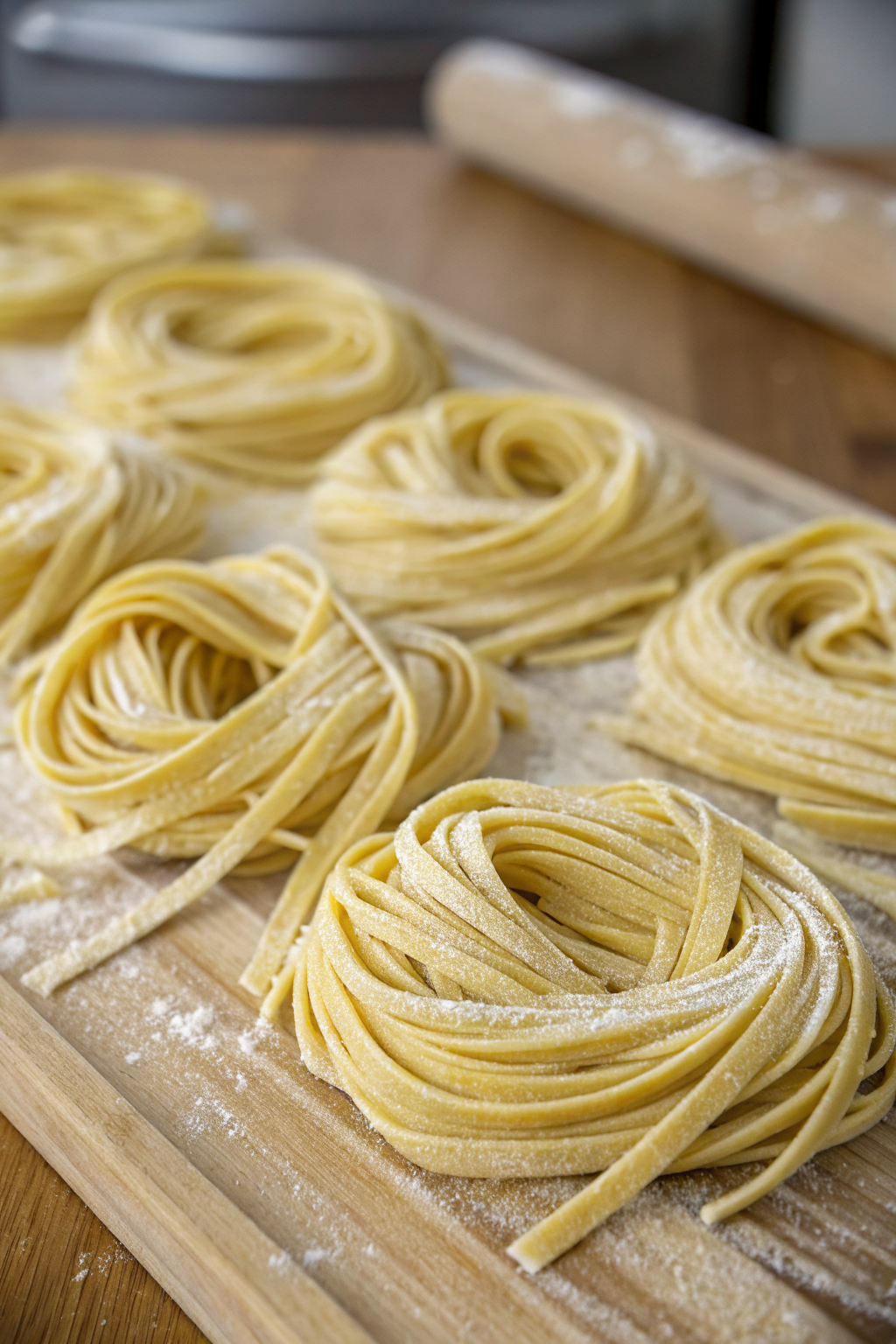
- Place each portion on a floured tray in loose nests.
- Cover with a clean kitchen towel while you heat the cooking water so the noodles do not dry out.
Cook the noodles
- Bring a large pot of water to a strong boil and salt it lightly.
- Drop in one or two portions of noodles and stir right away to prevent clumping.
- Boil 1 to 2 minutes for thin noodles or 2 to 3 minutes for thicker ones.
- Taste a strand; stop when the texture feels chewy and cooked through.
Rinse and serve
- Use a spider strainer or colander to lift the noodles from the pot.
- Rinse briefly under hot tap water if you want to remove extra starch, then drain well.
- Add noodles directly to hot ramen broth and top with your favorite toppings.
- Serve right away while the noodles stay bouncy and hot.
What to Serve with Homemade Ramen Noodles Recipe
These homemade ramen noodles shine in a rich chicken, pork, or veggie broth with soy sauce, miso, or a simple salt base. Add toppings like soft-boiled eggs, sliced scallions, corn, sautéed mushrooms, and sheets of toasted nori. You can also pair the bowl with cucumber salad, edamame, or simple steamed greens for a fresh side. If you want a fun twist, toss the cooked noodles with a quick stir-fry sauce and veggies for a ramen stir-fry bowl.
Storage Options
- Store uncooked noodles: Dust generously with flour, place in an airtight container, and keep in the fridge up to 2 days.
- Freeze uncooked noodles: Arrange portions on a tray, freeze until firm, then transfer to freezer bags and keep up to 1 month.
- Cook from frozen: Drop frozen noodles straight into boiling water and add 30 to 60 seconds to the cooking time.
- Store cooked noodles: Toss lightly with neutral oil, cool completely, and refrigerate in a sealed container up to 2 days.
- Reheat cooked noodles: Briefly dunk them in boiling water for 30 to 45 seconds until hot, then add to fresh broth or sauce.
Homemade Ramen Noodles Recipe
Ingredients
Instructions
- In a large bowl, whisk together the flour, salt, and baking soda (if using).
- In a measuring cup, dissolve the baked baking soda (kansui substitute) in the warm water, then stir in the vegetable oil if using.
- Pour the liquid into the flour mixture gradually, stirring with chopsticks or a fork until shaggy clumps form.
- Use your hands to press the dough together into a rough ball; it will be stiff and slightly dry but should hold together.
- Knead the dough on a lightly floured surface for 8–10 minutes until smooth and elastic. Cover and let rest for 20–30 minutes.
- Divide the dough into 2–4 pieces. Working with one piece at a time, roll it out with a rolling pin (or use a pasta machine) until very thin, dusting with flour as needed.
- Fold the sheet of dough loosely and slice into thin noodles with a sharp knife, then gently toss with flour to prevent sticking.
- Bring a large pot of water to a rolling boil. Add the noodles, stirring to separate, and cook for 1–2 minutes until just tender and chewy.
- Drain the noodles and rinse briefly under hot water if desired. Serve immediately in hot ramen broth with your choice of toppings.
Notes
Approximate per serving (noodles only, 1/4 of recipe): 260 calories; fat 3 g; saturated fat 0.5 g; carbohydrates 51 g; fiber 2 g; sugars 1 g; protein 9 g; sodium 290 mg. Values will vary based on specific ingredients, brands, and portion size, and do not include broth or toppings.
Leave a Reply