
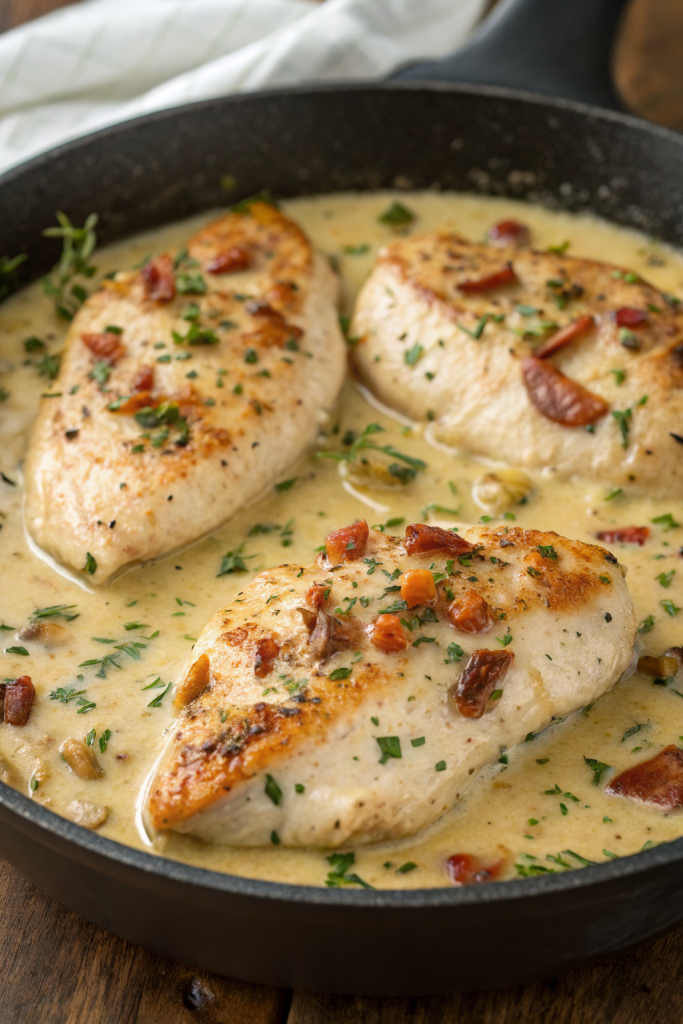
Pan Seared Chicken with Lemon Mustard Sauce Recipe tastes bright, savory, and a little fancy while it stays weeknight easy. It works for busy home cooks who want a 30–35 minute skillet dinner that feels restaurant-level without any complicated steps. I make this on repeat when I crave something cozy but still want to pretend I eat like an organized adult.
Why Pan Seared Chicken with Lemon Mustard Sauce Recipe Is Worth It
This pan seared chicken hits that perfect balance of crispy edges and juicy center, with a lemon mustard sauce that tastes tangy, creamy, and rich. You cook everything in one skillet, so cleanup stays simple and you keep all those flavorful browned bits in the sauce.
The recipe uses basic pantry ingredients like Dijon mustard, chicken broth, and butter, so you probably own most of what you need already. The sauce clings to the chicken and also tastes amazing over rice, potatoes, or a pile of roasted veggies.
“This Pan Seared Chicken with Lemon Mustard Sauce Recipe tastes like a restaurant meal that secretly came from a single skillet at home.” ★★★★★
Ingredients You Need
Chicken
- 4 small boneless skinless chicken breasts
- Aim for about 6 ounces each.
- If they look thick, slice them in half horizontally to make cutlets.
- 1 teaspoon kosher salt
- ½ teaspoon black pepper
- ½ teaspoon garlic powder
- ½ teaspoon onion powder
- ½ teaspoon smoked paprika or sweet paprika
For Searing
- 2 tablespoons olive oil
- Use avocado oil if you prefer a higher smoke point.
- 1 tablespoon butter
- Salted or unsalted both work; adjust salt at the end.
Lemon Mustard Sauce
- 3 cloves garlic, minced
- 1 cup low sodium chicken broth
- I like Better Than Bouillon mixed with water for strong flavor.
- 2 tablespoons Dijon mustard
- Use a smooth Dijon; grainy mustard can feel a bit chunky in this sauce.
- 1 tablespoon whole grain mustard (optional, for texture)
- ½ cup heavy cream
- Use half and half for a lighter sauce; it will taste a bit less rich.
- 2 tablespoons fresh lemon juice
- About 1 medium lemon.
- 1 teaspoon lemon zest
- 1 teaspoon honey or maple syrup
- This balances the acidity without making the sauce sweet.
- 1 tablespoon butter, cold, cut into small cubes
- Salt and pepper to taste
- 2 tablespoons chopped fresh parsley or chives for garnish
Pantry Shortcuts & Substitutions
- Use jarred minced garlic if you feel tired and do not want to chop.
- Use bottled lemon juice in a pinch, but still try to zest a fresh lemon for brightness.
- Swap heavy cream with full fat coconut milk for a dairy free version, but expect a slight coconut note.
Equipment List
- Large heavy skillet (10 to 12 inch; cast iron or stainless steel works best)
- Tongs for turning chicken
- Small whisk
- Cutting board and sharp knife
- Small bowl for mixing spices
- Instant read thermometer (helps you avoid dry chicken)
Quick Tips & substitutions
- Pat the chicken dry before seasoning so it browns instead of steaming.
- Slice thick chicken breasts into cutlets so they cook evenly and quickly.
- Use a stainless or cast iron skillet for better browning and flavor.
- Heat the pan until the oil shimmers before you add the chicken.
- Do not crowd the pan; cook in batches if needed so the chicken sears properly.
- Use chicken thighs instead of breasts if you prefer richer flavor; adjust cook time slightly longer.
- Swap heavy cream with half and half for a lighter sauce, or use full fat coconut milk for dairy free.
- Use vegetable broth instead of chicken broth if you only have that on hand.
- Stir the sauce often and keep the heat at medium to avoid curdling the cream.
- Taste the sauce at the end and adjust with more lemon, honey, or salt until it hits your sweet spot.
How to Make Pan Seared Chicken with Lemon Mustard Sauce Recipe
Step 1: Prep the chicken
Pat the chicken breasts dry on both sides with paper towels. In a small bowl, mix salt, pepper, garlic powder, onion powder, and paprika. Sprinkle the spice mix evenly over both sides of the chicken and press it in so it sticks.
Step 2: Sear the chicken
Heat the olive oil in your skillet over medium high heat until it looks hot and shimmery. Add the chicken in a single layer and do not move it for 4 to 5 minutes so a golden crust forms. Flip the chicken and cook another 3 to 5 minutes, until the internal temperature reaches 165°F and the juices run clear.
Transfer the cooked chicken to a plate and tent it loosely with foil so it stays warm. If the pan looks very dry, add a small splash of oil so the garlic does not burn in the next step. Keep the skillet on medium heat.
Step 3: Build flavor in the pan
Add the tablespoon of butter to the skillet and let it melt. Add the minced garlic and stir constantly for about 30 seconds until it smells fragrant and lightly golden. Scrape up any browned bits from the bottom of the pan with a wooden spoon, since those bits carry a ton of flavor.
Step 4: Deglaze and add mustard
Pour in the chicken broth while you keep scraping the pan. Whisk in the Dijon mustard and whole grain mustard until the liquid looks smooth. Let this mixture simmer for 2 to 3 minutes on medium heat so it reduces slightly and the flavors concentrate.
Step 5: Add cream and lemon
Turn the heat down to medium low. Stir in the heavy cream, lemon juice, lemon zest, and honey. Whisk until the sauce looks creamy and smooth, then let it gently bubble for 3 to 5 minutes, stirring often, until it thickens enough to coat the back of a spoon.
Taste the sauce and adjust with more salt, pepper, lemon juice, or honey as needed. If the sauce tastes too sharp, add a splash more cream. If it tastes too rich, add a squeeze more lemon.
Step 6: Finish the sauce with butter
Add the cold butter cubes to the sauce and whisk until they melt and the sauce turns glossy. This step gives the lemon mustard sauce a silky texture and restaurant style finish. Keep the sauce at low heat so it stays smooth.
Step 7: Return chicken to the pan
Nestle the seared chicken breasts back into the skillet, along with any juices that collected on the plate. Spoon the lemon mustard sauce over the top of each piece. Let the chicken simmer in the sauce for 2 to 3 minutes so the flavors mingle and the chicken heats through.
Sprinkle chopped parsley or chives over the top right before serving. This adds color and a fresh note that balances the creamy sauce. Take a second to admire your skillet because it looks fancy and you did that.
Recipe Variations
- Gluten free: Use gluten free chicken broth and confirm your mustard brand lists gluten free on the label.
- Dairy free: Use olive oil only, skip the butter, and swap heavy cream with full fat coconut milk.
- Low carb: Serve over cauliflower rice, zucchini noodles, or sautéed green beans instead of pasta or potatoes.
- Extra lemony: Add more zest and an extra tablespoon of lemon juice, then reduce the honey slightly.
- Herb twist: Stir in fresh thyme, tarragon, or basil at the end for a different flavor profile.
- Spicy kick: Add red pepper flakes or a pinch of cayenne with the garlic.
- Veggie boost: Add spinach, cherry tomatoes, or sliced mushrooms to the pan after you sear the chicken and cook them before you build the sauce.
Ways to Serve Pan Seared Chicken with Lemon Mustard Sauce Recipe
- Spoon the chicken and sauce over fluffy white rice, brown rice, or quinoa.
- Serve with mashed potatoes or roasted baby potatoes to soak up the sauce.
- Pair with steamed broccoli, green beans, or asparagus for a lighter plate.
- Slice the chicken and tuck it into a warm pita or tortilla with crunchy lettuce.
- Serve over buttered egg noodles or simple pasta for a cozy bowl.
Storage Success
Let the chicken and lemon mustard sauce cool until they reach room temperature, then store them together in an airtight container. Keep the container in the fridge and enjoy the leftovers within 3 to 4 days. Reheat gently on the stove over low heat or in the microwave at half power so the chicken stays tender and the sauce stays creamy. If the sauce thickens too much, stir in a splash of broth or water while you reheat.
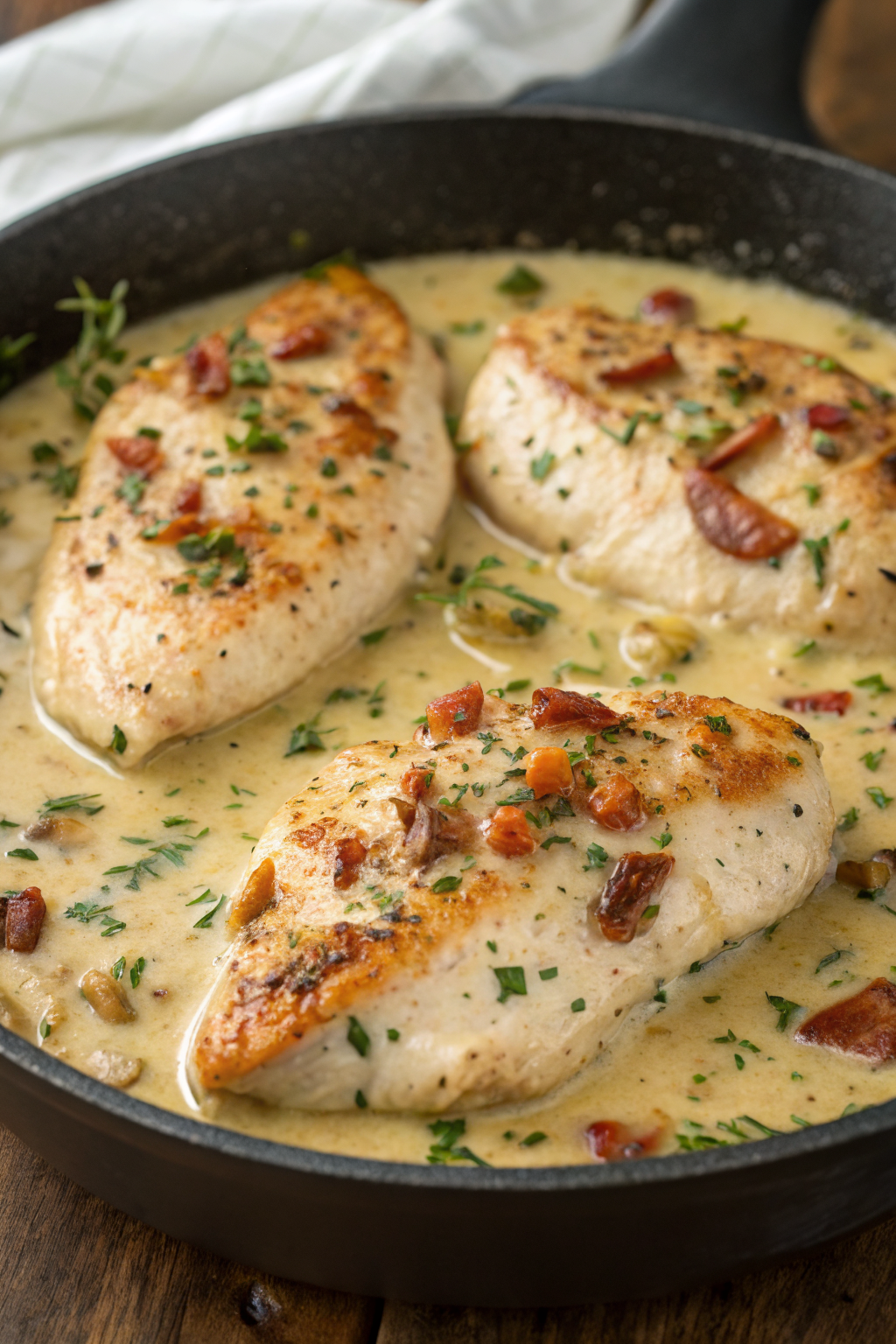
Pan Seared Chicken with Lemon Mustard Sauce Recipe
Ingredients
Instructions
- Pat the chicken breasts dry on both sides with paper towels. In a small bowl, mix the salt, black pepper, garlic powder, onion powder, and paprika. Sprinkle the spice mix evenly over both sides of the chicken and press it in so it sticks.
- Heat the olive oil in a large skillet over medium-high heat until it looks hot and shimmery. Add the chicken in a single layer and do not move it for 4 to 5 minutes so a golden crust forms. Flip the chicken and cook another 3 to 5 minutes, until the internal temperature reaches 165°F and the juices run clear. Transfer the cooked chicken to a plate and tent loosely with foil.
- Reduce the heat to medium. If the pan looks very dry, add a small splash of oil. Add the tablespoon of butter to the skillet and let it melt. Stir in the minced garlic and cook, stirring constantly, for about 30 seconds until fragrant and lightly golden, scraping up any browned bits from the bottom of the pan.
- Pour in the chicken broth while continuing to scrape the pan. Whisk in the Dijon mustard and whole grain mustard until the liquid looks smooth. Let the mixture simmer for 2 to 3 minutes on medium heat so it reduces slightly and the flavors concentrate.
- Turn the heat down to medium-low. Stir in the heavy cream, lemon juice, lemon zest, and honey. Whisk until the sauce looks creamy and smooth, then let it gently bubble for 3 to 5 minutes, stirring often, until it thickens enough to coat the back of a spoon. Taste and adjust with more salt, pepper, lemon juice, or honey as needed.
- Add the cold butter cubes to the sauce and whisk until they melt and the sauce turns glossy. Keep the sauce over low heat so it stays smooth.
- Nestle the seared chicken breasts back into the skillet along with any juices from the plate. Spoon the lemon mustard sauce over the chicken and let it simmer in the sauce for 2 to 3 minutes to heat through and mingle the flavors. Sprinkle with chopped parsley or chives just before serving.
Notes
Approximate per serving (1 of 4): 420 calories; fat 25 g; saturated fat 11 g; carbohydrates 8 g; fiber 0 g; sugars 4 g; protein 38 g; sodium 620 mg. Values will vary based on specific ingredients, brands, and portion size.
Leave a Reply