
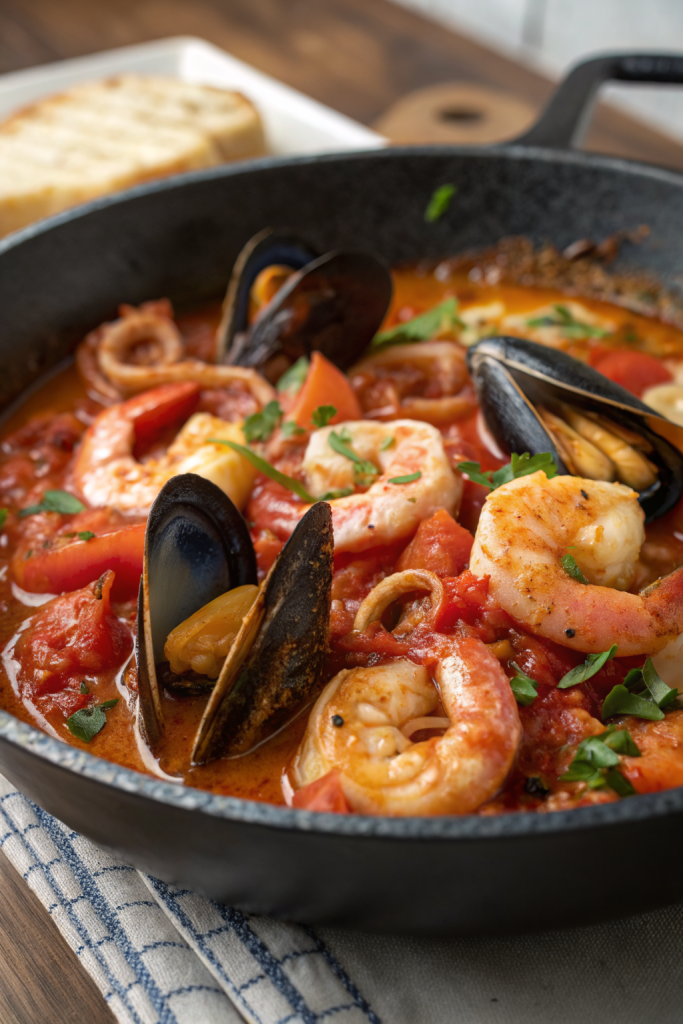
Spicy Nduja Seafood in Tomato Broth tastes rich, smoky, a little fiery, and deeply savory, like cioppino that went on vacation in Calabria and came back with attitude. It works for seafood lovers who want a restaurant-level dinner in about 40 minutes, including prep and cook time. I first made this on a Tuesday when I felt lazy and slightly dramatic, and it absolutely fixed both problems.
Why Make This Spicy Nduja Seafood in Tomato Broth at Home
You control the heat level, the quality of the seafood, and how brothy or saucy you want it. Restaurants often skimp on the good stuff, but at home you can load the pot with shrimp, mussels, clams, or whatever looks best at the market.
You also get a wildly flavorful dinner with very little effort, because nduja does most of the heavy lifting. It melts into the tomato broth, seasons everything, and gives you that slow-cooked flavor in under an hour.
“This Spicy Nduja Seafood in Tomato Broth tastes like a fancy coastal restaurant meal that somehow happens in one pot on a weeknight. ★★★★★”
Ingredients You Need
Seafood
Use what looks fresh and fits your budget. Aim for about 1½ to 2 pounds total.
- Large shrimp, peeled and deveined, tails on or off
- Mussels, scrubbed and debearded
- Clams, scrubbed
- Firm white fish, cut in chunks
- Calamari rings or tentacles, cleaned
You can mix and match. I like a combo of shrimp, mussels, and a mild white fish like cod or halibut. Frozen seafood works if you thaw it fully and pat it dry.
Nduja and flavor base
- Nduja: about 3 to 4 ounces
- Look for it in the cured meat section. Brands like La Quercia or Tempesta taste great.
- If you cannot find nduja, use spicy Calabrian salami and mash it with a little olive oil until spreadable.
- Olive oil: extra virgin or any good-tasting one
- Yellow onion, finely chopped
- Garlic cloves, thinly sliced or minced
- Crushed red pepper flakes, optional if you want extra heat
- Tomato paste, a tablespoon or two
- Crushed tomatoes or passata, one 14 to 15 ounce can or jar
- Seafood stock, fish stock, or low sodium chicken broth, about 2 to 3 cups
- Dry Italian seasoning or oregano and thyme
- Fresh parsley, chopped
- Fresh basil, optional but lovely
Tomato paste and canned tomatoes give the broth body and sweetness. I like Mutti or Cento for consistent flavor.
Seasoning and finishing
- Kosher salt
- Freshly ground black pepper
- Sugar, a pinch if the tomatoes taste too sharp
- Lemon, cut into wedges
- Good crusty bread, toasted or warmed
- Optional: a drizzle of good olive oil at the end
Pantry shortcuts
- Use jarred minced garlic if you feel tired, just reduce the amount slightly.
- Use frozen chopped onion to save time on prep.
- Use bottled clam juice as part of the stock if you want more briny flavor.
Equipment
- Large wide pot or Dutch oven with lid
- Cutting board and sharp knife
- Wooden spoon or heatproof spatula
- Ladle
- Tongs
- Small bowl for discarding empty shells
Tips & Mistakes
- Use very fresh seafood and smell it before you cook; it should smell like the ocean, not fishy.
- Pat seafood dry so it cooks nicely and does not water down the broth.
- Rinse and scrub mussels and clams well, and toss any that stay open after you tap them.
- Do not overcook shrimp or fish; pull them as soon as they turn opaque and just firm.
- Add mussels and clams first since they need more time, then add shrimp and fish near the end.
- Taste the broth before you add seafood and adjust salt, heat, and acidity so it already tastes delicious.
- Use medium heat when you cook the nduja and aromatics so they do not burn.
- Skim off any foam from the broth to keep flavors clean.
- Do not boil the broth hard once seafood goes in; keep it at a gentle simmer.
- Toast the bread so it holds up when you dunk it into the tomato broth.
How to Make Spicy Nduja Seafood in Tomato Broth
Step 1: Prep the seafood
Clean and prep all seafood before you turn on the stove. Peel and devein shrimp, scrub mussels and clams, and cut fish into bite size chunks. Pat everything dry with paper towels and keep it chilled while you start the broth.
Pick through mussels and clams and toss any cracked shells. Tap any open ones on the counter and discard them if they do not close.
Step 2: Build the flavor base
Set a large pot over medium heat and add a swirl of olive oil. Add chopped onion with a pinch of salt and cook about 5 to 7 minutes until it softens and turns lightly golden. Stir often so it cooks evenly.
Add sliced garlic and cook 30 to 60 seconds until it smells fragrant. Sprinkle in a pinch of crushed red pepper if you want extra heat.
Step 3: Cook the nduja
Add the nduja to the pot in small chunks. Use a spoon to break it up and stir it into the onions and garlic. It will soften and almost melt.
Let it cook 3 to 4 minutes so the fat renders and colors the oil a deep red. This step gives the tomato broth that rich, spicy backbone.
Step 4: Add tomato and herbs
Stir in tomato paste and cook it 1 to 2 minutes so it darkens slightly and loses the raw taste. Pour in crushed tomatoes or passata and stir well. Add Italian seasoning or a mix of oregano and thyme.
Season with a little salt and pepper, then taste. If the tomatoes taste sharp, add a tiny pinch of sugar.
Step 5: Add stock and simmer
Pour in seafood stock or broth until the mixture looks like a loose stew, not a thick sauce. I usually start with 2 cups and add more later if I want it more brothy. Stir and bring it to a gentle simmer.
Lower the heat and let it bubble softly for about 10 to 15 minutes. This gives the flavors time to mingle and the nduja time to fully melt into the tomato broth.
Step 6: Cook the shellfish
Turn the heat up just a bit so the broth simmers steadily. Add mussels and clams to the pot and stir them into the broth. Cover with a lid.
Cook about 5 to 7 minutes, checking once or twice. When the shells open, they finish cooking. Toss any that stay closed.
Step 7: Add shrimp, fish, and calamari
Add shrimp, fish chunks, and calamari to the pot. Stir gently so you do not break up the fish too much. Keep the heat at a steady simmer, not a hard boil.
Cook 3 to 5 minutes until shrimp turn pink and opaque, fish flakes easily, and calamari turns opaque and just tender. Taste the broth again and adjust salt and pepper.
Step 8: Finish with herbs and lemon
Turn off the heat. Stir in chopped parsley and basil if you use it. Squeeze in a little lemon juice and taste.
Drizzle a bit of good olive oil over the top if you like a glossy finish. The broth should taste spicy, savory, and bright.
Step 9: Toast the bread
While the broth simmers, slice crusty bread. Toast it in a skillet with a little olive oil or under the broiler until golden. Rub with a cut clove of garlic if you want extra flavor.
You now have the perfect vehicle for soaking up every drop of that spicy tomato broth.
Variations I've Tried
Use only shrimp and fish if you do not enjoy shellfish with shells. The broth still tastes rich and you skip the shell cleaning. Add a handful of small scallops near the end if you want a slightly sweeter seafood flavor.
Swap part of the stock with bottled clam juice for a stronger ocean vibe. Stir in a spoonful of Calabrian chile paste if you want extra heat and tang. Add a handful of chopped fennel with the onion for a subtle anise note that plays nicely with nduja.
Use whole wheat or sourdough bread if you want more flavor and chew. Serve the broth over cooked orzo or small pasta if you want something more filling. Add a handful of baby spinach or kale in the last minute of cooking for a little green.
How to Serve Spicy Nduja Seafood in Tomato Broth
Ladle the Spicy Nduja Seafood in Tomato Broth into warm shallow bowls so the seafood sits on top and looks generous. Add a big spoonful of broth, then tuck toasted bread along the side for dunking. Serve with lemon wedges so everyone can add more brightness.
Pair it with a simple green salad, roasted vegetables, or a bowl of fluffy white rice to catch extra broth. I also like a cold sparkling water with citrus or a light herbal iced tea to cool the heat from the nduja.
How to store
- Cool leftovers to room temperature within 1 hour, then transfer to airtight containers and refrigerate up to 2 days.
- Reheat gently on the stove over low to medium heat until hot; avoid boiling so the seafood does not turn rubbery.
- If you want to freeze, store only the broth and any fish without shells for up to 2 months; skip freezing mussels and clams since they turn tough.
- Thaw frozen broth overnight in the fridge, reheat gently, then add fresh quickly cooked seafood on the day you serve it.
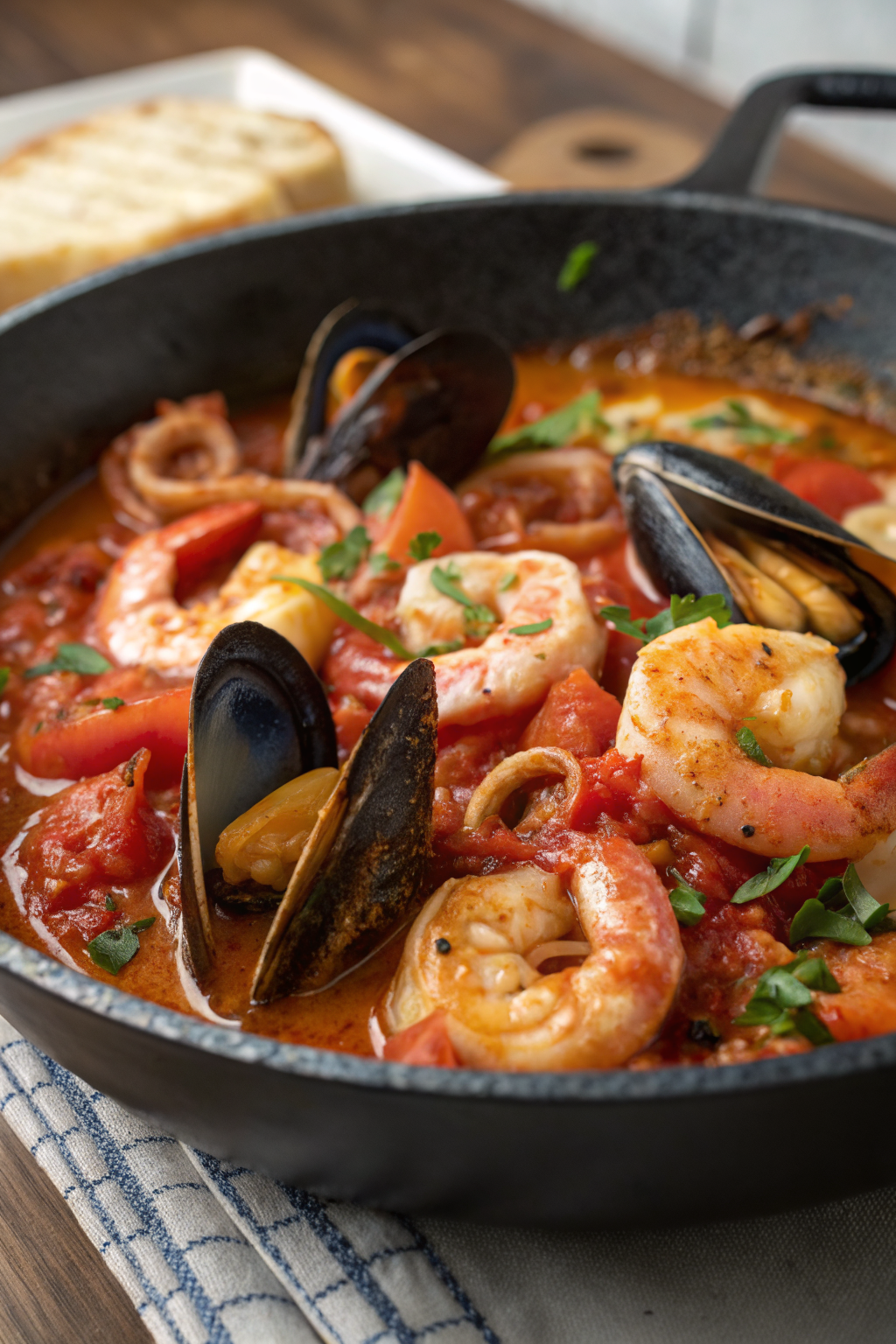
Spicy Nduja Seafood in Tomato Broth
Ingredients
Instructions
- Heat the olive oil in a large pot over medium heat. Add the chopped onion and cook for 4–5 minutes until softened and translucent.
- Stir in the minced garlic and cook for 30 seconds, just until fragrant.
- Add the nduja and use a spoon to break it up, cooking for 2–3 minutes until it melts into the oil and coats the onions. Stir in the crushed red pepper flakes if using.
- Pour in the white wine, scraping up any browned bits from the bottom of the pot. Simmer for 2 minutes to let the alcohol cook off.
- Stir in the crushed tomatoes, seafood stock, smoked paprika, salt, and black pepper. Bring the mixture to a simmer, then reduce heat to medium-low and cook for 10 minutes to develop flavor.
- Add the mussels to the pot, cover with a lid, and cook for 3–4 minutes until they just begin to open.
- Add the shrimp and fish pieces, gently stirring to submerge them in the broth. Cover and simmer for another 4–5 minutes, or until the shrimp are opaque, the fish flakes easily, and all mussels have opened. Discard any mussels that remain closed.
- Remove from heat and stir in the chopped parsley and lemon juice. Taste and adjust seasoning with additional salt or pepper if needed.
- Ladle the spicy seafood and tomato broth into warm bowls and serve immediately with toasted crusty bread for dipping, if desired.
Notes
Approximate per serving (without bread): 320 calories; fat 14 g; saturated fat 4 g; carbohydrates 16 g; fiber 3 g; sugars 6 g; protein 29 g; sodium 930 mg. Values are estimates and will vary based on exact seafood mix, nduja brand, stock, and portion size.
Leave a Reply