
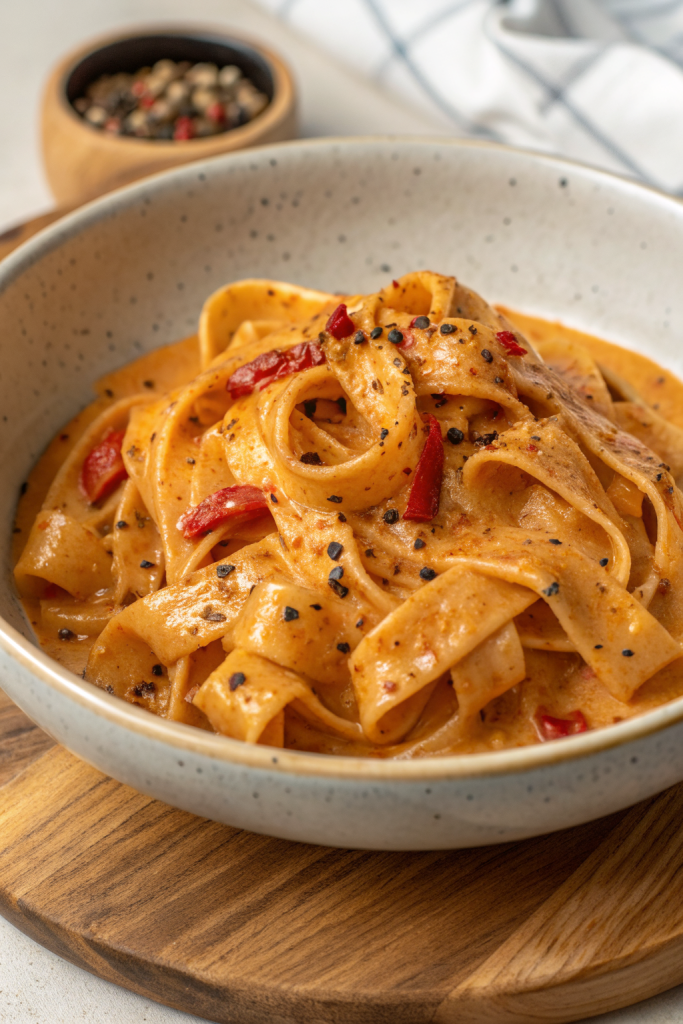
Spicy Butternut Squash Pasta Recipe tastes creamy, cozy, a little smoky, and just hot enough to wake up your tastebuds without setting off the fire alarm. It works perfectly for busy weeknights or casual dinner guests, and you can get it on the table in about 40 minutes. I first made a version of this on a Tuesday when my fridge looked empty, and it still feels like a tiny kitchen miracle every time.
Why Spicy Butternut Squash Pasta Recipe Is Worth It
This pasta gives you all the comfort of mac and cheese with more flavor and a bit more nutrition. The butternut squash turns silky and sweet, and the chili heat cuts through the richness so the sauce never feels heavy.
You can toss everything in one pot and a blender, which keeps cleanup simple. The recipe also uses easy pantry staples like broth, canned coconut milk, or cream, so you can pull it together even when your produce drawer looks sad.
“Creamy, spicy, and cozy without feeling heavy, this Spicy Butternut Squash Pasta Recipe instantly became a weeknight favorite in our house. ★★★★★”
Ingredients You Need
Pasta
- 12 ounces short pasta
- Good options: rigatoni, penne, fusilli, shells
- Whole wheat or chickpea pasta both work well and hold the sauce nicely
Squash and Sauce Base
- 1 medium butternut squash, about 2.5 to 3 pounds
- Shortcut: use 4 to 5 cups pre-cut butternut squash from the produce section
- 2 tablespoons olive oil
- 1 small yellow onion, diced
- 3 cloves garlic, minced
- 1 teaspoon kosher salt, plus more to taste
- 1 to 1.5 cups vegetable broth or chicken broth
- Boxed low sodium broth works great here
- 1 teaspoon smoked paprika
- 1 teaspoon chili flakes or red pepper flakes
- Use 1/2 teaspoon for mild heat, up to 1.5 teaspoons for extra spicy
- 1/4 teaspoon ground nutmeg
- 1/4 teaspoon black pepper
Creamy Elements
Pick one of these options:
- 1/2 cup heavy cream
- 1/2 cup canned full fat coconut milk
- 3/4 cup whole milk plus 1 tablespoon butter
Cheese
- 1 cup freshly grated Parmesan or Pecorino Romano
- Pre-grated cheese often clumps, so grate a block if you can
- For a vegetarian version, choose a rennet free hard cheese
Optional Flavor Boosters
- 1 to 2 tablespoons butter for finishing
- 1 teaspoon maple syrup or honey if the squash tastes bland
- Zest of 1 lemon for brightness
- Extra chili flakes for serving
- Fresh sage or thyme leaves, chopped
Pantry Shortcuts
- Frozen butternut squash works if you cannot find fresh
- Pre-chopped onions and jarred minced garlic save time
- Pre-washed baby spinach or kale can go straight into the pot near the end
Equipment List
- Large pot for boiling pasta
- Large skillet or Dutch oven
- Blender or immersion blender
- Cutting board and sharp knife
- Measuring cups and spoons
- Wooden spoon or spatula
- Colander
Quick Tips & substitutions
- Salt the pasta water generously so the pasta tastes seasoned before it hits the sauce.
- Roast the squash if you want deeper flavor, or simmer it on the stove if you want speed.
- Use coconut milk instead of cream to keep the recipe dairy light and still very creamy.
- Swap Parmesan with nutritional yeast and a vegan hard cheese for a dairy free version.
- Use gluten free pasta and check your broth label to keep the recipe gluten free.
- Stir in a handful of spinach or kale at the end to sneak in extra greens.
- Add cooked chicken sausage or chickpeas if you want more protein.
- Thin a thick sauce with a splash of hot pasta water until it coats the noodles smoothly.
How to Make Spicy Butternut Squash Pasta Recipe
Step 1: Prep and Cook the Squash
Peel the butternut squash, slice it in half, scoop out the seeds, and cut it into 1 inch cubes. Heat 2 tablespoons olive oil in a large skillet over medium heat. Add the onion and cook 4 to 5 minutes until it softens and turns lightly golden, then stir in the garlic and cook 30 seconds so it smells fragrant.
Add the squash cubes, salt, smoked paprika, chili flakes, nutmeg, and black pepper. Stir so the spices coat the squash. Pour in 1 cup broth, bring it to a gentle simmer, then cover and cook 15 to 18 minutes until the squash feels very tender when you poke it with a fork.
If the pan looks dry before the squash softens, add a splash more broth. You want some liquid left in the pan so the blender can work easily. Taste a piece of squash and adjust salt or chili flakes if it needs more flavor.
Step 2: Boil the Pasta
While the squash cooks, bring a large pot of salted water to a boil. Add the pasta and cook until it reaches al dente according to the package directions. Scoop out 1 to 1.5 cups of hot starchy pasta water and set it aside.
Drain the pasta and keep it in the pot or a large bowl. Toss it with a tiny drizzle of olive oil if it sits for more than a couple of minutes so it does not clump. Keep it nearby so you can combine it with the sauce while everything stays hot.
Step 3: Blend the Sauce
Transfer the cooked squash mixture and all the liquid from the pan into a blender. Add your cream, coconut milk, or milk and butter option. Blend until the sauce turns very smooth and velvety, about 30 to 60 seconds.
If the sauce looks too thick, add a splash of broth or pasta water and blend again. Taste and adjust salt, chili flakes, or a tiny drizzle of maple syrup or honey if the squash tastes flat. You want a balance of sweet, spicy, and savory.
Step 4: Combine Pasta and Sauce
Pour the sauce back into the skillet over low heat. Stir in the grated Parmesan until it melts and the sauce looks glossy. Add the cooked pasta and toss so every piece gets coated.
If the sauce feels too thick, loosen it with a bit of hot pasta water until it clings to the noodles but still moves easily. Add butter, lemon zest, and chopped herbs if you use them. Taste again and adjust seasoning so the flavors pop.
Step 5: Finish and Serve
Let the pasta sit on low heat for 1 to 2 minutes so the sauce and pasta marry. Stir a few times to keep it from sticking. Sprinkle extra Parmesan, more chili flakes, and herbs on top.
Serve the Spicy Butternut Squash Pasta Recipe hot in warm bowls. Add a squeeze of lemon over each portion if you like brightness. Enjoy the creamy heat while it still steams.
Recipe Variations
- Gluten free: Use your favorite gluten free pasta and check your broth label.
- Vegan: Use coconut milk, skip the dairy cheese, and add nutritional yeast plus a vegan Parmesan style cheese.
- Low carb: Swap pasta with zucchini noodles or spaghetti squash strands and keep the same sauce.
- Extra protein: Add cooked chicken sausage, grilled chicken, shrimp, or sautéed tofu cubes.
- More veggies: Stir in spinach, kale, peas, or roasted broccoli near the end.
- Extra spicy: Add a pinch of cayenne or a spoonful of chili crisp on top before serving.
- Smoky version: Add a bit more smoked paprika and a tiny pinch of chipotle powder.
Ways to Serve Spicy Butternut Squash Pasta Recipe
- With a simple green salad and lemony vinaigrette.
- Alongside roasted Brussels sprouts or green beans.
- With garlic bread or warm crusty bread for dipping in the sauce.
- With a side of sliced cucumbers and cherry tomatoes for something cool and fresh.
- As a main dish with a side of roasted carrots or a mixed veggie tray.
Storage Success
Store leftover Spicy Butternut Squash Pasta Recipe in an airtight container in the fridge for up to 3 to 4 days. Add a splash of broth or milk when you reheat it on the stove so the sauce turns creamy again. Stir often over low heat so the cheese does not clump and the pasta heats evenly. You can freeze the sauce by itself for up to 2 months and cook fresh pasta when you feel like a cozy spicy bowl.
Spicy Butternut Squash Pasta Recipe
Ingredients
Instructions
- Peel the butternut squash, slice it in half, scoop out the seeds, and cut it into 1-inch cubes.
- Heat the olive oil in a large skillet over medium heat. Add the diced onion and cook for 4 to 5 minutes, until softened and lightly golden.
- Stir in the minced garlic and cook for about 30 seconds, just until fragrant.
- Add the squash cubes, kosher salt, smoked paprika, chili flakes, nutmeg, and black pepper. Stir to coat the squash evenly with the spices.
- Pour in 1 cup of broth and bring to a gentle simmer. Cover and cook for 15 to 18 minutes, until the squash is very tender when pierced with a fork, adding a splash more broth if the pan looks dry. Taste and adjust salt or chili flakes as needed.
- While the squash cooks, bring a large pot of generously salted water to a boil.
- Add the pasta and cook until al dente according to the package directions.
- Reserve 1 to 1 1/2 cups of hot starchy pasta water, then drain the pasta. If it will sit for more than a couple of minutes, toss with a small drizzle of olive oil to prevent clumping. Set aside near the stove.
- Transfer the cooked squash mixture and all the liquid from the skillet to a blender.
- Add your choice of creamy element: heavy cream, coconut milk, or the whole milk and butter option.
- Blend until very smooth and velvety, 30 to 60 seconds. If the sauce seems too thick, add a splash of broth or reserved pasta water and blend again.
- Taste the sauce and adjust with more salt, chili flakes, or a tiny drizzle of maple syrup or honey if the squash tastes flat. Aim for a balance of sweet, spicy, and savory.
- Pour the blended sauce back into the skillet over low heat.
- Stir in the grated Parmesan until melted and the sauce looks glossy.
- Add the cooked pasta and toss until every piece is well coated in sauce.
- If the sauce is too thick, loosen it with a bit of hot pasta water at a time until it clings to the noodles but still moves easily.
- Stir in butter, lemon zest, and chopped herbs if using, then taste and adjust the seasoning so the flavors pop.
- Let the pasta sit over low heat for 1 to 2 minutes, stirring a few times so the sauce and pasta marry and do not stick.
- Serve the pasta hot in warm bowls, topped with extra Parmesan, more chili flakes, and herbs if you like.
- Add a squeeze of lemon over each portion for extra brightness, and enjoy the creamy heat while it is still steaming.
Notes
Approximate per serving (1/4 of recipe, made with heavy cream and Parmesan): 520 calories; fat 20 g; saturated fat 9 g; carbohydrates 70 g; fiber 7 g; sugars 8 g; protein 18 g; sodium 750 mg. Values are estimates and will vary based on ingredient brands, exact amounts, and optional add-ins or substitutions such as coconut milk or added protein.