
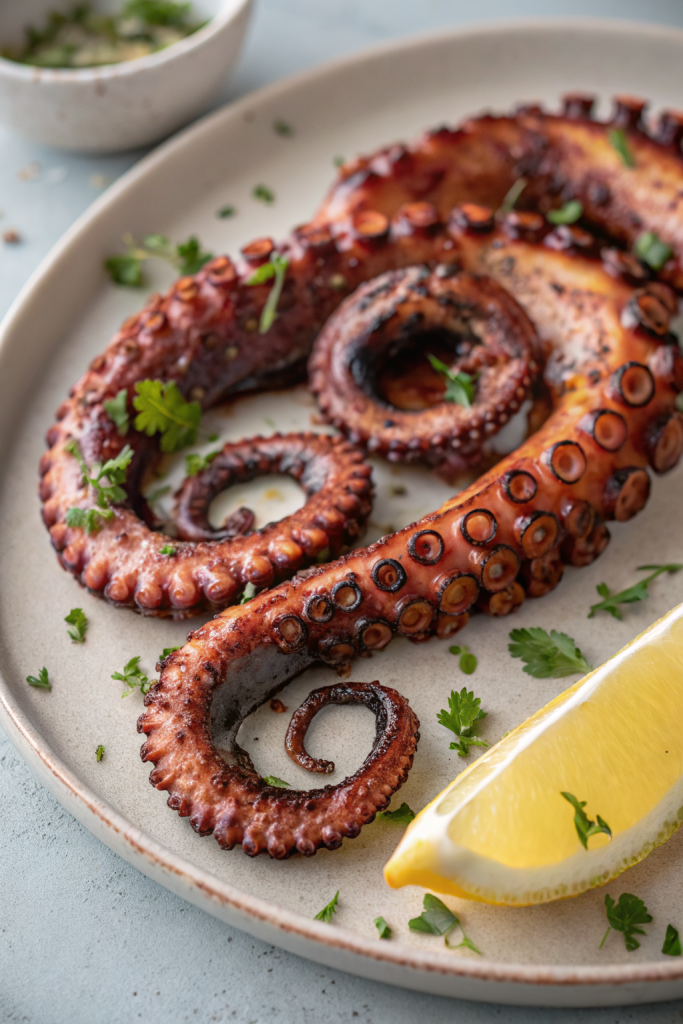
Sous Vide Octopus Recipe tastes incredibly tender, slightly sweet, and rich with ocean flavor, with none of that rubbery chew people fear. It works perfectly for home cooks who want restaurant-level seafood on a weeknight, and the total time clocks in around 5 to 6 hours, most of it hands-off. I still remember the first time I served this to friends and watched their eyes widen when the fork slid right through the tentacles.
Why Sous Vide Octopus Recipe Is Worth It
Octopus turns tough and chewy when you blast it with high heat or rush the cooking. Sous vide solves that problem because you hold a precise temperature for a long stretch, so the collagen melts and the meat stays juicy. You get silky, tender octopus every single time, with zero guesswork.
This method also fits busy schedules. You season the octopus, seal it, drop it in the water bath, and walk away while it quietly transforms. When guests arrive, you only need a quick sear in a hot pan or on the grill, and everyone assumes you trained in a fancy coastal restaurant.
“This Sous Vide Octopus Recipe came out insanely tender and flavorful, better than any restaurant version I have tried at home ★★★★★”
Ingredients You Need
Octopus
- 2 to 3 pounds whole octopus, cleaned
- Ask the fishmonger to clean it and remove the beak and ink sac.
- Frozen octopus works great and often turns out more tender than fresh because ice crystals break down some fibers.
Aromatics and seasoning
- 3 tablespoons extra virgin olive oil
- 4 garlic cloves, smashed
- 1 small onion, quartered
- 2 bay leaves
- 1 teaspoon whole black peppercorns
- 1 teaspoon smoked paprika or sweet paprika
- 1 teaspoon kosher salt, plus more to finish
- 1 small lemon, zest peeled in strips with a peeler
- Optional: 1 teaspoon dried oregano or thyme
- Optional heat: 1 teaspoon red pepper flakes
Finishing ingredients
- 2 tablespoons olive oil for searing
- 1 tablespoon butter, optional but tasty
- 1 tablespoon fresh lemon juice
- 2 tablespoons chopped fresh parsley or cilantro
- Flaky sea salt for serving
Pantry shortcuts and notes
- Use jarred minced garlic if you do not want to peel cloves; use 1 to 1.5 teaspoons.
- Use bottled lemon juice in a pinch, though fresh lemon gives brighter flavor.
- Use pre-mixed seafood seasoning instead of separate paprika and herbs if you keep that on hand.
Equipment
- Sous vide immersion circulator
- Large pot or heatproof container for the water bath
- Vacuum sealer and bags, or heavy duty zip top freezer bags
- Large skillet or grill pan for finishing
- Tongs
- Cutting board and sharp knife
- Paper towels
Quick Tips & substitutions
- Pat the octopus very dry before searing so you get a nice crust.
- Use frozen octopus straight from the freezer; add about 30 minutes to the sous vide time.
- Set the sous vide temperature to 171°F for very tender octopus with a bit of bite, or 175°F if you want extra soft texture.
- Season lightly in the bag and adjust salt after searing, since the flavor concentrates during the long cook.
- Swap smoked paprika with regular paprika plus a pinch of cumin if you want a milder profile.
- Skip butter and use only olive oil if you want a dairy free version.
- Use orange zest instead of lemon zest for a slightly sweeter citrus note.
- Cut very large octopus into 2 or 3 sections so it fits in the bag and cooks more evenly.
- Use two bags if the tentacles crowd each other; give them room so the water circulates well.
- Chill the cooked octopus in the bag in an ice bath if you plan to sear it later or serve it cold in salads.
How to Make Sous Vide Octopus Recipe
Step 1: Prep the octopus
Rinse the octopus under cold water and check for any remaining bits of beak or tough cartilage. Trim any loose skin flaps if they bother you, though they soften during cooking. Pat the octopus dry with paper towels so the seasoning sticks.
If the head feels large, slice it open and clean out any remaining bits, then rinse again. You can keep the head attached or separate it from the tentacles. I usually keep it attached so it looks dramatic on the plate.
Step 2: Season and bag
Place the octopus on a cutting board and sprinkle it with kosher salt and paprika on all sides. Add the smashed garlic, onion quarters, bay leaves, peppercorns, lemon zest strips, and dried herbs. Drizzle the olive oil over the octopus and rub everything around so the aromatics coat the surface.
Slide the octopus and aromatics into a vacuum bag or a heavy duty zip top freezer bag. Arrange the tentacles in a loose spiral so they do not clump into a tight ball. Seal the bag with a vacuum sealer, or use the water displacement method with a zip top bag and squeeze out as much air as possible.
Step 3: Set up the sous vide bath
Fill a large pot or container with water and attach your sous vide circulator. Set the temperature to 171°F for tender octopus with some structure, or 175°F for extra soft texture. Let the water heat while the bagged octopus waits on the counter.
Once the water reaches the target temperature, lower the bag into the bath. Clip the top of the bag to the side so it stays fully submerged and does not float. Make sure water flows freely around the entire bag.
Step 4: Cook the octopus
Cook the octopus for 4 to 5 hours at 171°F, or 4 to 5 hours at 175°F if you want softer results. Check occasionally to ensure the bag stays under water and the temperature stays stable. The long, gentle cook lets the collagen break down and turns the meat tender.
After about 4 hours, you can open the bag and test a small piece if you feel curious. If the texture still feels a bit firm for your taste, reseal or reclip the bag and give it another 30 to 60 minutes. The window stays pretty forgiving, so you do not need to stress about exact minutes.
Step 5: Chill or proceed to sear
When the octopus reaches your preferred tenderness, lift the bag out of the water. Use tongs to move the octopus to a plate and let it cool for a few minutes so it firms up slightly. This rest makes it easier to handle and slice.
If you plan to serve it later or use it in salads, place the sealed bag in an ice bath for 20 to 30 minutes, then refrigerate. If you plan to serve it hot right away, move straight to the searing step. Either way, keep the flavorful liquid from the bag, since you can reduce it into a quick sauce.
Step 6: Prep for searing
Lay the tentacles on a cutting board and pat them very dry with paper towels. Moisture fights browning, so take a minute and really dry them. If the octopus feels large, cut the tentacles apart so you can sear them more easily.
Strain the cooking liquid into a small saucepan if you want a sauce. Simmer it over medium heat until it reduces by about half and thickens slightly. Taste and adjust with a squeeze of lemon juice and a pinch of salt.
Step 7: Sear the octopus
Heat a large skillet over medium high heat and add olive oil. When the oil shimmers and moves easily in the pan, add the tentacles in a single layer without crowding. Let them cook undisturbed for 1 to 2 minutes so a golden crust forms.
Turn the tentacles and sear the other sides for another 1 to 2 minutes. Add butter in the last minute and spoon the foaming butter over the octopus for extra flavor. Turn off the heat and squeeze fresh lemon juice over the top.
Step 8: Finish and serve
Transfer the seared octopus to a serving platter or board. Sprinkle with chopped parsley or cilantro and a pinch of flaky sea salt. Drizzle with a bit of the reduced cooking liquid if you made it, or just a little extra olive oil.
Slice the tentacles into bite size pieces or serve them whole for a more dramatic look. Add lemon wedges on the side so everyone can adjust brightness. Serve right away while the exterior stays crisp and the inside stays tender.
Recipe Variations
- Gluten free: The base recipe already stays gluten free; just pair it with gluten free sides like roasted potatoes, rice, or a simple salad.
- Dairy free: Skip the butter in the searing step and use only olive oil.
- Vegan style plating: Use this same flavor profile on thick slices of king oyster mushrooms or hearts of palm for a plant based “octopus style” dish.
- Low carb: Serve the octopus over cauliflower mash, zucchini ribbons, or a big green salad.
- Spicy version: Add extra red pepper flakes, a pinch of cayenne, or a spoonful of chili crisp when you finish the dish.
- Herb heavy Mediterranean: Load the bag with extra oregano, thyme, and a few olives, then finish with more lemon and fresh herbs.
- Garlic lover: Double the garlic and add a quick garlic oil drizzle at the end.
Ways to Serve Sous Vide Octopus Recipe
- Over a warm potato and olive salad with lemon and herbs.
- Chopped and tossed into a chilled octopus salad with cucumber, tomato, red onion, and parsley.
- On top of creamy polenta or mashed potatoes with a drizzle of olive oil.
- As a taco filling with shredded cabbage, avocado, and lime crema.
- On a mezze platter with hummus, grilled vegetables, and warm pita or flatbread.
- As a simple appetizer with toothpicks, lemon wedges, and a sprinkle of smoked paprika.
Storage Success
Store leftover sous vide octopus in an airtight container in the fridge for up to 3 days. Keep it in some of its cooking liquid if possible, since that helps it stay moist and flavorful. Reheat it gently in a skillet over low heat or in a warm water bath, then give it a quick hot sear if you want fresh crust again. Freeze cooked octopus in a freezer bag with as much air removed as possible for up to 2 months, and thaw it overnight in the fridge before reheating.

Sous Vide Octopus Recipe
Ingredients
Instructions
- Preheat a sous vide water bath to 171°F (77°C).
- Pat the cleaned octopus dry with paper towels and cut into large pieces if necessary to fit in the bag.
- Place the octopus in a vacuum bag or heavy-duty zip-top bag along with olive oil, garlic, thyme, rosemary, bay leaves, salt, pepper, and smoked paprika if using.
- Vacuum seal the bag or use the water displacement method to remove as much air as possible.
- Submerge the sealed bag in the preheated water bath and cook for 5 hours, ensuring the bag stays fully underwater.
- After cooking, carefully remove the bag from the water bath. Transfer the octopus pieces to a plate and discard the herbs and aromatics. Pat the octopus dry thoroughly.
- Preheat a grill or cast-iron skillet over high heat. Lightly oil the grates or pan.
- Sear the octopus for 1–2 minutes per side until lightly charred and crisp on the edges.
- Transfer to a serving platter, squeeze fresh lemon juice over the top, and garnish with chopped parsley if desired.
- Serve warm as a main dinner dish with your choice of sides.
Notes
Approximate per serving (1/4 of recipe): 260 calories; fat 13 g; saturated fat 2 g; carbohydrates 4 g; fiber 0 g; sugars 0 g; protein 32 g; sodium 630 mg. Values will vary based on octopus size, oil amount, and any additional sides or garnishes.
Leave a Reply