
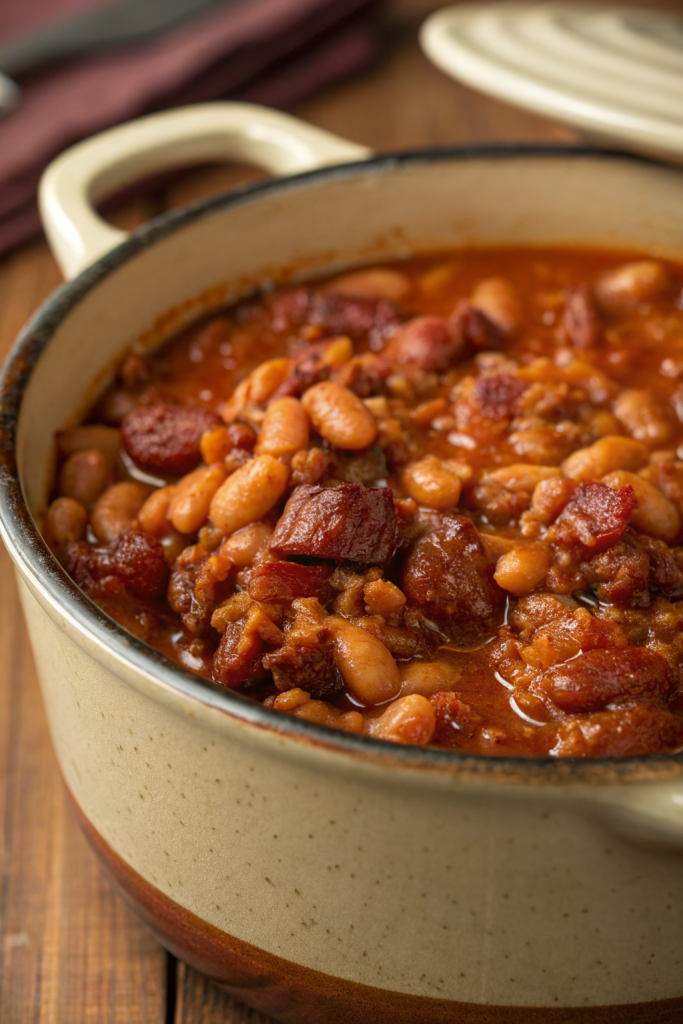
Barbecue Beans Recipe hits that perfect sweet, smoky, and slightly spicy spot, comes together in about 1 hour, and works for anyone who wants a hearty side that can almost pass as a main. It suits busy weeknights, potlucks, cookouts, or that “I need something cozy and saucy” mood. I have cooked some version of these beans for so many backyard parties that my friends now judge all other beans against this bowl.
Why Make This Barbecue Beans Recipe at Home
Homemade barbecue beans taste richer, smokier, and more customizable than anything from a can. You control the sweetness, the spice level, and the texture, so the beans fit your taste instead of the other way around.
You also stretch your budget, use pantry staples, and avoid mystery ingredients. The recipe works with canned beans, so you skip long soaking times and still get that slow-cooked flavor.
“These barbecue beans taste like they simmered all afternoon on a smoker, but they come together in my regular kitchen and vanish from the table every time. ★★★★★”
Ingredients You Need
Beans
- 3 cans (15 ounces each) canned beans, drained and rinsed
- Use a mix for best texture: 1 can pinto, 1 can kidney, 1 can black or navy.
- You can use all one type if that is what you have in the pantry.
Aromatics and Flavor Base
- 1 tablespoon neutral oil (canola, avocado, or vegetable)
- 1 medium yellow onion, finely diced
- 1 small green bell pepper, finely diced
- 2 cloves garlic, minced
- 1 small jalapeño, minced, seeds removed for mild heat
- Skip jalapeño for kids or use a pinch of chili flakes instead.
Smoky Sauce
- 1 cup barbecue sauce
- Use a thick, smoky style you like; I often reach for Sweet Baby Ray’s or Stubb’s.
- 1 cup tomato sauce or crushed tomatoes
- 1 tablespoon tomato paste
- 2 tablespoons yellow mustard or Dijon mustard
- 3 tablespoons brown sugar, packed
- Use light brown sugar for milder molasses flavor or dark for deeper flavor.
- 2 tablespoons molasses
- Use maple syrup if you do not keep molasses in the pantry.
- 2 tablespoons apple cider vinegar
- 1 teaspoon Worcestershire sauce
- Use a vegan brand if you cook for vegetarians.
- 1 teaspoon smoked paprika
- 1 teaspoon chili powder
- 1 teaspoon ground cumin
- 1 teaspoon kosher salt, plus more to taste
- ½ teaspoon black pepper
- ½ teaspoon onion powder
- ¼ to ½ teaspoon cayenne pepper, to taste
Optional Meaty Add‑Ins
- 4 slices thick-cut bacon, chopped
- Use turkey bacon if you prefer, or skip for a vegetarian version.
- ½ cup cooked chopped smoked sausage or leftover pulled pork
- Stir this in near the end so it stays tender.
Liquid
- ½ to 1 cup low sodium chicken broth or vegetable broth
- Start with ½ cup and add more if the beans look too thick while they simmer.
Equipment
- Large heavy pot or Dutch oven
- Cutting board and sharp knife
- Wooden spoon or heat-safe spatula
- Measuring cups and spoons
- Can opener
- Optional: oven-safe baking dish if you want to finish the beans in the oven
Tips & Mistakes
- Stir the aromatics until they soften and lightly brown, so they add sweetness instead of sharp onion bite.
- Taste the barbecue sauce before you add it, since very sweet sauce needs less sugar in the recipe.
- Start with less cayenne and add more at the end, so you avoid fire-alarm heat.
- Keep the simmer gentle; a hard boil can split the beans and turn them mushy.
- Add broth a little at a time, so the beans stay thick and saucy instead of soupy.
- Scrape the bottom of the pot often, since the sugars in the sauce can stick and burn if you walk away.
- Add salty ingredients like bacon first, then salt at the end, so you do not oversalt the pot.
- Let the beans rest 10 minutes before serving, so the sauce thickens and clings to every bean.
How to Make Barbecue Beans Recipe
Step 1: Prep the Ingredients
Open the cans of beans, drain them, and rinse them under cool water. Dice the onion and green pepper, mince the garlic and jalapeño, and chop the bacon if you use it. Measure all spices and liquids so the cooking flows smoothly.
Step 2: Cook the Bacon and Aromatics
Place the pot over medium heat and add the chopped bacon. Cook until the bacon turns crisp and renders its fat, about 5 to 7 minutes, then scoop the bacon onto a plate and leave 1 tablespoon of fat in the pot. Add oil if you skipped bacon, then add onion and green pepper and cook until they soften and start to brown at the edges, about 5 to 8 minutes.
Add the garlic and jalapeño to the pot and stir for 30 to 60 seconds, just until they smell fragrant. Scrape up any browned bits from the bottom, since they add flavor. Keep the heat at medium so nothing scorches.
Step 3: Build the Sauce
Add the tomato paste and stir it into the vegetables for about 1 minute, so it darkens slightly and tastes richer. Pour in the barbecue sauce, tomato sauce, mustard, brown sugar, molasses, apple cider vinegar, and Worcestershire sauce. Stir until everything blends into a thick, glossy sauce.
Sprinkle in smoked paprika, chili powder, cumin, onion powder, cayenne, salt, and black pepper. Stir again and taste a small spoonful, keeping in mind the flavors will deepen as the beans simmer. Adjust sweetness or tang now by adding a little more sugar or vinegar if you want.
Step 4: Add Beans and Simmer
Tip the drained beans into the pot and stir until the sauce coats them. Add ½ cup broth and bring the mixture to a gentle simmer over medium heat. Once it bubbles, lower the heat to medium low so the beans simmer quietly.
Let the beans cook uncovered for 25 to 35 minutes, stirring every few minutes. Add more broth in small splashes if the sauce thickens too much before the beans soak up the flavor. Taste and adjust salt, pepper, or heat level near the end.
Step 5: Optional Oven Finish
Heat the oven to 350°F if you want that baked top and deeper flavor. Transfer the beans to an oven-safe dish or keep them in an oven-safe Dutch oven. Stir the cooked bacon and any cooked sausage or pulled pork into the beans.
Bake for 20 to 30 minutes until the edges bubble and the top looks slightly caramelized. Stir once halfway through if you want a more even texture, or leave the top undisturbed for more browned bits. Let the beans rest 10 minutes after you pull them from the oven.
Step 6: Final Taste and Texture Check
Stir the beans and check the thickness of the sauce. If it looks too thick, splash in a little broth and warm it for a couple of minutes. If it looks too loose, simmer on the stove over medium low heat until it thickens.
Taste again and adjust seasoning. Add a pinch of sugar for more sweetness, a splash of vinegar for more tang, or a sprinkle of cayenne for extra kick. Top with the crisp bacon pieces if you held them back for garnish.
Variations I've Tried
I swap in all black beans and add a spoonful of chipotle in adobo for a smoky, slightly spicy version that works great with grilled chicken. I use all navy beans, skip the meat, and add a splash of soy sauce for a vegetarian version with deep savory flavor. I stir in small diced sweet potato during the simmer for a hearty, almost stew-like bowl that feels perfect on cold nights.
I also tried a maple and mustard twist with maple syrup instead of molasses and extra Dijon, which gave the beans a brighter, breakfast-friendly vibe. Sometimes I toss in leftover chopped brisket or rotisserie chicken during the last 10 minutes, which turns the side dish into a full meal with almost no extra effort.
How to Serve Barbecue Beans Recipe
Serve this Barbecue Beans Recipe hot in a wide bowl so the sauce has room to shine and thicken slightly as it cools. Spoon it next to grilled chicken, burgers, hot dogs, or roasted vegetables, or pile it on toast or baked potatoes for a filling lunch. Kids often like it with a side of cornbread or simple buttered rice.
You can also use the beans as a hearty filling in tortillas with shredded cheese, avocado, and crunchy slaw. I sometimes top a bowl with chopped green onion or a dollop of plain Greek yogurt to balance the richness.
How to store
- Cool the barbecue beans to room temperature, then store them in an airtight container in the fridge for 4 to 5 days.
- Freeze portions in freezer-safe containers or bags for up to 3 months, leaving a little space at the top for expansion.
- Thaw frozen beans overnight in the fridge or gently in a covered container in the microwave on low power.
- Reheat on the stove over medium low heat with a splash of broth or water, or warm in the microwave in short bursts, stirring often so the beans heat evenly and the sauce stays silky.
Leave a Reply