
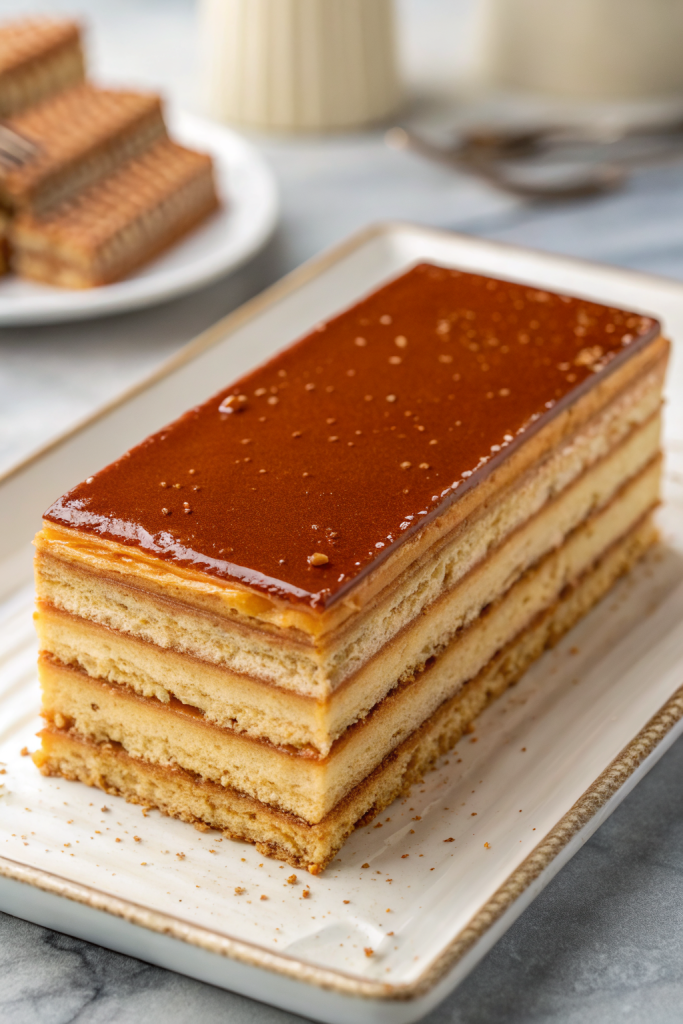
Apple Mille Feuille with Vanilla Custard Recipe tastes like a cross between a flaky apple pie and a fancy French bakery dessert, with crisp layers and silky custard in every bite. It works well for anyone who wants a showstopper dessert in about 2 hours total, including chilling and baking time. I first baked this for a tiny dinner party in my small apartment kitchen, and my friends still ask about “that apple thing with all the layers.”
Why Make This Apple Mille Feuille with Vanilla Custard Recipe at Home
Homemade apple mille feuille with vanilla custard tastes fresher and lighter than most bakery versions. You control the sweetness, the spice level, and how generous you feel with the custard.
You also save money, since a single slice at a patisserie often costs as much as a whole tray at home. The recipe looks fancy, but the method stays very doable if you follow each step.
“This Apple Mille Feuille with Vanilla Custard Recipe tastes like a French pastry chef moved into my kitchen and decided to spoil me. ★★★★★”
Ingredients You Need
Puff pastry and apples
- 2 sheets all-butter puff pastry, thawed but still cold
- Use store-bought puff pastry from the freezer section.
- Choose an all-butter brand if possible, since it puffs higher and tastes richer.
- 3 medium apples, firm and crisp
- Honeycrisp, Pink Lady, or Granny Smith work well.
- Mix varieties for more flavor.
- 2 tablespoons granulated sugar
- 1 tablespoon light brown sugar, packed
- 1 teaspoon ground cinnamon
- 1 pinch ground nutmeg
- 1 teaspoon lemon juice
- 1 teaspoon cornstarch or all-purpose flour, to lightly coat the apples
- 1 egg, beaten with 1 tablespoon milk, for egg wash
- 1 to 2 tablespoons powdered sugar, for dusting the top
Vanilla custard (crème pâtissière)
- 2 cups whole milk
- 1 vanilla bean, split and scraped
- Or 2 teaspoons pure vanilla extract, not imitation.
- 5 large egg yolks
- 1/2 cup granulated sugar
- 3 tablespoons cornstarch
- 1 tablespoon unsalted butter
- 1 pinch fine sea salt
Optional finishing touches
- 1 to 2 tablespoons apricot jam or apple jelly, warmed and strained, for a light glaze
- Extra thin apple slices or apple matchsticks, for garnish on top
- A tiny pinch of flaky sea salt on top, if you like a sweet-salty contrast
Equipment list
- Rimmed baking sheet
- Parchment paper
- Rolling pin
- Fork for docking pastry
- Sharp knife or pizza cutter
- Medium saucepan
- Whisk
- Heatproof bowl
- Fine mesh strainer (nice to have, but not required)
- Plastic wrap
- Offset spatula or regular spatula
- Serrated knife for slicing the finished mille feuille
- Cooling rack
Tips & Mistakes
- Chill puff pastry well before baking, or the layers slump instead of puffing.
- Dock the pastry all over with a fork, or it balloons in random spots and bakes unevenly.
- Weigh the pastry with another pan or parchment plus a second baking sheet, so the layers bake flat and crisp.
- Slice apples thin and even, or they cook at different speeds and some stay crunchy.
- Toss apple slices with lemon juice right away, or they brown and look tired.
- Cook custard over medium heat and whisk constantly, or it scorches and turns lumpy.
- Strain the custard while warm, or you chase tiny lumps later with a spoon.
- Press plastic wrap directly on the custard surface, or a skin forms and ruins the silky texture.
- Cool pastry layers fully before assembly, or the heat melts the custard and the layers slide.
- Use a serrated knife and gentle sawing motions to slice, or you crush the layers and squeeze out the filling.
How to Make Apple Mille Feuille with Vanilla Custard Recipe
Step 1: Prepare the vanilla custard
-
Pour the milk into a medium saucepan.
-
Add the split vanilla bean and scraped seeds, or add vanilla extract later off the heat.
-
Heat the milk until it steams and tiny bubbles form around the edges, then turn off the heat.
-
Let the vanilla steep while you mix the yolks.
-
In a heatproof bowl, whisk egg yolks, sugar, cornstarch, and salt until the mixture looks pale and thick.
-
Slowly pour about half the warm milk into the yolk mixture while you whisk constantly.
-
Whisk until smooth, then pour the mixture back into the saucepan with the remaining milk.
-
Place the pan over medium heat and whisk without stopping.
-
As the custard heats, it thickens and starts to bubble.
-
Keep whisking for about 1 minute after the first bubble, so the cornstarch cooks fully.
-
Remove the pan from the heat, then whisk in the butter and vanilla extract if you use extract.
-
Pull out the vanilla bean pod if you used one.
-
Strain the custard through a fine mesh strainer into a clean bowl if you want extra smooth texture.
-
Press plastic wrap directly on the surface of the custard.
-
Chill in the fridge until cold and thick, at least 1 hour.
-
Stir the custard before assembly so it loosens slightly and spreads easily.
Step 2: Bake the puff pastry layers
-
Preheat the oven to 400°F (200°C).
-
Line a rimmed baking sheet with parchment paper.
-
Place one sheet of puff pastry on a lightly floured surface.
-
Roll it into a rectangle about 1/8 inch thick, roughly 10 by 12 inches.
-
Transfer the pastry to the lined baking sheet.
-
Dock the pastry all over with a fork, right up to the edges.
-
Place another sheet of parchment on top, then set a second baking sheet on top to weigh it down.
-
Bake for 15 to 18 minutes until the pastry looks golden at the edges.
-
Remove the top pan and parchment.
-
Bake another 3 to 5 minutes so the top turns a deeper golden color and the pastry crisps.
-
Move the pastry to a cooling rack and cool completely.
-
Repeat with the second sheet of puff pastry.
-
When both sheets cool, trim the edges with a sharp knife so they match in size and look neat.
-
Cut each sheet into equal rectangles or strips, depending on how you plan to stack.
-
A simple option uses three equal rectangles stacked into one long mille feuille.
-
Keep the baked pastry pieces on a rack until you assemble.
Step 3: Cook the apples
-
Peel the apples if you prefer a softer texture, or leave the peel for more color.
-
Core the apples and slice them thinly, about 1/8 inch thick.
-
Place the slices in a bowl and toss with lemon juice.
-
Sprinkle in granulated sugar, brown sugar, cinnamon, nutmeg, and cornstarch or flour.
-
Toss until the apples look evenly coated.
-
Heat a large skillet over medium heat.
-
Add a small knob of butter if you like, then add the apples.
-
Cook, stirring often, until the apples soften but still hold their shape, about 6 to 8 minutes.
-
Taste and adjust sugar or cinnamon if needed.
-
Spread the apples on a plate or tray in a single layer so they cool quickly.
-
Let them cool to room temperature before assembly.
-
If the apples release a lot of liquid, drain off extra juices so they do not soak the pastry.
Step 4: Assemble the layers
-
Place one pastry rectangle on a serving board or platter.
-
Whisk or stir the chilled vanilla custard until smooth.
-
Spoon custard into a piping bag or use a zip-top bag with the corner snipped off.
-
Pipe or spread an even layer of custard over the pastry, leaving a tiny border at the edges.
-
Arrange a layer of cooled apple slices over the custard.
-
Keep the layer even and avoid big mounds so the top layers sit flat.
-
Place a second pastry rectangle on top and press gently so it settles.
-
Repeat with another layer of custard and apples.
-
Finish with a final pastry layer on top.
-
Chill the assembled mille feuille for at least 30 to 45 minutes so it firms up.
-
Just before serving, dust the top with powdered sugar.
-
If you like, brush a thin layer of warmed apricot jam or apple jelly over the top pastry for shine.
Step 5: Slice and serve clean pieces
-
Use a sharp serrated knife for slicing.
-
Chill the mille feuille well before you cut, since cold layers hold shape better.
-
Saw gently through the top pastry instead of pressing straight down.
-
Wipe the knife between cuts for neat edges.
-
Cut into rectangles or squares, depending on your serving style.
-
Add a few fresh apple matchsticks or a tiny pinch of flaky salt on top of each slice if you like.
-
Serve right away while the pastry still tastes crisp.
-
Store leftovers in the fridge as soon as the dessert cools back down.
Variations I've Tried
- Salted caramel drizzle: Drizzle warm salted caramel sauce over each slice just before serving, which adds a deeper flavor and pairs nicely with the apples.
- Spiced apple version: Add a pinch of cardamom and a tiny bit of ground clove to the apple mixture for a cozy fall flavor.
- Maple custard twist: Swap part of the sugar in the custard with pure maple syrup and reduce the milk slightly, which gives a subtle maple note.
- Nut crunch layer: Sprinkle toasted chopped pecans or walnuts over the custard layers for texture, but keep the pieces small so the layers still stack neatly.
- Lighter custard: Fold a bit of lightly whipped cream into the cooled custard to make a lighter, mousse-like filling, then chill well before assembly.
How to Serve Apple Mille Feuille with Vanilla Custard Recipe
Serve apple mille feuille with vanilla custard chilled or slightly cool, not straight from the fridge ice cold. The flavors open up more when the custard softens just a bit. Add a spoonful of softly whipped cream or a scoop of vanilla or cinnamon ice cream on the side. Pair it with hot coffee, black tea, or spiced chai for a cozy dessert plate that feels bakery-level without leaving your kitchen.
How to store
- Fridge: Cover the apple mille feuille loosely with plastic wrap or place it in an airtight container and store in the fridge for up to 2 days.
- Freezer: Freeze individual slices on a tray until firm, then wrap each slice tightly and keep in a freezer bag for up to 1 month; expect slightly softer pastry after thawing.
- Thawing: Thaw frozen slices in the fridge for several hours or overnight, then let them sit at room temperature for 10 to 15 minutes before serving.
- Reheating: Keep this dessert chilled rather than hot; if you want a hint of warmth, let a slice sit at room temperature a bit longer, since direct oven or microwave heat softens the puff pastry too much.
Leave a Reply