
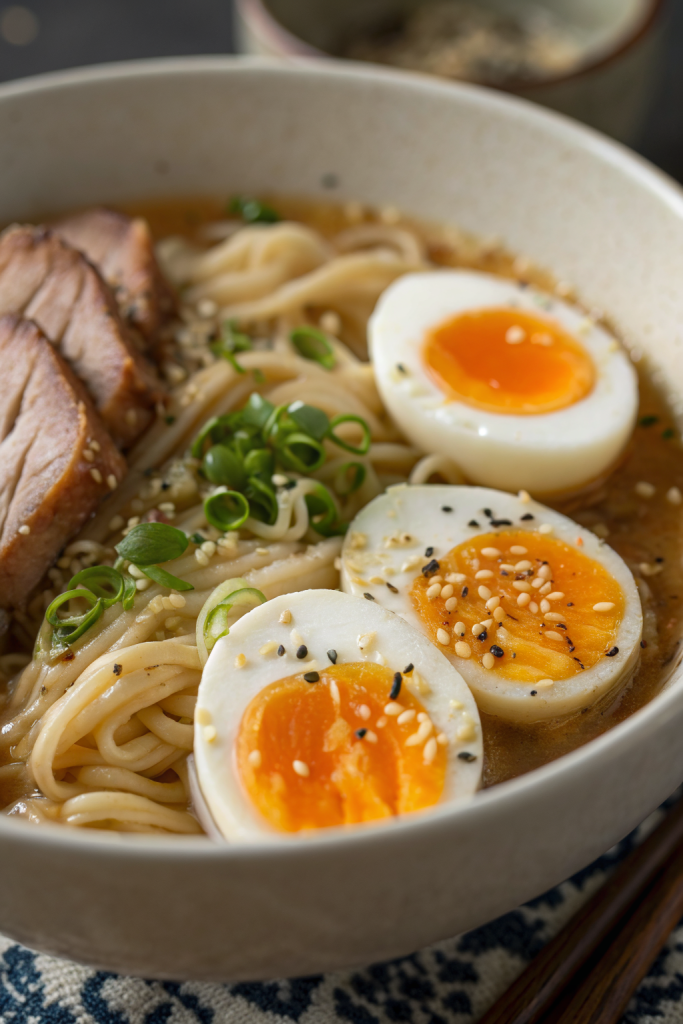
Ajitama Japanese Ramen Egg Recipe tastes rich, savory, and slightly sweet with a jammy yolk that feels like ramen-shop magic at home. It works perfectly for busy home cooks who want a restaurant-level topping in about 30 minutes of active time plus an easy overnight soak. I still remember the first time I nailed that custardy center and did a tiny victory dance in my kitchen.
Why Ajitama Japanese Ramen Egg Recipe Is Worth It
These marinated ramen eggs turn a simple bowl of noodles into something that tastes like you ordered it from a tiny Tokyo ramen counter. The whites soak up soy, mirin, and aromatics, while the yolks stay golden and creamy.
You can prep a batch in advance and keep them ready for quick meals all week. They work in ramen, rice bowls, salads, or as a salty little snack straight from the fridge.
“This Ajitama Japanese Ramen Egg Recipe tastes like a ramen shop secret that somehow snuck into my home kitchen ★★★★★”
Ingredients You Need
Eggs
- 6 large eggs, fridge cold
- Extra eggs if you want backups in case one cracks
Marinade
- 1 cup low sodium soy sauce
- Use Japanese-style soy if possible for classic flavor.
- 1 cup water
- This lightens the salt level and keeps the eggs balanced.
- 1⁄2 cup mirin
- If you cannot find mirin, use 1⁄3 cup sake plus 1 tablespoon sugar, or 1⁄3 cup apple juice plus 1 tablespoon sugar as a pantry shortcut.
- 2 tablespoons sugar
- Brown sugar adds a deeper caramel note, white sugar tastes cleaner.
- 1 tablespoon rice vinegar
- Adds gentle brightness and keeps the flavor from tasting flat.
- 2 cloves garlic, lightly crushed
- 1 small knob ginger, sliced
- 1 piece kombu (about 2 by 3 inches), optional but highly recommended
- Skip kombu if you need a pantry-only version and increase soy sauce by 1 tablespoon.
Optional flavor boosters
- 1 teaspoon toasted sesame oil for a nutty finish
- 1 teaspoon chili flakes or a small dried chili for gentle heat
- 1 scallion, cut into 2 inch pieces
Equipment
- Medium pot for boiling eggs
- Slotted spoon or spider strainer
- Medium bowl with ice water for shocking eggs
- Small pot or saucepan for marinade
- Measuring cups and spoons
- Zip-top bag or narrow container for marinating
- Timer
- Small pin or thumbtack if you like to poke egg shells to reduce cracking
Quick Tips & substitutions
- Use fridge cold eggs to keep the yolks centered and jammy.
- Set a timer the second the eggs hit the boiling water so you hit your perfect texture.
- Aim for 6 to 7 minutes of boiling for a jammy yolk and 8 minutes for a slightly firmer center.
- Stir the eggs gently in the first 30 seconds of boiling so the yolks stay centered.
- Shock the eggs in ice water right away so they stop cooking and peel easier.
- Peel under running water if the shells stick and drive you slightly wild.
- Swap low sodium tamari for soy sauce if you want a gluten free version.
- Use maple syrup or honey instead of sugar if you prefer unrefined sweeteners.
- Skip kombu and ginger if you do not have them and just increase garlic for a simpler marinade.
- Use a zip-top bag set in a bowl so the marinade fully covers the eggs without using extra liquid.
How to Make Ajitama Japanese Ramen Egg Recipe
Step 1: Mix the marinade
Add soy sauce, water, mirin, sugar, and rice vinegar to a small pot. Toss in garlic, ginger, kombu, and any optional chili or scallion. Bring the mixture to a gentle simmer over medium heat and stir until the sugar dissolves.
Turn off the heat and let the marinade cool to room temperature. Remove the kombu once the liquid cools so it does not turn slimy or too strong. Add sesame oil at the end if you like a toasty aroma.
Step 2: Boil the eggs
Fill a medium pot with enough water to cover the eggs by about 1 inch. Bring the water to a rolling boil over medium high heat. Lower the heat slightly so the boil stays steady but not aggressive.
Gently lower the cold eggs into the water with a slotted spoon. Start a timer right away. Stir the eggs gently for the first 30 seconds so the yolks stay centered.
Boil 6 minutes for a very soft, jammy yolk, 7 minutes for a slightly firmer but still runny center, or 8 minutes if you like a custardy but not runny yolk. Adjust by 30 seconds either way based on your stove and pot. Aim for consistency so you learn your perfect timing.
Step 3: Shock and peel
Prepare a large bowl with ice water while the eggs cook. When the timer goes off, move the eggs straight into the ice bath. Let them cool at least 10 minutes so the shells release more easily.
Crack the shells gently all over on the counter. Peel under cool running water and start from the wider end where the air pocket sits. Take your time so you keep the whites smooth and pretty for that classic Ajitama look.
Step 4: Marinate the eggs
Place the peeled eggs in a zip-top bag or a narrow container. Pour the cooled marinade over the eggs so they sit fully covered. Press out extra air from the bag so the liquid hugs every egg.
Chill in the fridge at least 4 hours, though overnight gives deeper flavor and color. Rotate the bag once or twice if some eggs peek out of the liquid. Taste one at 12 hours to check salt level and pull them out when the flavor hits your sweet spot.
Step 5: Serve
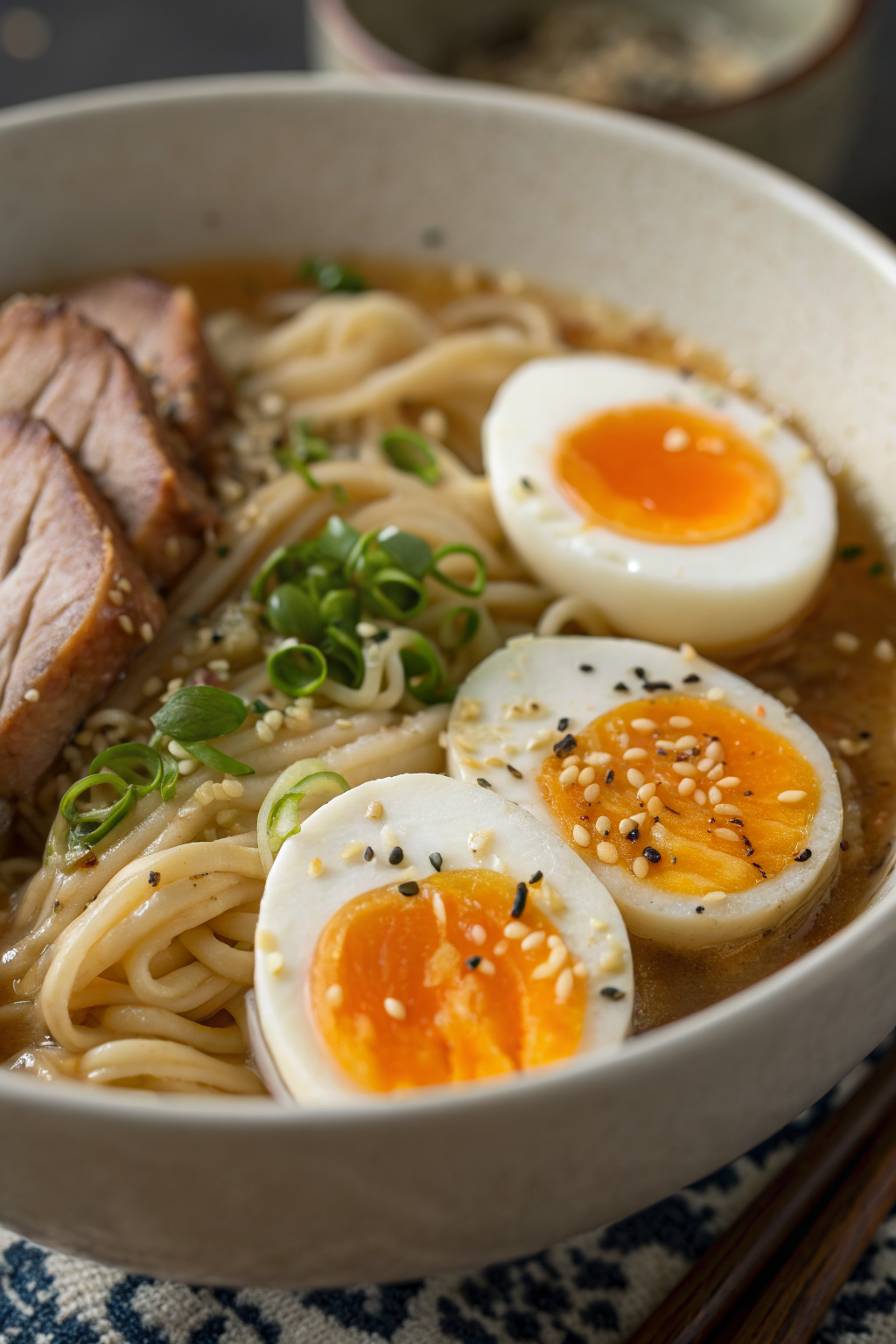
Slice the Ajitama eggs in half with a sharp, damp knife for clean cuts. Lay them on top of hot ramen, rice bowls, or salads. Spoon a little extra marinade over the top if you want stronger flavor.
Keep any leftover marinade in the fridge and use it as a seasoning for stir fries or as a base for dipping sauce. I often drizzle a spoonful over steamed veggies and call it a win. Enjoy the eggs chilled or at room temperature for the best texture.
Recipe Variations
- Gluten free: Use tamari or certified gluten free soy sauce and check your mirin label.
- Low carb: Reduce or skip the sugar and mirin, then sweeten lightly with a keto friendly sweetener.
- Mild flavor: Add more water to the marinade and shorten the marinating time to 4 to 6 hours.
- Extra rich: Add 1 tablespoon of bonito flakes to the warm marinade, then strain after 10 minutes.
- Spicy: Add chili oil, fresh sliced chili, or extra chili flakes to the marinade.
- Vegan style: Use soft tofu cubes or firm tofu slices instead of eggs and marinate them the same way.
Ways to Serve Ajitama Japanese Ramen Egg Recipe
- Classic topping for tonkotsu, shoyu, miso, or shio ramen.
- Over hot steamed rice with scallions and a drizzle of leftover marinade.
- Sliced on avocado toast for a Japanese style breakfast.
- On top of cold soba or udon noodles with cucumbers and sesame seeds.
- As a protein snack in bento boxes with pickles and veggies.
- Halved on salads in place of regular boiled eggs.
Storage Success
Store Ajitama Japanese ramen eggs in an airtight container in the fridge. Keep them in a bit of marinade so they stay flavorful and moist. Use them within 3 to 4 days for the best texture and taste.
If the flavor tastes too strong after a long soak, move the eggs to plain water for an hour to soften the saltiness. Do not freeze these eggs because the whites turn rubbery and unpleasant. Enjoy them cold or let them sit at room temperature for 10 minutes before serving so the yolks taste creamier.
Ajitama Japanese Ramen Egg Recipe
Ingredients
Instructions
- Add soy sauce, water, mirin, sugar, and rice vinegar to a small pot. Add the garlic, ginger, kombu, and any optional chili or scallion.
- Bring to a gentle simmer over medium heat, stirring until the sugar dissolves. Turn off the heat and let the marinade cool to room temperature.
- Remove the kombu once the liquid has cooled, then stir in the toasted sesame oil if using.
- Fill a medium pot with enough water to cover the eggs by about 1 inch and bring it to a rolling boil over medium-high heat.
- Lower the heat slightly to keep a steady but not aggressive boil. Gently lower the cold eggs into the water with a slotted spoon and start a timer immediately.
- Stir the eggs gently for the first 30 seconds to help keep the yolks centered, then boil for 6 to 7 minutes for jammy yolks or up to 8 minutes for a slightly firmer center.
- While the eggs cook, prepare a large bowl of ice water.
- When the timer goes off, transfer the eggs directly into the ice bath and let them cool for at least 10 minutes.
- Gently crack the shells all over and peel under cool running water, starting from the wider end where the air pocket is, keeping the whites as smooth as possible.
- Place the peeled eggs in a zip-top bag or narrow container.
- Pour the cooled marinade over the eggs so they are fully covered, pressing out excess air from the bag so the liquid surrounds each egg.
- Refrigerate for at least 4 hours, preferably overnight, rotating the bag once or twice if needed so all the eggs stay in contact with the marinade.
- Slice the marinated eggs in half with a sharp, damp knife for clean cuts.
- Serve on top of hot ramen, rice bowls, salads, or enjoy as a snack, spooning a little extra marinade over if you want a stronger flavor.
Notes
Approximate per egg (1 of 6): 110 calories; fat 7 g; saturated fat 2 g; carbohydrates 5 g; fiber 0 g; sugars 4 g; protein 7 g; sodium 780 mg. Values are estimates and will vary based on exact soy sauce, mirin, sugar, and marinating time.