
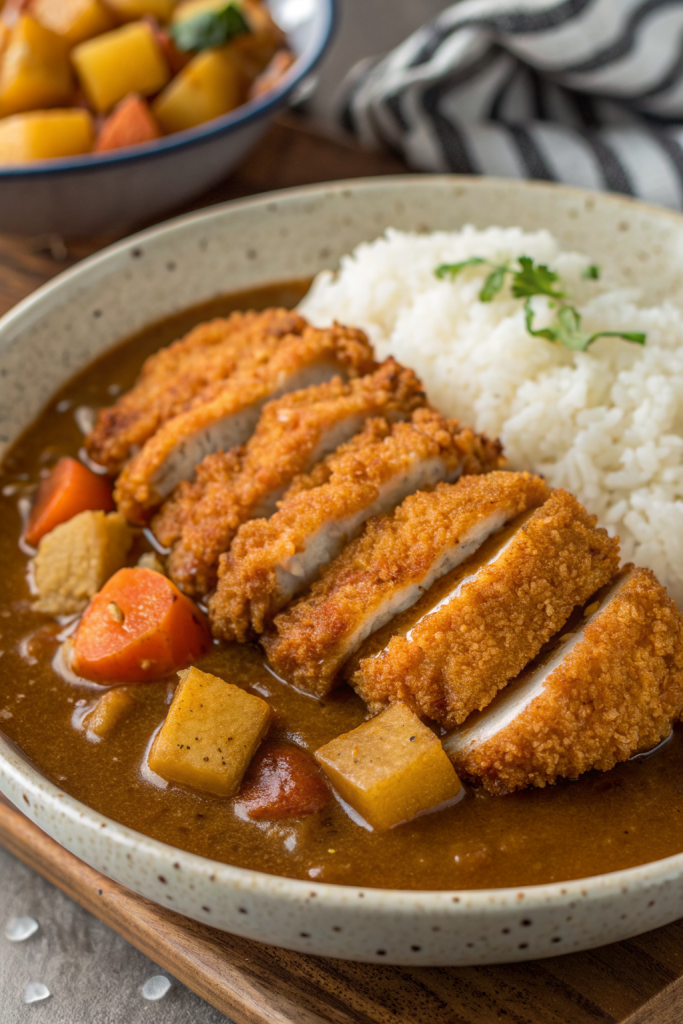
Chicken Katsu Curry Recipe tastes like the best cozy Japanese takeout in a bowl, with crunchy panko chicken, a rich, mildly spiced curry sauce, and fluffy rice soaking it all up. It works perfectly for busy weeknights or casual weekend dinners and usually takes about 45–55 minutes from start to finish. I first cooked this in a tiny apartment kitchen with one pan and a dream, so if I pulled it off there, you definitely can in your kitchen too.
Why Make This Chicken Katsu Curry Recipe at Home
You control everything at home, from how crispy the chicken gets to how thick and spicy the curry sauce turns out. You skip mystery ingredients and adjust salt, sweetness, and heat exactly how you like it.
You also save money compared to restaurant or delivery versions, especially if you cook for a family or like leftovers. Plus, your kitchen smells incredible, and that alone justifies the dishes.
This Chicken Katsu Curry Recipe tastes better than my favorite Japanese restaurant version and still feels easy enough for a weeknight ★★★★★
Ingredients You Need
Chicken katsu ingredients
- 2 large boneless, skinless chicken breasts
- 1 teaspoon kosher salt
- 1 teaspoon garlic powder
- 1 teaspoon onion powder
- ½ teaspoon ground black pepper
- ½ teaspoon smoked paprika or regular paprika
- ½ cup all purpose flour
- 2 large eggs, beaten
- 1 tablespoon milk or water, to loosen the eggs
- 1½ to 2 cups panko breadcrumbs
- Use Japanese panko if possible, it fries up extra light and crisp.
- Neutral oil for shallow frying
- Use canola, vegetable, peanut, or sunflower oil. Avoid olive oil here.
Curry sauce ingredients
- 2 tablespoons neutral oil or butter
- 1 large onion, thinly sliced
- 2 medium carrots, sliced into coins
- 2 cloves garlic, minced
- 1 tablespoon fresh ginger, minced or grated
- 2 tablespoons curry powder
- Use Japanese curry powder if you find it; S&B brand works great.
- 1 tablespoon garam masala or extra curry powder
- 2 tablespoons all purpose flour
- 2 cups low sodium chicken broth
- You can use vegetable broth if you cook for someone who avoids chicken stock in the sauce.
- 1 tablespoon soy sauce
- 1 tablespoon Worcestershire sauce
- 1 tablespoon ketchup
- 1 to 2 teaspoons sugar or honey, to taste
- ½ teaspoon kosher salt, plus more to taste
- Freshly ground black pepper, to taste
To serve
- Steamed short grain rice or jasmine rice
- Thinly sliced green onions or chives
- Pickled ginger or fukujinzuke (Japanese pickles), optional
- Toasted sesame seeds, optional
Pantry shortcuts and substitutions
- Use Japanese curry roux blocks instead of curry powder and flour if you want a shortcut. Just simmer them in the broth until they melt and thicken.
- Use pre sliced onions and pre cut carrots from the produce section if you want to save time.
- Swap chicken breasts for boneless chicken thighs if you prefer juicier meat. Adjust cook time slightly since thighs can take a minute or two longer.
- Use gluten free panko and a 1 to 1 gluten free flour blend if you cook for someone who avoids gluten.
Equipment list
- Large cutting board
- Sharp chef’s knife
- Meat mallet or rolling pin
- 3 shallow bowls for breading
- Large skillet or frying pan
- Medium saucepan for curry sauce
- Tongs or chopsticks for flipping chicken
- Wire rack set over a sheet pan or a plate lined with paper towels
- Small ladle or spoon for serving sauce
Tips & Mistakes
- Pound the chicken evenly so it cooks at the same rate and stays juicy.
- Pat the chicken dry before seasoning so the coating sticks better.
- Season every layer: chicken, flour, and panko, so the flavor runs through each bite.
- Press the panko firmly onto the chicken so it clings and forms a thick, crunchy crust.
- Heat the oil long enough; aim for about 340 to 350°F so the coating crisps instead of soaking up oil.
- Avoid crowding the pan; fry in batches so the oil temperature stays steady.
- Keep the curry sauce at a gentle simmer so it thickens slowly and stays smooth.
- Taste the sauce near the end and adjust salt, sugar, and curry powder to match your heat and sweetness preference.
- Slice the chicken just before serving so the crust stays crisp.
- Store the chicken and curry sauce separately so the coating does not soften too much.
How to Make Chicken Katsu Curry Recipe
Step 1: Prep and pound the chicken
Slice each chicken breast horizontally to make 2 thinner cutlets. Place each cutlet between two sheets of plastic wrap or parchment. Pound gently with a meat mallet or rolling pin until about ½ inch thick and even. Pat dry with paper towels.
Season both sides with salt, garlic powder, onion powder, pepper, and paprika. Set the chicken aside while you set up the breading station.
Step 2: Set up the breading station
Place flour in one shallow bowl. Beat eggs with milk or water in a second bowl. Pour panko into a third bowl and season it lightly with a pinch of salt and pepper.
Dredge each chicken cutlet in flour and shake off excess. Dip in egg mixture and let excess drip off. Press firmly into the panko on both sides until fully coated.
Step 3: Fry the chicken katsu
Heat about ¼ inch of neutral oil in a large skillet over medium to medium high heat. Test the oil by dropping in a breadcrumb; it should sizzle gently on contact. Add 1 or 2 cutlets at a time, depending on pan size.
Cook each side for about 3 to 4 minutes until the crust looks deep golden and the chicken cooks through. Move cooked cutlets to a wire rack or paper towel lined plate. Keep them warm in a low oven if you want.
Step 4: Start the curry base
While the chicken rests, heat oil or butter in a medium saucepan over medium heat. Add sliced onions and carrots. Cook, stirring often, until the onions turn soft and lightly browned at the edges and the carrots start to soften.
Add garlic and ginger and cook about 1 minute until fragrant. Stir constantly so they do not burn.
Step 5: Build the curry flavor
Sprinkle curry powder and garam masala over the vegetables. Stir well so the spices coat everything and toast for about 1 minute. This step deepens the flavor and wakes up the spices.
Sprinkle flour over the mixture and stir again until no dry spots remain. The flour will cling to the vegetables and form a thick paste.
Step 6: Add liquid and simmer
Slowly pour in the chicken broth while you whisk or stir. Add a little at a time so the sauce stays smooth and lump free. Add soy sauce, Worcestershire, ketchup, sugar or honey, salt, and pepper.
Bring the curry to a gentle simmer. Cook for 10 to 15 minutes, stirring occasionally, until the carrots turn tender and the sauce thickens to a gravy like consistency. If it thickens too much, add a splash of broth or water.
Step 7: Adjust and blend (optional)
Taste the curry sauce and adjust seasoning. Add more curry powder for stronger spice, more sugar for sweetness, or more soy sauce for depth.
If you prefer a smoother sauce, use an immersion blender and blend until mostly smooth. You can also blend half the sauce and mix it back in so you keep some texture.
Step 8: Slice the chicken and assemble
Slice each chicken katsu into strips with a sharp knife. Try not to saw back and forth too much so the crust stays intact.
Spoon hot rice into bowls or plates. Ladle curry sauce on one side of the rice. Lay sliced chicken katsu on top or just beside the curry so the crust stays crisp. Garnish with green onions, sesame seeds, or pickles if you like.
Variations I've Tried
I swap chicken breasts for boneless chicken thighs when I want extra juicy katsu with a slightly richer flavor. I also use pork loin cutlets sometimes and follow the same breading and frying method.
For a lighter option, I bake the breaded chicken on a wire rack over a sheet pan at high heat and spray the top lightly with oil. The crust still turns crisp, just not quite as shatteringly crunchy as shallow fried katsu.
I also cook a veggie version with breaded tofu or thick slices of eggplant and use vegetable broth in the curry sauce. Kids usually love a milder version, so I cut the curry powder in half and add a bit more ketchup and sugar for a sweeter, gentler flavor.
How to Serve Chicken Katsu Curry Recipe
Serve Chicken Katsu Curry Recipe in a wide bowl with a generous scoop of hot steamed rice, then spoon the curry sauce around the rice and top with sliced katsu. Keep the chicken slightly off the sauce if you want the crust to stay extra crisp. Add a simple side salad with a light sesame dressing or some steamed broccoli or green beans for color and freshness. Pickled ginger or Japanese pickles on the side cut through the richness and keep each bite interesting.
How to store
- Store leftover curry sauce and chicken katsu in separate airtight containers in the fridge for up to 3 days.
- Keep cooked rice in a sealed container in the fridge for up to 3 days; cool it quickly before you chill it.
- Freeze the curry sauce in freezer safe containers for up to 2 months; thaw it overnight in the fridge before reheating.
- Freeze cooked katsu cutlets on a tray, then move them to a freezer bag for up to 2 months; reheat from frozen in a hot oven or air fryer until hot and crisp.
- Reheat curry sauce gently in a saucepan over low to medium heat and add a splash of water or broth if it thickens too much.
- Reheat chicken katsu in a 375°F oven or air fryer until the coating turns crisp again and the center heats through; avoid the microwave since it softens the crust.
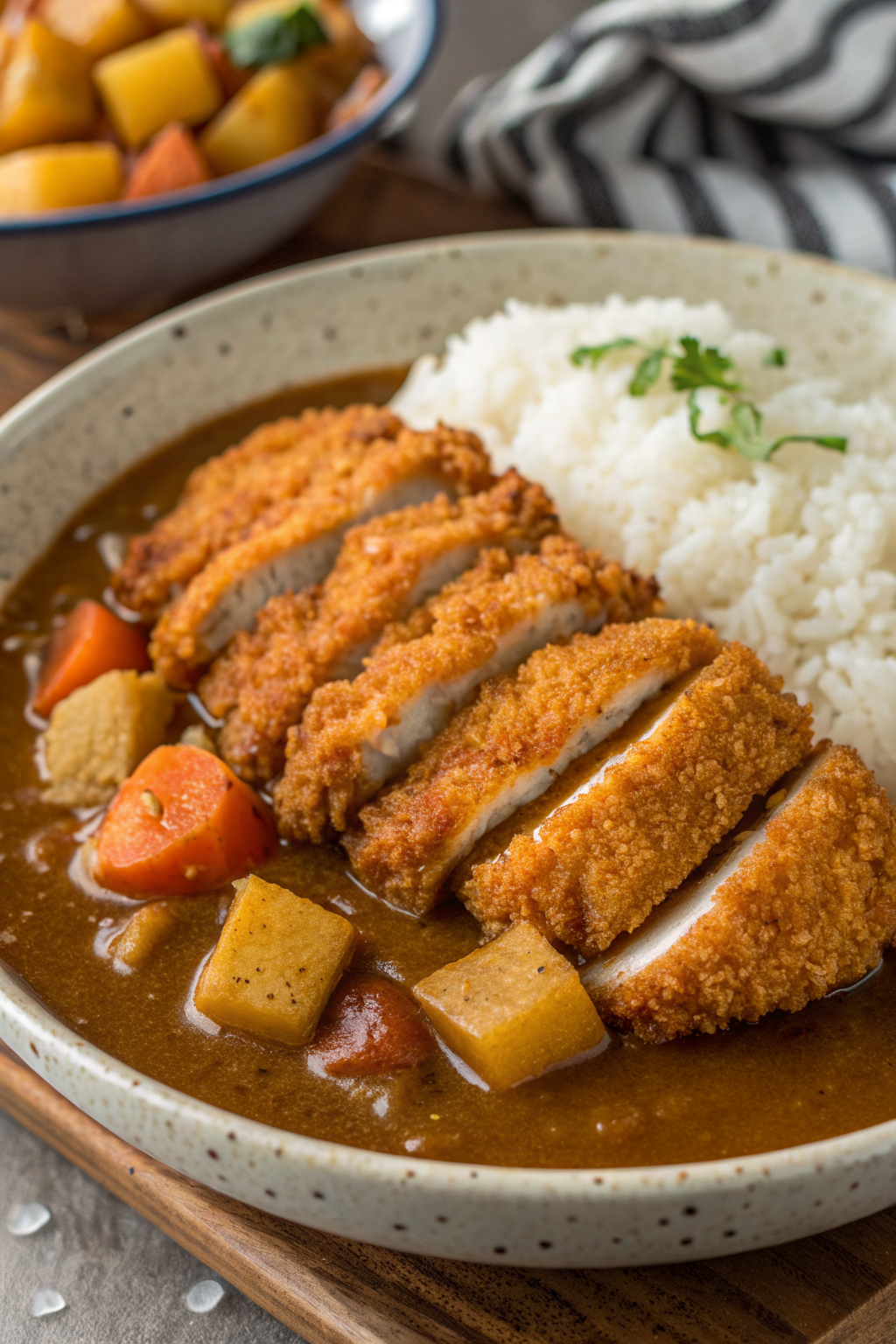
Chicken Katsu Curry Recipe
Ingredients
Instructions
- Slice each chicken breast horizontally to create 2 thinner cutlets. Place each cutlet between sheets of plastic wrap or parchment and pound gently to about 1/2 inch thickness. Pat dry with paper towels.
- Season both sides of the chicken with kosher salt, garlic powder, onion powder, ground black pepper, and paprika. Set aside.
- Set up a breading station with three shallow bowls: flour in one; beaten eggs mixed with milk or water in the second; and panko breadcrumbs in the third, lightly seasoned with a pinch of salt and pepper.
- Dredge each seasoned chicken cutlet in flour, shaking off any excess. Dip into the egg mixture, letting the excess drip off, then press firmly into the panko on both sides until fully coated.
- Heat about 1/4 inch of neutral oil in a large skillet over medium to medium-high heat. When a breadcrumb dropped in sizzles gently, add 1–2 cutlets, without crowding the pan.
- Fry each cutlet for about 3–4 minutes per side, until deep golden brown and cooked through. Transfer to a wire rack or paper towel–lined plate and keep warm while you make the curry sauce.
- In a medium saucepan, heat the neutral oil or butter over medium heat. Add the sliced onions and carrots and cook, stirring often, until the onions are soft and lightly browned at the edges and the carrots begin to soften.
- Add the minced garlic and ginger and cook for about 1 minute, stirring constantly, until fragrant.
- Sprinkle in the curry powder and garam masala, stirring to coat the vegetables, and toast the spices for about 1 minute.
- Sprinkle the flour over the mixture and stir until no dry spots remain and the vegetables are coated in a thick paste.
- Slowly pour in the chicken broth while whisking or stirring to avoid lumps. Add the soy sauce, Worcestershire sauce, ketchup, sugar or honey, salt, and black pepper.
- Bring the curry to a gentle simmer and cook for 10–15 minutes, stirring occasionally, until the carrots are tender and the sauce has thickened to a gravy-like consistency. Add a splash of broth or water if it becomes too thick.
- Taste and adjust the seasoning with more curry powder for stronger spice, more sugar for sweetness, or more soy sauce for depth. For a smoother sauce, blend with an immersion blender, or blend half and return it to the pan.
- Slice the cooked chicken katsu into strips with a sharp knife, taking care not to crush the crust.
- Spoon hot steamed rice into bowls or onto plates. Ladle the curry sauce around or beside the rice.
- Lay the sliced chicken katsu on top of or just beside the curry so the crust stays crisp. Garnish with green onions, sesame seeds, and pickles if desired, and serve immediately.
Notes
Approximate per serving (1 of 4, including rice): 760 calories; fat 33 g; saturated fat 8 g; carbohydrates 76 g; fiber 5 g; sugars 12 g; protein 37 g; sodium 1350 mg. Values are estimates and will vary based on brands, exact quantities, frying oil absorption, and portion size.