
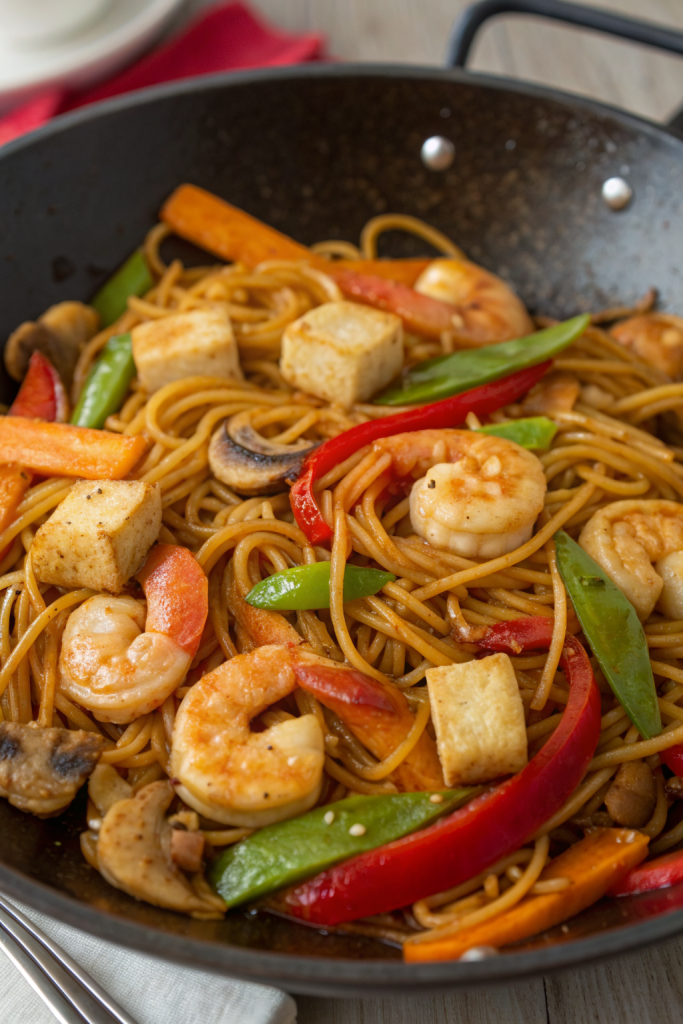
Yaki Udon with Shrimp Recipe hits that perfect sweet-salty-savory spot with bouncy noodles, juicy shrimp, and veggies in a glossy stir fry sauce. It works well for busy weeknights, date nights at home, or meal prep, and you can finish the whole thing in about 25 minutes. I first made this on a Tuesday when I refused to eat another sad salad, and it completely fixed my mood.
Why Make This Yaki Udon with Shrimp Recipe at Home
You control the sauce, the veggies, and the shrimp quality, so the noodles taste fresher than most takeout versions. The chewy udon soaks up the sauce, the shrimp stay tender, and you can adjust the spice level for picky kids or heat lovers.
You also save money and time, since the recipe uses pantry staples like soy sauce, oyster sauce, and frozen udon bricks. Cleanup stays easy because you cook everything in one large skillet or wok.
"This Yaki Udon with Shrimp Recipe tastes like restaurant stir fry but comes together faster than delivery ★★★★★"
Ingredients You Need
Udon and Shrimp
-
14 to 16 ounces fresh or frozen udon noodles
- Use frozen vacuum packed udon bricks if you can find them, since they turn out extra chewy.
- Shelf stable udon works too, but cook it slightly under the package time so the noodles stay firm in the pan.
-
1 pound large shrimp, peeled and deveined
- Tail on looks nice, tail off makes eating easier.
- Use 31 to 40 count shrimp for a good noodle to shrimp ratio.
Vegetables
Use what you have, but this combo works really well.
- 1 small yellow onion, thinly sliced
- 2 green onions, sliced, white and green parts separated
- 1 small carrot, cut into matchsticks or very thin slices
- 1 cup shredded green cabbage or coleslaw mix
- 1 small bell pepper, thinly sliced (red or orange adds nice color)
- 2 to 3 cloves garlic, minced
- 1 teaspoon grated fresh ginger or 1/4 teaspoon ground ginger
You can swap cabbage with napa cabbage or bok choy. Use bagged coleslaw mix as a shortcut when you feel tired or rushed.
Sauce
This sauce gives that classic yaki udon flavor: savory, slightly sweet, and a little smoky.
- 3 tablespoons soy sauce
- Use regular soy sauce or low sodium if you watch salt.
- 1 tablespoon dark soy sauce (optional but adds color and depth)
- 1 tablespoon oyster sauce
- 1 tablespoon mirin or 1 tablespoon rice vinegar plus 1 teaspoon sugar
- 1 tablespoon sugar or honey
- 1 teaspoon toasted sesame oil
- 1 to 2 teaspoons sriracha or chili paste, to taste
Taste the sauce before you cook and adjust the sweetness or saltiness to your preference. If you use a salty soy sauce brand, add a splash of water to balance it.
Shrimp Seasoning
- 1 tablespoon soy sauce
- 1 teaspoon cornstarch
- 1 teaspoon neutral oil (canola, avocado, or vegetable)
- Pinch of black pepper
This quick marinade keeps the shrimp juicy and helps the sauce cling to the noodles.
Cooking Oil and Garnishes
- 2 tablespoons neutral oil, divided
- 1 teaspoon butter (optional, adds richness)
- Toasted sesame seeds, for topping
- Extra sliced green onions, for topping
- Shichimi togarashi or crushed red pepper, optional for heat
Equipment
- Large nonstick skillet or wok
- Medium pot to loosen or cook udon
- Tongs or chopsticks for tossing noodles
- Small bowl and whisk for the sauce
- Cutting board and sharp knife
Tips & Mistakes
- Pre-mix the sauce in a bowl so you do not scramble to measure while the shrimp cooks.
- Pat the shrimp dry before seasoning so they sear instead of steaming.
- Do not overcook the udon; keep them slightly firm so they stay chewy in the pan.
- Rinse cooked udon quickly under warm water to loosen clumps, then drain well so the sauce does not thin out.
- Heat the pan until it smokes lightly before you add oil so the shrimp and veggies pick up a light char.
- Cook shrimp in a single layer and pull them as soon as they turn opaque to avoid rubbery texture.
- Do not crowd the pan with too many veggies; if you double the recipe, cook in two batches.
- Add the sauce near the end and toss quickly so the noodles coat evenly without turning soggy.
- Taste before serving and adjust with a splash of soy sauce, sugar, or chili for perfect balance.
- Keep everything you need within reach, since stir fry moves fast and waits for no one.
How to Make Yaki Udon with Shrimp Recipe
Step 1: Prep the Noodles
- If you use frozen udon bricks, place them in a pot of boiling water and loosen gently with chopsticks for 1 to 2 minutes.
- Once the noodles separate and soften, drain them and rinse briefly under warm water.
- Toss the noodles with a tiny drizzle of oil so they do not stick, then set them aside.
- If you use shelf stable udon, cook them 1 minute less than the package suggests, then drain and rinse.
Step 2: Mix the Sauce
- In a small bowl, combine soy sauce, dark soy sauce, oyster sauce, mirin, sugar, sesame oil, and sriracha.
- Whisk until the sugar dissolves and the sauce looks smooth.
- Taste and adjust sweetness, salt, or heat to match your preference.
- Set the bowl near the stove so you can grab it quickly.
Step 3: Season the Shrimp
- Place the peeled shrimp in a bowl and pat them dry with paper towels.
- Add soy sauce, cornstarch, oil, and black pepper, then toss until the shrimp coat evenly.
- Let the shrimp sit while you slice the vegetables so the seasoning sinks in.
Step 4: Stir Fry the Shrimp
- Heat 1 tablespoon of oil in a large skillet or wok over medium high heat until it shimmers.
- Add the shrimp in a single layer and cook 1 to 2 minutes per side until they turn pink and opaque.
- Transfer the shrimp to a plate and keep them near the stove.
Step 5: Cook the Vegetables
- In the same pan, add the remaining 1 tablespoon of oil and the butter if you use it.
- Add sliced onion, carrot, and bell pepper, then cook 3 to 4 minutes until they soften slightly but still keep some crunch.
- Add cabbage, garlic, ginger, and the white parts of the green onions, then stir fry 1 to 2 minutes until fragrant.
Step 6: Add Noodles and Sauce
- Add the cooked udon noodles to the pan with the vegetables.
- Pour the sauce over the noodles and toss with tongs or chopsticks until everything coats evenly.
- Let the noodles sit in the hot pan for 1 to 2 minutes so they pick up a bit of caramelization on the bottom.
Step 7: Finish With Shrimp and Garnishes
- Add the cooked shrimp back into the pan and toss gently until they warm through.
- Sprinkle in the green parts of the green onions and sesame seeds.
- Taste and adjust seasoning with a splash of soy sauce or a pinch of sugar if needed.
- Serve hot, topped with extra green onions and a pinch of shichimi togarashi if you like heat.
Variations I've Tried
I swap shrimp with thinly sliced chicken thighs or pork belly when I feel like a change, and the sauce still works perfectly. I also make a veggie version with tofu, mushrooms, extra cabbage, and edamame for protein. Sometimes I use a spicy version with extra chili paste and a drizzle of chili crisp on top for the heat lovers at my table.
How to Serve Yaki Udon with Shrimp Recipe
Serve Yaki Udon with Shrimp Recipe straight from the pan while the noodles stay hot and glossy. Add a side of cucumber salad, steamed edamame, or miso soup to round out the meal. Kids usually enjoy this with mild sauce and extra noodles, while adults can add chili flakes or hot sauce at the table. A cold glass of iced green tea or sparkling water with lemon pairs really well with the rich, savory flavors.
How to store
- Cool leftovers to room temperature within 1 hour, then place them in an airtight container.
- Store in the fridge for up to 3 days for best texture and flavor.
- Freeze portions in freezer safe containers or bags for up to 2 months, and press out extra air to prevent ice crystals.
- Reheat in a skillet over medium heat with a splash of water or broth, tossing until hot, or use the microwave in short bursts and stir between each round so the noodles heat evenly.
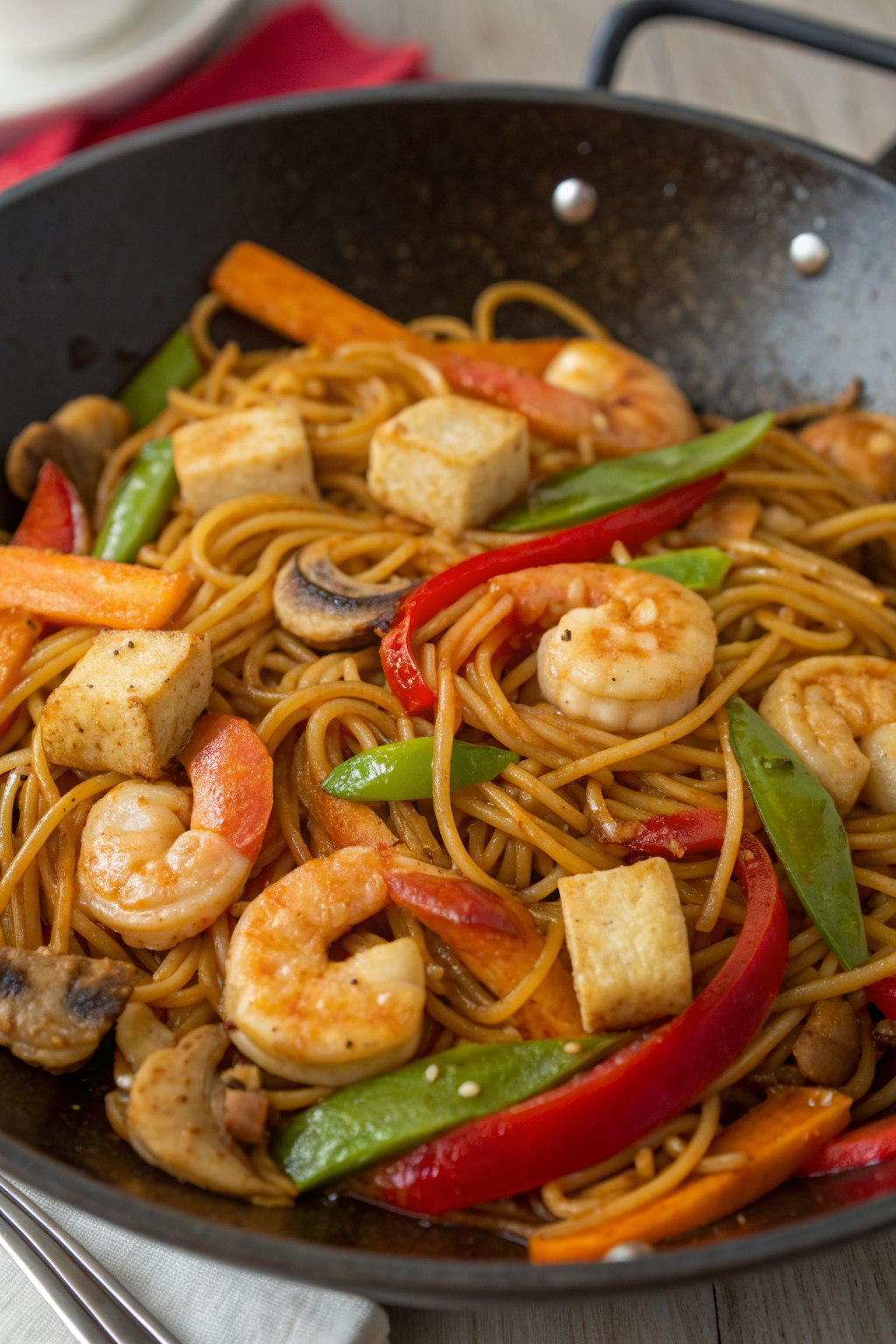
Yaki Udon with Shrimp Recipe
Ingredients
Instructions
- If using frozen udon bricks, place them in a pot of boiling water and gently loosen with chopsticks for 1 to 2 minutes until just softened.
- Drain and rinse briefly under warm water, then toss with a tiny drizzle of oil so they do not stick and set aside.
- If using shelf-stable udon, cook 1 minute less than the package suggests, then drain and rinse.
- In a small bowl, combine soy sauce, dark soy sauce, oyster sauce, mirin (or rice vinegar and sugar), sugar or honey, sesame oil, and sriracha or chili paste.
- Whisk until the sugar dissolves and the sauce is smooth, then taste and adjust sweetness, salt, or heat as desired. Set near the stove.
- Place the peeled shrimp in a bowl and pat dry with paper towels.
- Add soy sauce, cornstarch, neutral oil, and black pepper, then toss until the shrimp are evenly coated and let sit while you slice the vegetables.
- Heat 1 tablespoon of neutral oil in a large skillet or wok over medium-high heat until it shimmers.
- Add the shrimp in a single layer and cook 1 to 2 minutes per side until pink and opaque, then transfer to a plate and keep near the stove.
- In the same pan, add the remaining 1 tablespoon of oil and the butter, if using.
- Add sliced yellow onion, carrot, and bell pepper, and cook 3 to 4 minutes until slightly softened but still crisp.
- Add cabbage, garlic, ginger, and the white parts of the green onions, then stir fry 1 to 2 minutes until fragrant.
- Add the cooked udon noodles to the pan with the vegetables.
- Pour the sauce over the noodles and toss with tongs or chopsticks until everything is evenly coated.
- Let the noodles sit in the hot pan for 1 to 2 minutes so they pick up a bit of caramelization on the bottom.
- Add the cooked shrimp back into the pan and toss gently until warmed through.
- Sprinkle in the green parts of the green onions and toasted sesame seeds.
- Taste and adjust seasoning with a splash of soy sauce or a pinch of sugar if needed, then serve hot with optional shichimi togarashi or crushed red pepper.
Notes
Approximate per serving (1/4 of recipe): 520 calories; fat 16 g; saturated fat 3 g; carbohydrates 63 g; fiber 4 g; sugars 14 g; protein 29 g; sodium 1650 mg. Values are estimates and will vary based on specific brands, exact amounts, and portion size.
Leave a Reply