
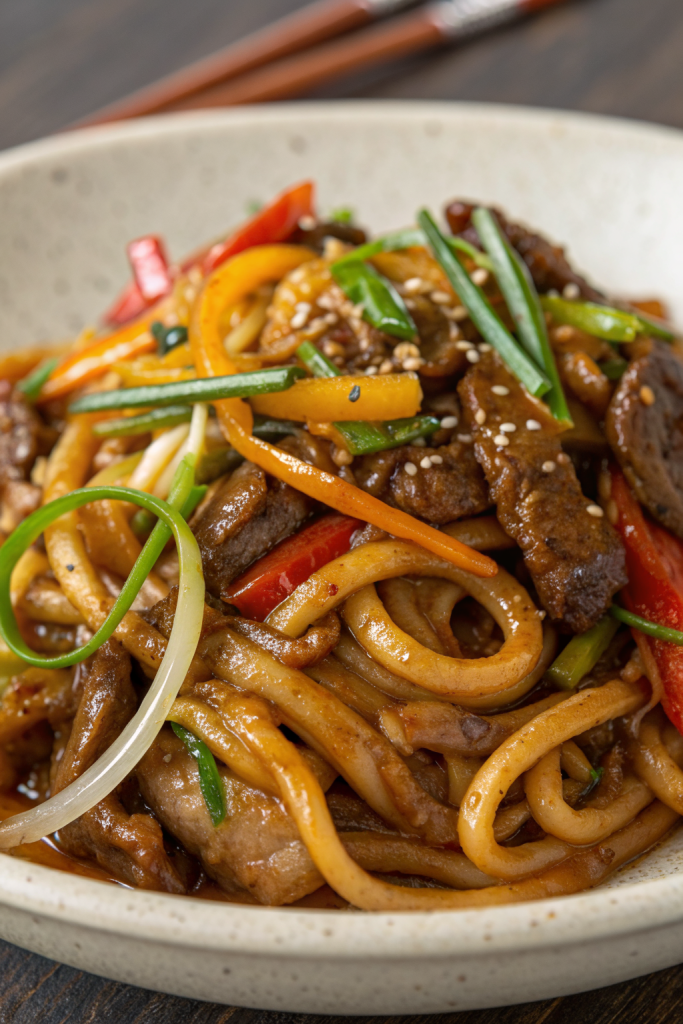
Beef Udon Noodles Recipe hits all the comfort food notes with chewy noodles, tender beef, and a rich, savory broth that tastes like a cozy hug in a bowl. It works perfectly for busy weeknights or lazy weekends, and you can get it on the table in about 30 minutes. I first fell in love with beef udon in a tiny shop in Los Angeles, and I have chased that same slurp-worthy flavor in my own kitchen ever since.
Why You Should Try This Beef Udon Noodles Recipe
This beef udon noodles recipe gives you restaurant-style flavor with simple grocery store ingredients. You get silky udon noodles, thinly sliced beef, and a soy-based broth that tastes deep and complex without a long simmer.
You can customize the spice level, veggie mix, and broth richness, so it fits picky eaters and adventurous ones at the same table. Clean-up stays pretty easy too, since you cook most of it in one pot or pan.
“Best weeknight noodle bowl I have made at home in years: rich broth, tender beef, and bouncy udon that my whole family inhaled. ★★★★★”
Ingredients You’ll Need
Udon and Beef
- Frozen udon noodles: Use 2 to 3 bricks of frozen udon. Frozen udon usually gives the best chewy texture compared to shelf-stable packs. Brands like Shirakiku or Sanuki-style udon work great.
- Thinly sliced beef: About 8 to 10 ounces of ribeye, sirloin, or hot pot / shabu-shabu style beef. Ask the butcher to slice it thin, or partially freeze a steak and slice it yourself with a sharp knife.
Broth Base
- Low-sodium beef broth or stock: 3 cups. Low-sodium broth lets you control the salt, since soy sauce and dashi also add saltiness.
- Water: 1 cup, to balance the broth and keep it from tasting too strong.
- Soy sauce: 3 to 4 tablespoons. Use regular Japanese-style soy sauce like Kikkoman or Yamasa.
- Mirin: 2 tablespoons. This sweet rice seasoning rounds out the salty flavors. If you only have cooking sake and sugar, use 2 tablespoons sake plus 1 teaspoon sugar.
- Sugar: 1 to 2 teaspoons, to taste. Brown sugar adds a slightly deeper flavor, but white sugar works fine.
- Instant dashi powder: 1 to 2 teaspoons. This pantry shortcut adds classic Japanese soup flavor without simmering kombu and bonito flakes. Look for Hondashi or similar brands.
Aromatics and Veggies
- Yellow onion: 1 small, thinly sliced. It sweetens as it cooks in the broth.
- Garlic: 2 to 3 cloves, minced. Jarred minced garlic works in a pinch, but fresh gives a cleaner flavor.
- Ginger: 1 tablespoon, finely grated or minced. Tube ginger from the Asian aisle works as a shortcut.
- Green onions (scallions): 3 to 4, sliced. Use the white and light green parts in the broth and save the dark green tops for garnish.
- Mushrooms: 1 to 1½ cups sliced shiitake, cremini, or button mushrooms. Fresh or rehydrated dried shiitake both work.
- Baby spinach or napa cabbage: 1 to 2 cups loosely packed. Spinach wilts quickly and suits busy nights.
Seasoning & Garnish
- Sesame oil: 1 to 2 teaspoons, added at the end for aroma.
- Neutral oil: 1 tablespoon, such as canola, vegetable, or avocado oil, for sautéing.
- Salt and black pepper: To taste, added at the end after you taste the broth.
- Toasted sesame seeds: Optional, for garnish.
- Shichimi togarashi or crushed red pepper: Optional, for a spicy kick.
Optional Add-ins and Substitutions
- Protein swaps: Use thinly sliced pork, ground beef, or leftover steak cut into strips. Adjust cooking time so the meat does not overcook.
- Noodle swaps: Use ramen, soba, or even thick spaghetti if you cannot find udon. Cook them separately and add them to the broth at the end.
- Veggie swaps: Add carrots, bok choy, snow peas, or bean sprouts. Cut them thin so they cook quickly.
Equipment
- Large pot or deep skillet
- Small pot for boiling udon (if your main pot feels crowded)
- Cutting board and sharp knife
- Tongs or chopsticks for handling noodles and beef
- Ladle for serving broth
- Measuring cups and spoons
Tips & Tricks
- Slice beef very thin so it cooks in seconds and stays tender.
- Partially freeze the beef for 20 to 30 minutes to make thin slicing easier.
- Use frozen udon for the best chewy texture and quick cooking.
- Loosen frozen udon under warm water before you add it to the pot so the bricks separate easily.
- Taste the broth before you add salt, since soy sauce and dashi already add plenty.
- Add spinach or other tender greens at the very end so they stay bright and fresh.
- Do not boil the broth hard after you add beef, or the meat can turn tough.
- Cook noodles slightly under so they finish in the hot broth without turning mushy.
- Keep some extra hot water nearby to thin the broth if it tastes too strong.
- Garnish with green onions and sesame oil right before serving to keep the flavors vibrant.
How to Make Beef Udon Noodles Recipe
Step 1: Prep the Ingredients
Slice the onion thinly, mince the garlic, and grate or mince the ginger. Slice the green onions, keeping dark green tops separate for garnish. Slice mushrooms and prep your greens, then set everything near the stove.
If you slice your own beef, place the steak in the freezer for 20 to 30 minutes so it firms up. Slice it across the grain into very thin strips and pat it dry with paper towels.
Step 2: Build the Broth Base
Heat the neutral oil in a large pot over medium heat. Add sliced onion and cook 3 to 4 minutes until it softens and turns lightly golden at the edges. Stir in garlic, ginger, and the white and light green parts of the scallions, then cook 30 to 60 seconds until fragrant.
Pour in beef broth and water, then stir in soy sauce, mirin, sugar, and dashi powder. Bring the mixture to a gentle simmer, then add mushrooms. Let the broth simmer 5 to 7 minutes so the flavors deepen and the mushrooms soften.
Step 3: Cook the Udon Noodles
While the broth simmers, bring a small pot of water to a boil. Add frozen udon bricks and cook according to package directions, usually 1 to 2 minutes, just until they loosen and turn tender. Stir gently to separate the strands.
Drain the noodles and rinse briefly under hot water to remove extra starch. Toss them lightly with a few drops of sesame oil to prevent sticking, then set them aside.
Step 4: Cook the Beef
Taste the broth and adjust with more soy sauce or a pinch of sugar if needed. Lower the heat so the broth simmers gently, not at a rolling boil. Add the beef slices in small handfuls, stirring so they separate and cook evenly.
Cook the beef 1 to 2 minutes until it turns just cooked through and still looks tender. Skim off any foam or excess fat from the surface with a spoon to keep the broth clear. Add spinach or other quick-cooking greens and stir until they wilt, about 30 seconds to 1 minute.
Step 5: Combine Noodles and Broth
Add the cooked udon noodles directly into the pot of broth and beef. Gently toss with tongs so the noodles soak up the broth and distribute the beef and veggies. Let everything heat together for 1 to 2 minutes.
Drizzle in sesame oil and give the pot one last stir. Taste again and adjust seasoning with salt, pepper, or a bit more soy sauce if needed.
Step 6: Serve
Ladle noodles, beef, veggies, and broth into large bowls. Top each bowl with sliced green onion tops, toasted sesame seeds, and shichimi togarashi or crushed red pepper if you like heat. Serve hot while the noodles still feel bouncy and the broth steams.
If you cook for a crowd, keep extra hot broth on the side so you can top off bowls as people eat. That trick keeps the noodles from soaking up every last drop.
What to Serve with Beef Udon Noodles Recipe
Serve this beef udon noodles recipe with a simple cucumber salad dressed in rice vinegar, soy sauce, and a touch of sesame oil. Steamed edamame with a sprinkle of salt makes an easy side that kids and adults both enjoy. You can also add a small plate of kimchi or quick-pickled veggies for a tangy contrast.
If you want something warm, pair it with steamed broccoli or stir-fried bok choy with garlic. A pot of hot green tea or iced barley tea rounds out the meal without overpowering the broth.
Storage Options
- Fridge storage: Store leftover beef udon in an airtight container in the fridge for up to 3 days. If possible, keep noodles and broth in separate containers so the noodles do not soak up too much liquid.
- Freezer storage: Freeze the broth with beef and veggies for up to 2 months, but store noodles separately and cook fresh ones when you reheat. Udon noodles tend to turn soft and lose their texture after freezing.
- Reheating on the stove: Reheat broth and beef gently in a pot over medium-low heat until hot, then add noodles and warm them just until heated through. Add a splash of water or broth if the soup thickens.
- Reheating in the microwave: Place a portion in a microwave-safe bowl, cover loosely, and heat in 45 to 60 second bursts, stirring between each. Add a bit of water if the noodles soak up too much broth.
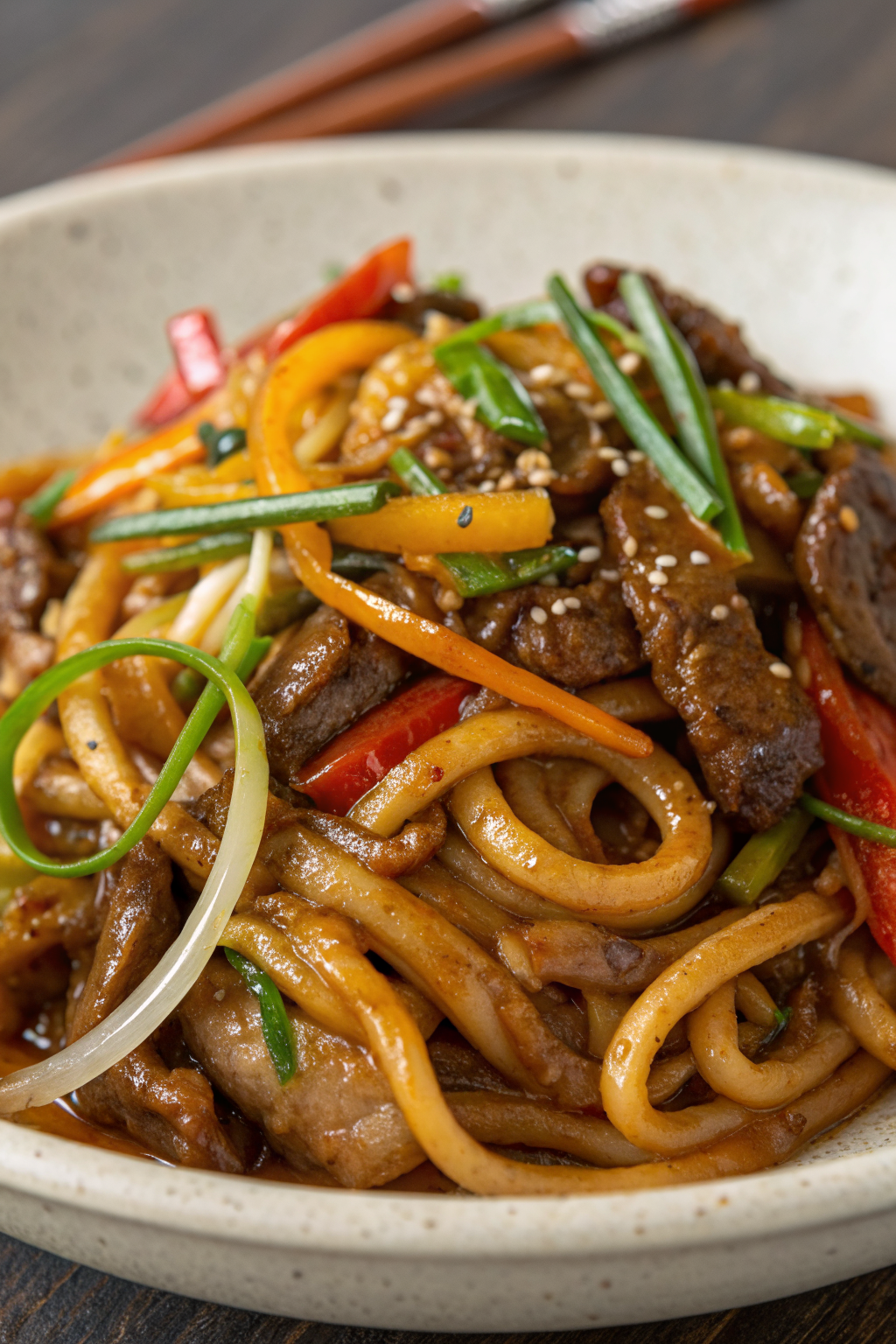
Beef Udon Noodles Recipe
Ingredients
Instructions
- Slice the onion thinly, mince the garlic, and grate or mince the ginger. Slice the green onions, keeping the dark green tops separate for garnish. Slice the mushrooms and prep the spinach or napa cabbage, then set everything near the stove.
- If slicing your own beef, place the steak in the freezer for 20 to 30 minutes until firm. Slice it across the grain into very thin strips and pat dry with paper towels.
- Heat the neutral oil in a large pot over medium heat. Add the sliced onion and cook for 3 to 4 minutes until softened and lightly golden at the edges.
- Stir in the garlic, ginger, and the white and light green parts of the scallions. Cook for 30 to 60 seconds until fragrant.
- Pour in the beef broth and water, then stir in the soy sauce, mirin, sugar, and instant dashi powder. Bring to a gentle simmer.
- Add the mushrooms and let the broth simmer for 5 to 7 minutes so the flavors deepen and the mushrooms soften.
- While the broth simmers, bring a small pot of water to a boil. Add the frozen udon bricks and cook according to package directions, usually 1 to 2 minutes, just until they loosen and turn tender, stirring gently to separate the strands.
- Drain the noodles and rinse briefly under hot water to remove extra starch. Toss lightly with a few drops of sesame oil to prevent sticking, then set aside.
- Taste the broth and adjust with more soy sauce or a pinch of sugar if needed. Lower the heat so the broth simmers gently, not at a rolling boil.
- Add the sliced beef in small handfuls, stirring so the pieces separate and cook evenly. Simmer for 1 to 2 minutes until just cooked through and tender.
- Skim off any foam or excess fat from the surface to keep the broth clear. Add the spinach or other quick-cooking greens and stir until just wilted, about 30 seconds to 1 minute.
- Add the cooked udon noodles to the pot with the beef and broth. Gently toss with tongs so the noodles soak up the broth and the beef and veggies are evenly distributed. Let everything heat together for 1 to 2 minutes.
- Drizzle in the sesame oil and stir. Taste and adjust seasoning with salt, black pepper, or a bit more soy sauce if needed.
- Ladle noodles, beef, vegetables, and broth into large bowls. Top with the reserved sliced green onion tops, toasted sesame seeds, and shichimi togarashi or crushed red pepper if desired. Serve hot.
Notes
Approximate per serving (4 servings): 520 calories; fat 18 g; saturated fat 5 g; carbohydrates 63 g; fiber 3 g; sugars 8 g; protein 25 g; sodium 1650 mg. Values will vary based on specific brands, exact amounts, and optional garnishes.
Leave a Reply