
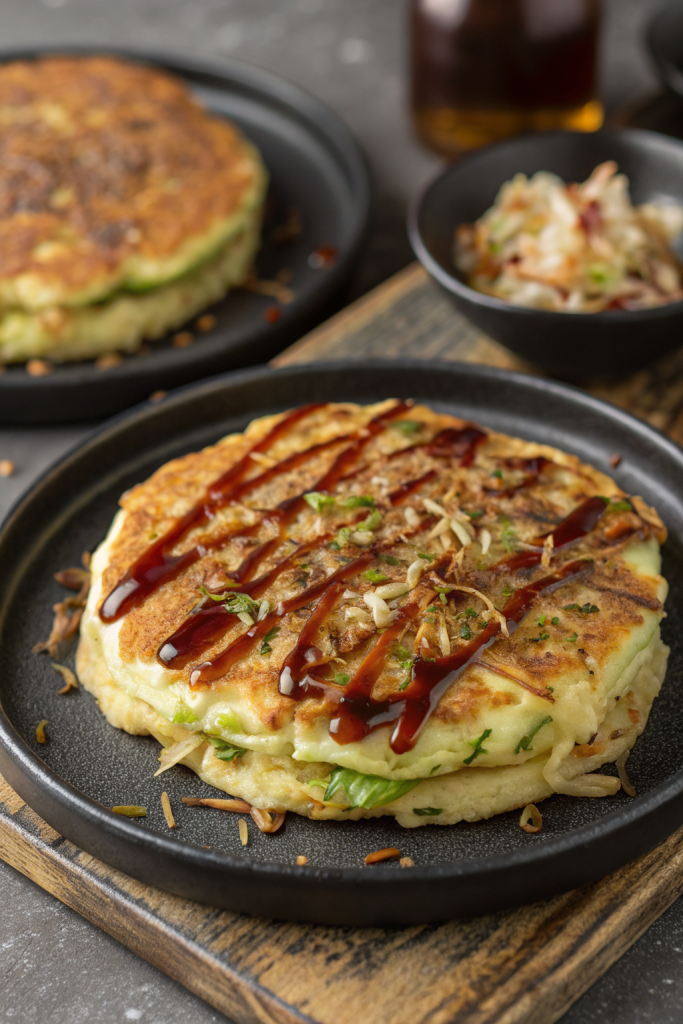
Okonomiyaki Japanese Pancakes Recipe tastes savory, a little smoky from the sauce, and super satisfying with that crispy-outside, tender-inside cabbage batter. It works perfectly for weeknight dinners or lazy weekend lunches and usually takes about 35 minutes from chopping to eating. I first fell in love with okonomiyaki in a tiny Osaka shop, then spent years tweaking this version in my very un-Japanese American kitchen.
Why Okonomiyaki Japanese Pancakes Recipe Is Worth It
This recipe gives you a full, comforting meal in one skillet, with protein, veggies, and carbs all hanging out together like old friends. You get layers of flavor from the dashi, okonomiyaki sauce, mayo, and bonito flakes, so it tastes restaurant-level without complicated technique.
You also customize it easily, which fits picky eaters, kids, and “I only have half a cabbage and some bacon” nights. The batter comes together in one bowl, and you cook it like a thick pancake, so no special chef skills needed.
“This Okonomiyaki Japanese Pancakes Recipe tastes like a cozy Osaka street stall in your kitchen and disappears from plates in minutes. ★★★★★”
Ingredients You Need
Batter and Vegetables
- 1 cup all-purpose flour
- Use any standard unbleached flour; King Arthur or Gold Medal both work great.
- 2 tablespoons potato starch or cornstarch
- Potato starch gives a slightly bouncier texture, but cornstarch works fine.
- 1 teaspoon baking powder
- 1 teaspoon kosher salt
- 1 teaspoon sugar
- 3 large eggs
- 3/4 cup dashi stock
- Use instant dashi granules with water as a shortcut, or swap with low-sodium chicken broth if needed.
- 1 teaspoon soy sauce
- 1/4 teaspoon toasted sesame oil
- 3 cups finely shredded green cabbage
- Use regular green cabbage; savoy works in a pinch, but napa turns softer.
- 1/2 cup finely sliced green onions, plus extra for topping
- 1/2 cup tenkasu (tempura bits) or crushed plain rice crackers
- Store-bought tempura bits from an Asian market save time and add crunch.
- 4 to 6 strips thick-cut bacon or pork belly, cut in halves
Toppings
- Okonomiyaki sauce
- Use Otafuku brand if you find it; if not, mix 2 tablespoons ketchup, 2 tablespoons Worcestershire, 1 tablespoon oyster sauce, and 1 teaspoon sugar.
- Japanese mayonnaise (Kewpie)
- Regular mayo works, but Kewpie tastes richer and more authentic.
- Aonori (dried seaweed flakes), optional but tasty
- Katsuobushi (bonito flakes), optional but classic
- Extra sliced green onions
- Pickled ginger (beni shoga), optional for brightness
Oil and Equipment
- Neutral oil with high smoke point, such as canola or avocado oil
- Large nonstick skillet or well-seasoned cast iron skillet
- Large mixing bowl
- Whisk
- Spatula or wide turner
- Measuring cups and spoons
Quick Tips & substitutions
- Slice cabbage very thin so it softens fast and cooks evenly.
- Mix the batter gently and stop when no dry flour shows, so the pancakes stay tender.
- Use instant dashi granules with warm water for quick stock; follow the package ratio.
- Swap bacon with thinly sliced pork belly, turkey bacon, or even shrimp for a lighter version.
- Skip bonito flakes and use extra aonori and green onion if you cook vegetarian.
- Use gluten free all-purpose blend and gluten free soy sauce to fit gluten free needs.
- Cook smaller pancakes if you feel nervous about flipping a large one.
- Preheat the skillet well so the bottom crisps instead of steaming.
How to Make Okonomiyaki Japanese Pancakes Recipe
Mix the batter
- Add flour, potato starch, baking powder, salt, and sugar to a large bowl and whisk to combine.
- In a separate bowl or measuring cup, whisk eggs, dashi, soy sauce, and sesame oil until smooth.
- Pour the wet mix into the dry ingredients and whisk until the batter looks smooth with no dry pockets.
- Let the batter rest for 5 minutes while you prep the vegetables, so the flour hydrates.
Prep the vegetables and fillings
- Core the cabbage and slice it into very thin shreds, then chop the shreds into shorter pieces.
- Slice green onions finely, both white and green parts.
- Add cabbage, green onions, and tenkasu to the rested batter and stir until everything coats evenly.
- The mixture should look thick and chunky, more cabbage than liquid, like a very loaded slaw.
Heat the skillet
- Set a large nonstick or cast iron skillet over medium heat.
- Add about 1 tablespoon of oil and swirl to coat the surface.
- Wait until the oil shimmers and a small drop of batter sizzles on contact.
Cook the first side
- Scoop about 1 to 1 1/2 cups of the cabbage batter into the skillet and shape it into a round about 3/4 inch thick.
- Lay 2 to 3 half-strips of bacon or pork belly across the top of the pancake.
- Cover the skillet with a lid to trap heat and cook for 4 to 5 minutes, until the edges look set and the bottom browns.
- Lift a corner gently with a spatula to check; you want a deep golden brown color.
Flip and finish cooking
- Slide a wide spatula under the pancake, support the top with your other hand or a second spatula, and flip it in one confident motion.
- Cook the second side, uncovered, for another 4 to 5 minutes, until the bacon cooks through and the center feels firm when you press it lightly.
- If the bacon browns too fast, lower the heat slightly and cook a bit longer so the inside finishes.
- Transfer the cooked okonomiyaki to a plate and repeat with the remaining batter, adding more oil as needed.
Sauce and garnish
- While the pancake stays hot, drizzle okonomiyaki sauce generously over the top in a zigzag pattern.
- Add Japanese mayo in a thinner zigzag or crosshatch pattern.
- Sprinkle with aonori and a small handful of bonito flakes, which will dance from the heat.
- Finish with extra sliced green onions and a little pickled ginger on the side.
Recipe Variations
- Gluten free: Use a gluten free all-purpose flour blend, gluten free soy sauce, and gluten free Worcestershire in the sauce mix.
- Vegan: Use plant based eggs or a chickpea flour batter, skip bacon, use mushrooms or tofu, and choose vegan mayo and vegan dashi or vegetable broth.
- Low carb: Swap half the flour with almond flour, use extra cabbage, and keep the pancakes thinner for better cooking.
- Seafood: Add small shrimp, squid rings, or chopped scallops to the batter or on top under the bacon layer.
- Extra veggie: Mix in grated carrot, thinly sliced shiitake mushrooms, or bean sprouts for more texture.
- Cheese twist: Sprinkle shredded mozzarella or mild cheddar on top during the last minute of cooking.
Ways to Serve Okonomiyaki Japanese Pancakes Recipe
- Serve hot from the skillet with extra okonomiyaki sauce and mayo on the table.
- Cut into wedges like pizza and share as an appetizer.
- Pack cooled slices in lunch boxes with a side of cucumber salad.
- Pair with miso soup and steamed rice for a bigger meal.
- Serve smaller pancakes as a fun brunch option with green tea.
Storage Success
Let leftover okonomiyaki cool to room temperature, then wrap slices tightly or place them in an airtight container. Store in the fridge for up to 3 days. Reheat slices in a lightly oiled skillet over medium heat until hot and crisp again, or use an air fryer for a few minutes. Freeze individual portions for up to 1 month, then thaw in the fridge and reheat in a skillet so the texture stays close to fresh.
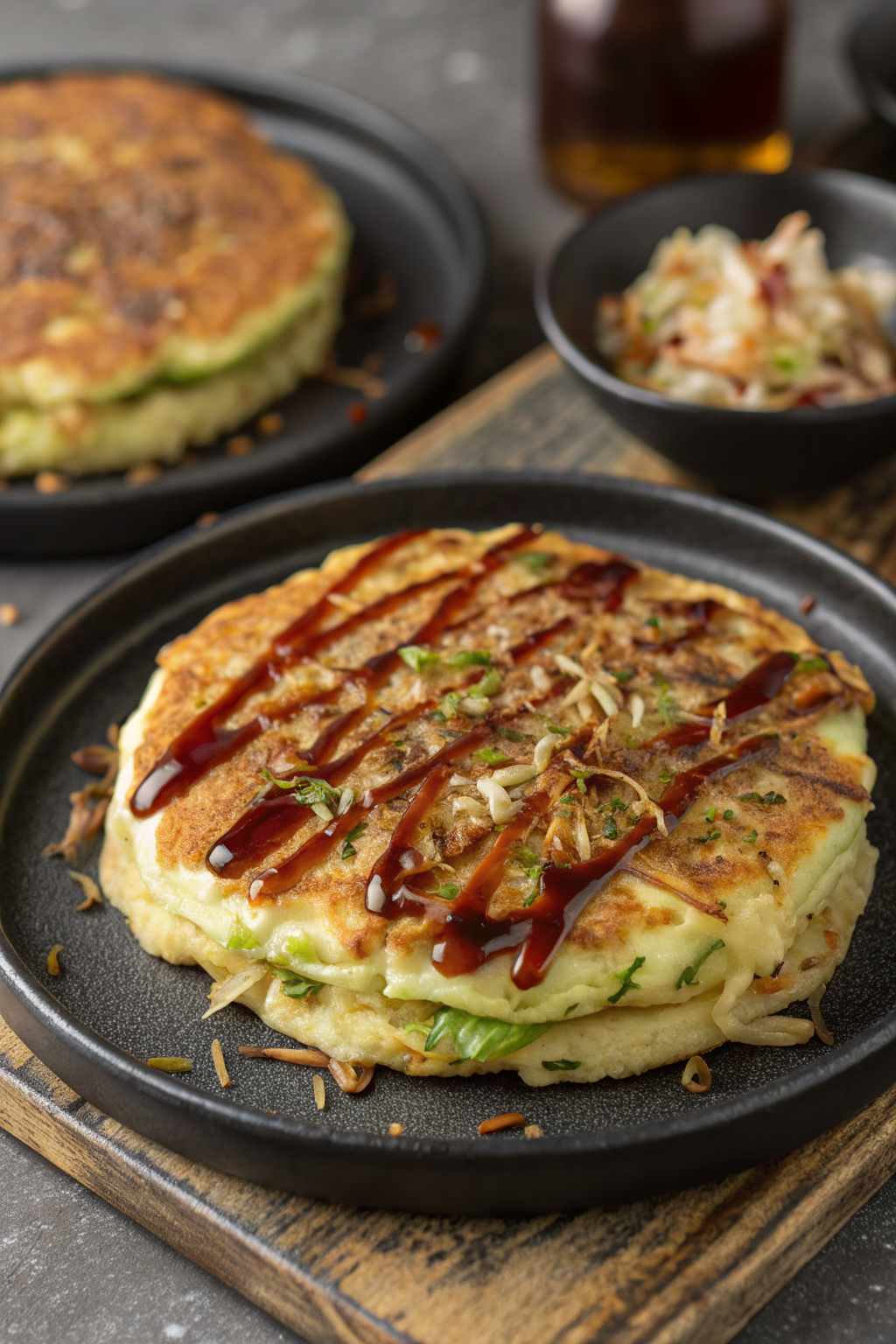
Okonomiyaki Japanese Pancakes Recipe
Ingredients
Instructions
- In a mixing bowl, whisk together the flour, baking powder, and salt. Add the dashi stock (or water) and whisk until smooth. Beat in the eggs until fully combined.
- Fold in the shredded cabbage, green onions, and tenkasu (if using) until the vegetables are evenly coated in the batter.
- Heat a large skillet or griddle over medium heat and add the vegetable oil. Once hot, spoon in half of the batter to form a round pancake about 6–7 inches wide.
- Lay 2 slices of bacon or pork belly across the top of the pancake. Cook for 4–5 minutes, until the bottom is golden brown.
- Carefully flip the pancake so the bacon side is now on the bottom. Cook another 4–5 minutes, pressing gently, until the pork is cooked through and the center of the pancake is set.
- Repeat with the remaining batter and bacon to make a second pancake.
- Transfer the cooked okonomiyaki to plates. Drizzle generously with okonomiyaki sauce and Japanese mayonnaise, then sprinkle with aonori and katsuobushi. Serve hot with pickled red ginger if desired.
Notes
Approximate per serving (1 pancake with toppings): 520 calories; fat 30 g; saturated fat 8 g; carbohydrates 45 g; fiber 4 g; sugars 5 g; protein 18 g; sodium 1180 mg. Values will vary based on ingredient brands, toppings, and portion size.
Leave a Reply