
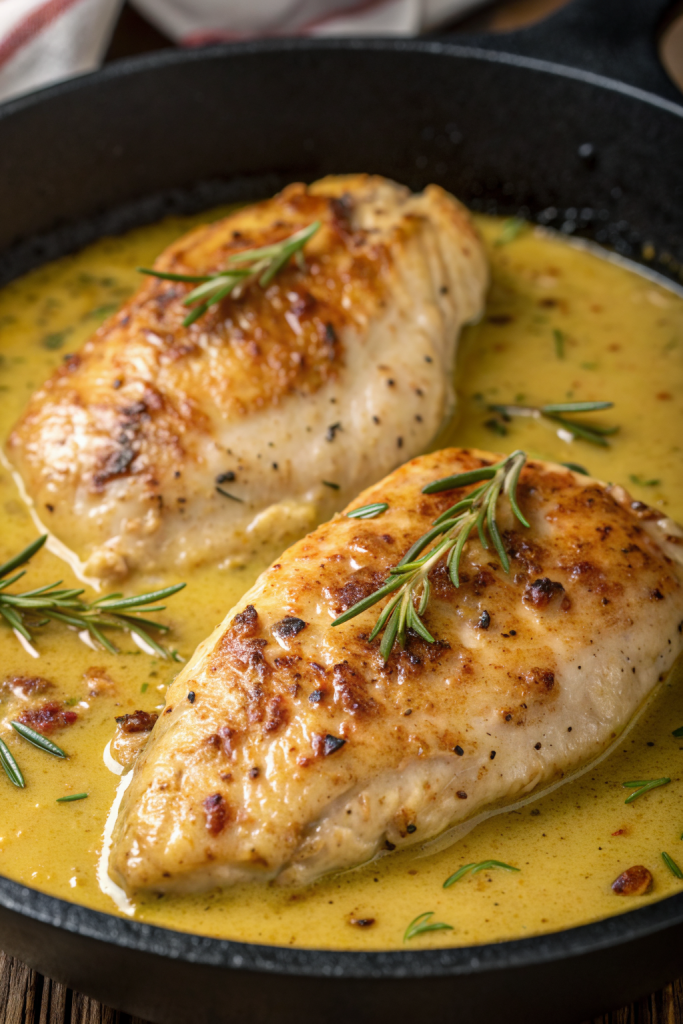
Rosemary Dijon Chicken Recipe hits that perfect spot between cozy and fancy, with juicy chicken, tangy mustard, and herby rosemary in a rich, garlicky sauce. It works for busy weeknights or casual dinner guests and takes about 35 minutes from start to finish. I first made a version of this on a Tuesday when my pantry looked tragic, and it still tasted like I actually planned dinner.
Why You Should Try This Rosemary Dijon Chicken Recipe
This Rosemary Dijon Chicken Recipe gives you juicy, flavorful chicken with almost no fuss. The Dijon adds a sharp, tangy kick, while rosemary and garlic make the whole kitchen smell like you know exactly what you are doing.
You whisk the sauce in one bowl, sear the chicken, then let everything simmer together until the flavors meld. Cleanup stays simple, and the recipe works with chicken thighs or breasts, so you can use whatever waits in your fridge.
“This Rosemary Dijon Chicken tastes like a restaurant meal but comes together faster than ordering takeout. ★★★★★”
Ingredients You’ll Need
Chicken
- 2 pounds boneless, skinless chicken thighs
- Use thighs for juicier results and more forgiveness on cook time.
- Optional: 2 boneless, skinless chicken breasts, halved horizontally
- Use if you prefer leaner meat; watch the cook time so they stay tender.
Marinade & Sauce
- 3 tablespoons Dijon mustard
- Use a smooth Dijon like Maille or Grey Poupon for the best flavor.
- 1 tablespoon whole grain mustard (optional but tasty)
- Adds texture and a little pop of flavor.
- 3 tablespoons olive oil
- Any neutral olive oil works; no need for the fancy bottle.
- 3 cloves garlic, minced or grated
- Jarred minced garlic works in a pinch, use 1 heaping teaspoon.
- 1 ½ tablespoons fresh rosemary, finely chopped
- Use 1 ½ teaspoons dried rosemary if you do not have fresh; crush it between your fingers first.
- 1 tablespoon honey or maple syrup
- Balances the tang of the mustard and keeps the sauce from tasting harsh.
- 1 tablespoon fresh lemon juice
- Bottled lemon juice works if that is what you have.
- ½ teaspoon smoked paprika
- Regular paprika works if you prefer a milder flavor.
- ½ teaspoon onion powder
- ¾ to 1 teaspoon kosher salt, plus more to taste
- ½ teaspoon black pepper
Cooking Liquid & Finish
- ½ cup low sodium chicken broth
- Use water plus ½ teaspoon bouillon paste if you do not have broth.
- 2 tablespoons heavy cream or half and half (optional)
- Stir in at the end for a slightly creamy sauce.
- 1 teaspoon butter (optional)
- Swirl in at the end for a glossy finish.
- Extra chopped fresh rosemary and parsley for garnish (optional)
Pantry Shortcuts & Substitutions
- Use pre-minced garlic, dried rosemary, and bottled lemon juice on weeknights.
- Swap honey with brown sugar if that sits in your pantry already.
- Use bone-in chicken thighs; just extend the simmer time and check for doneness.
- Use ghee or avocado oil instead of olive oil if you cook at higher heat.
Equipment List
- Large skillet or sauté pan with lid
- Cutting board and sharp knife
- Small mixing bowl and whisk or fork
- Tongs or spatula
- Instant-read thermometer (very helpful for juicy chicken)
Tips & Tricks
- Pat the chicken dry with paper towels so it browns instead of steams.
- Salt the chicken lightly before you add it to the marinade for deeper flavor.
- Let the chicken sit in the marinade at least 15 minutes; aim for 30 to 60 minutes if you have time.
- Use medium heat, not blazing high, so the garlic and mustard do not burn.
- Brown the chicken in batches if your pan feels crowded; crowded chicken stews instead of browns.
- Scrape the browned bits from the pan when you add broth; those bits carry huge flavor.
- Check doneness with a thermometer; aim for 165°F in the thickest part.
- Rest the chicken 5 minutes before slicing so the juices stay inside.
- Taste the sauce at the end and adjust with a pinch of salt, a squeeze of lemon, or a drizzle of honey.
- Stir in cream off the heat so it stays smooth and silky.
How to Make Rosemary Dijon Chicken Recipe
Step 1: Mix the Marinade
Add Dijon mustard, whole grain mustard, olive oil, garlic, rosemary, honey, lemon juice, smoked paprika, onion powder, salt, and pepper to a small bowl. Whisk until the mixture looks smooth and glossy. Taste a tiny bit and adjust with more salt, lemon, or honey if you want.
Step 2: Coat the Chicken
Place the chicken thighs in a large bowl or zip-top bag. Pour the marinade over the chicken and coat every piece thoroughly. Cover and chill for 15 to 60 minutes, or keep it on the counter up to 20 minutes if you feel rushed.
Step 3: Sear the Chicken
Heat a large skillet over medium heat and add a drizzle of olive oil. Shake off extra marinade from each piece of chicken and lay it in the hot pan in a single layer. Sear 4 to 5 minutes on the first side until a deep golden crust forms.
Flip the chicken and sear the second side 3 to 4 minutes. If the pan looks dry or the garlic starts to darken too fast, lower the heat slightly. Transfer the browned chicken to a plate while you build the sauce.
Step 4: Build the Pan Sauce
Lower the heat to medium low. Pour the chicken broth into the skillet and scrape up the browned bits with a wooden spoon. Add any leftover marinade from the bowl or bag and stir it into the broth.
Let the mixture bubble gently for 2 to 3 minutes so it thickens slightly and the raw garlic flavor softens. Taste and adjust the seasoning with salt, pepper, or a squeeze of lemon juice.
Step 5: Simmer the Chicken
Return the seared chicken and any juices from the plate to the skillet. Nestle the pieces into the sauce so they sit mostly in the liquid. Cover the pan and simmer on low heat 8 to 10 minutes, until the chicken reaches 165°F.
Flip the pieces halfway through so they cook evenly. If the sauce reduces too much, splash in a bit more broth or water.
Step 6: Finish the Sauce
Turn off the heat. Stir in the heavy cream and butter, if you use them, until the sauce looks smooth and slightly thick. Sprinkle in a little extra chopped rosemary or parsley for freshness.
Taste one last time and adjust seasoning. The sauce should taste bright, savory, and just a little tangy.
Step 7: Serve
Transfer the chicken to plates or a serving platter. Spoon plenty of Rosemary Dijon sauce over the top. Garnish with more herbs and a twist of black pepper.
Serve hot with your favorite sides that soak up the sauce. Try not to eat half the pan while you “taste test.”
What to Serve with Rosemary Dijon Chicken Recipe
This Rosemary Dijon Chicken Recipe pairs beautifully with fluffy white rice, brown rice, or quinoa that soaks up the tangy, herby sauce. Mashed potatoes or roasted baby potatoes also work perfectly with the mustard and rosemary flavors. You can add a simple green salad, steamed green beans, or roasted broccoli for color and crunch. If you want something cozy, serve it with buttered egg noodles and a side of garlic bread.
Storage Options
- Store leftover Rosemary Dijon Chicken in an airtight container in the fridge for up to 3 to 4 days.
- Chill the chicken and sauce together so the meat stays moist and flavorful.
- Freeze portions in freezer-safe containers for up to 2 months, then thaw overnight in the fridge.
- Reheat gently on the stovetop over low heat with a splash of broth or water, or warm in the microwave in short bursts while you stir between bursts so the chicken stays tender.
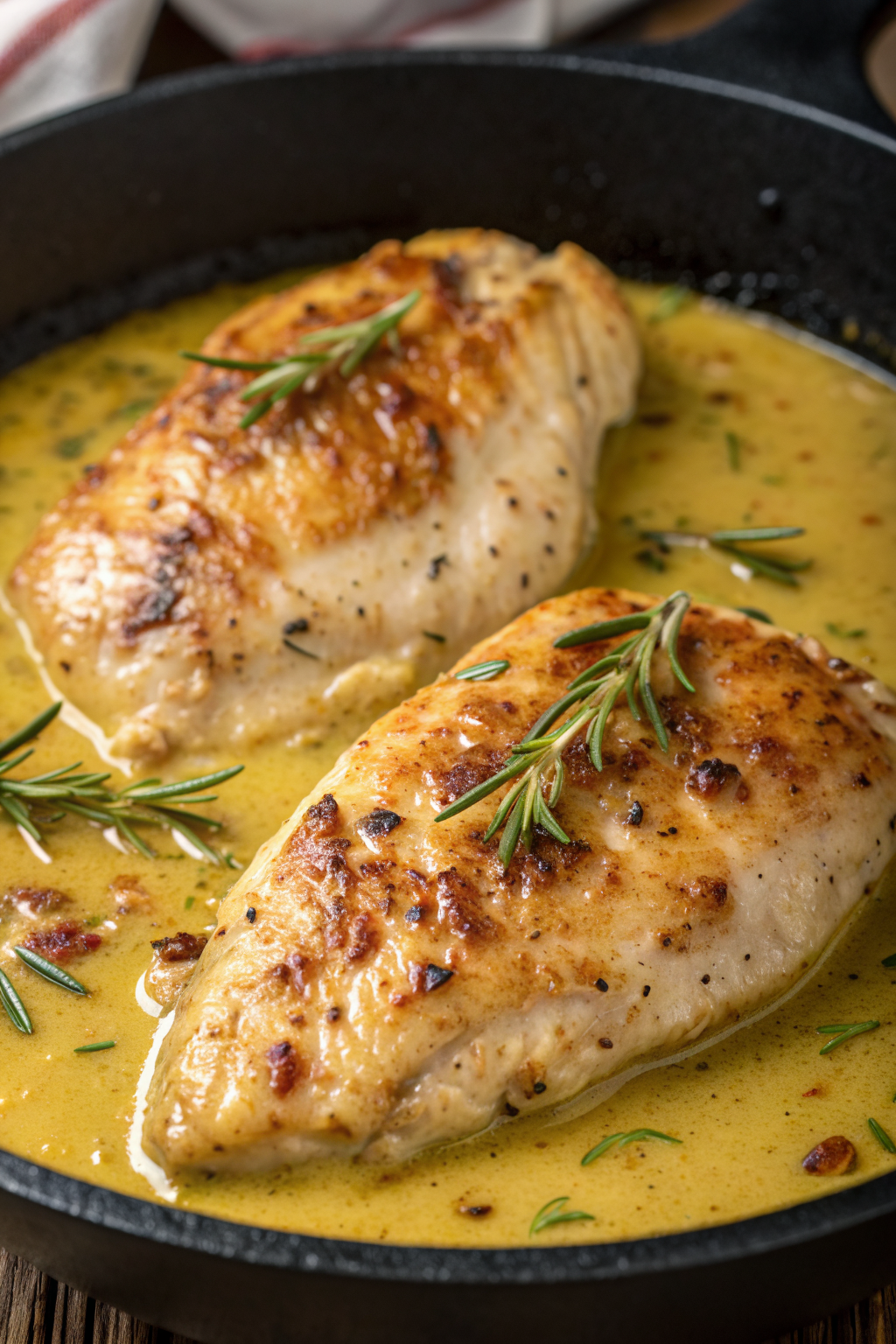
Rosemary Dijon Chicken Recipe
Ingredients
Instructions
- In a small bowl, whisk together the Dijon mustard, whole grain mustard, olive oil, garlic, rosemary, honey, lemon juice, smoked paprika, onion powder, kosher salt, and black pepper until smooth and glossy. Taste and adjust with more salt, lemon, or honey if desired.
- Place the chicken thighs (and breast pieces if using) in a large bowl or zip-top bag. Pour the marinade over the chicken and turn to coat every piece thoroughly. Cover and chill for 15 to 60 minutes, or leave on the counter up to 20 minutes if short on time.
- Heat a large skillet over medium heat and add a drizzle of olive oil. Shake excess marinade from each piece of chicken and arrange in a single layer in the hot pan. Sear for 4 to 5 minutes on the first side until a deep golden crust forms.
- Flip the chicken and sear for 3 to 4 minutes on the second side. If the pan looks dry or the garlic starts to darken too quickly, lower the heat slightly. Transfer the browned chicken to a plate and set aside.
- Reduce the heat to medium-low. Pour the chicken broth into the skillet and scrape up the browned bits from the bottom of the pan. Add any leftover marinade from the bowl or bag and stir into the broth. Let the mixture bubble gently for 2 to 3 minutes to thicken slightly and soften the raw garlic flavor. Taste and adjust seasoning if needed.
- Return the seared chicken and any accumulated juices to the skillet, nestling the pieces into the sauce. Cover and simmer over low heat for 8 to 10 minutes, flipping halfway through, until the chicken reaches 165°F in the thickest part. Add a splash of broth or water if the sauce reduces too much.
- Turn off the heat. Stir in the heavy cream and butter, if using, until the sauce looks smooth and slightly thickened. Sprinkle with extra chopped rosemary or parsley for freshness and taste once more, adjusting with salt, lemon, or honey if desired.
- Transfer the chicken to plates or a serving platter and spoon plenty of the Rosemary Dijon sauce over the top. Serve hot with sides such as rice, potatoes, noodles, or vegetables that can soak up the sauce.
Notes
Approximate per serving (6 servings, using thighs only, including sauce with cream and butter): 310 calories; fat 18 g; saturated fat 5 g; carbohydrates 6 g; fiber 0 g; sugars 4 g; protein 32 g; sodium 520 mg. Values will vary based on exact ingredients, brands, substitutions, and portion size.
Leave a Reply