
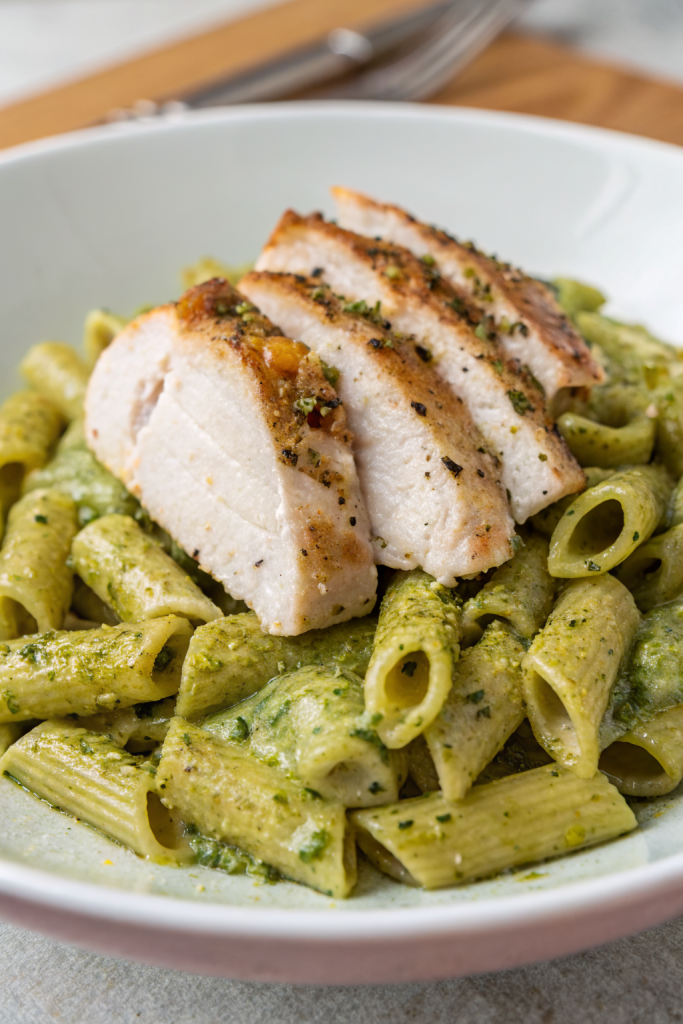
Pesto Chicken Pasta Recipe tastes bright, garlicky, and cheesy with juicy bites of chicken and tender pasta in every forkful. It works perfectly for busy weeknights, date nights at home, or meal prep, and you can have it on the table in about 30 minutes. I tested this on my own picky family, and no one spoke for the first five minutes of dinner because they kept going back for more.
Why Make This Pesto Chicken Pasta Recipe at Home
Homemade pesto chicken pasta gives you fresher flavor than most takeout or jarred sauces. You control the garlic, the salt, and the richness, so the dish tastes balanced instead of heavy or oily.
You also use up leftover cooked chicken or rotisserie chicken and turn it into something that feels like a restaurant meal. Cleanup stays pretty simple, since you only need a pot and a skillet.
“This pesto chicken pasta recipe tastes like something from a cozy Italian cafe, but it comes together faster than delivery ★★★★★”
Ingredients You Need
Here is everything you need to make this pesto chicken pasta recipe.
Pasta
- 12 ounces short pasta
- I like rotini, fusilli, penne, or farfalle because the spirals and ridges hold the pesto.
- Use regular, whole wheat, or gluten free pasta based on your needs.
Chicken
-
1 to 1.25 pounds boneless skinless chicken breast or thighs
- Thighs stay juicier and forgive overcooking.
- Use leftover grilled chicken or rotisserie chicken as a shortcut and skip the raw chicken cooking step.
-
1 teaspoon kosher salt
-
1 teaspoon Italian seasoning or dried oregano and basil mix
-
1 teaspoon garlic powder
-
1 tablespoon olive oil
Pesto
You can use homemade pesto or a good store bought pesto.
- 1 packed cup fresh basil leaves
- 2 to 3 tablespoons grated Parmesan or Pecorino Romano
- 2 tablespoons toasted pine nuts, walnuts, or almonds
- 1 to 2 cloves garlic
- 1 teaspoon lemon juice
- 1⁄3 to 1⁄2 cup extra virgin olive oil
- 1⁄4 teaspoon kosher salt, more to taste
If you use jarred pesto, choose one that lists basil, olive oil, and nuts near the top of the ingredient list. I like refrigerated pesto from the deli section because it usually tastes fresher than shelf stable jars.
To Finish the Pasta
- 1⁄3 to 1⁄2 cup pasta cooking water
- 1⁄3 cup grated Parmesan, plus extra for serving
- 1 tablespoon butter or extra olive oil for silkier sauce
- 1 cup halved cherry tomatoes or sun dried tomatoes in oil, drained
- 1 to 2 handfuls baby spinach or arugula (optional but tasty)
- Freshly ground black pepper
- Lemon wedges for serving
Equipment
- Large pot for boiling pasta
- Large skillet or sauté pan
- Cutting board and sharp knife
- Tongs or a pasta spoon
- Measuring cups and spoons
- Blender or food processor if you make pesto at home
- Fine grater for Parmesan
Tips & Mistakes
- Salt the pasta water generously so the pasta and sauce taste seasoned from the inside out.
- Scoop out pasta water before you drain the pot, or you lose your best tool for silky pesto sauce.
- Cut chicken into even pieces so everything cooks at the same rate and stays juicy.
- Dry the chicken with paper towels before seasoning so it browns instead of steaming.
- Do not overcook the chicken, or it turns tough; pull it off the heat when the center turns opaque and the juices run clear.
- Turn the heat to low before you add pesto to the skillet so the basil stays bright and the cheese does not clump.
- Thin the pesto with pasta water a little at a time; stop when the sauce lightly coats the pasta instead of pooling.
- Toss the pasta and pesto gently so you keep the pasta shape and avoid breaking it.
- Taste at the end and adjust with salt, pepper, and a squeeze of lemon so the flavors pop.
- Add delicate greens like spinach at the very end so they wilt gently and keep some texture.
How to Make Pesto Chicken Pasta Recipe
Step 1: Boil the Pasta
Bring a large pot of water to a strong boil and add a good handful of kosher salt. Add the pasta and cook it until it reaches al dente texture based on the package directions. Scoop out about 1 cup of pasta cooking water, then drain the pasta and set it aside.
Step 2: Prep and Season the Chicken
Pat the chicken dry with paper towels and cut it into bite size strips or cubes. Sprinkle the pieces with salt, Italian seasoning, and garlic powder, and toss to coat evenly. Set the seasoned chicken aside while you start the pesto or heat the skillet.
Step 3: Make the Pesto (If Using Homemade)
Add basil, Parmesan, nuts, garlic, lemon juice, and salt to a food processor or blender. Pulse a few times, then slowly stream in the olive oil while you blend until the pesto looks thick but pourable. Taste and adjust with more salt, cheese, or lemon until the flavor hits you with bright, savory notes.
Step 4: Cook the Chicken
Heat olive oil in a large skillet over medium high heat until it shimmers. Add the chicken in a single layer and let it sear without moving it for 2 to 3 minutes so it develops color. Stir and cook another 3 to 5 minutes until the chicken cooks through and no pink remains in the center, then transfer it to a plate.
Step 5: Build the Sauce Base
Turn the heat under the skillet to low and add butter or a drizzle of olive oil. Add the cherry tomatoes or sun dried tomatoes and stir for 1 to 2 minutes until they soften slightly and release some flavor into the pan. Add a splash of pasta water to loosen any browned bits on the bottom and stir them into the liquid.
Step 6: Combine Pasta, Chicken, and Pesto
Add the drained pasta and cooked chicken to the skillet and toss to combine. Spoon in the pesto and toss quickly so every piece of pasta and chicken gets coated. Add pasta water a few tablespoons at a time until the sauce looks glossy and clings lightly to the pasta.
Step 7: Finish With Cheese and Greens
Sprinkle in the grated Parmesan and toss again so it melts into the sauce. Add spinach or arugula if you use it and stir just until the leaves wilt. Taste and season with more salt, black pepper, and a squeeze of lemon juice if you want extra brightness.
Step 8: Serve
Turn off the heat and let the pesto chicken pasta sit for 1 to 2 minutes so the sauce thickens slightly. Plate the pasta and top it with extra Parmesan and a few basil leaves if you have them. Serve right away while everything tastes hot and fragrant.
Variations I've Tried
I swap half the basil with baby spinach when I run low on herbs, and the pesto still tastes fresh while costing less. I also use walnuts instead of pine nuts often, since they sit in my pantry more reliably and blend into a rich sauce. When I want extra protein, I stir in a handful of cooked white beans with the pasta and chicken.
Sometimes I skip the tomatoes and add steamed broccoli florets or roasted asparagus for more vegetables. I also tried this pesto chicken pasta recipe with whole wheat penne, and the nutty flavor of the pasta matched the pesto really well. On hot nights, I toss the warm pasta with a handful of fresh mozzarella pearls for a creamy twist that kids love.
How to Serve Pesto Chicken Pasta Recipe
Serve pesto chicken pasta hot in shallow bowls so the sauce pools slightly around the edges. Add a squeeze of lemon over each bowl and a shower of extra Parmesan for that restaurant style finish. Pair it with a simple green salad, garlic bread, or roasted vegetables for a full meal.
You can also pack leftovers into meal prep containers with a side of cucumber slices or carrot sticks for an easy lunch. If you want a lighter dinner, serve smaller portions of pasta and pile extra salad on the side.
How to store
- Fridge: Cool the pesto chicken pasta to room temperature, then store it in an airtight container in the refrigerator for up to 3 to 4 days.
- Freezer: Portion the pasta into freezer safe containers, drizzle a tiny bit of olive oil on top to protect the pesto, and freeze for up to 2 months.
- Reheating on the stove: Reheat in a skillet over low to medium heat with a splash of water or chicken broth, and stir often until hot and creamy again.
- Reheating in the microwave: Cover loosely and heat in short bursts, stirring between each burst and adding a spoonful of water if the pasta looks dry.
Leave a Reply