
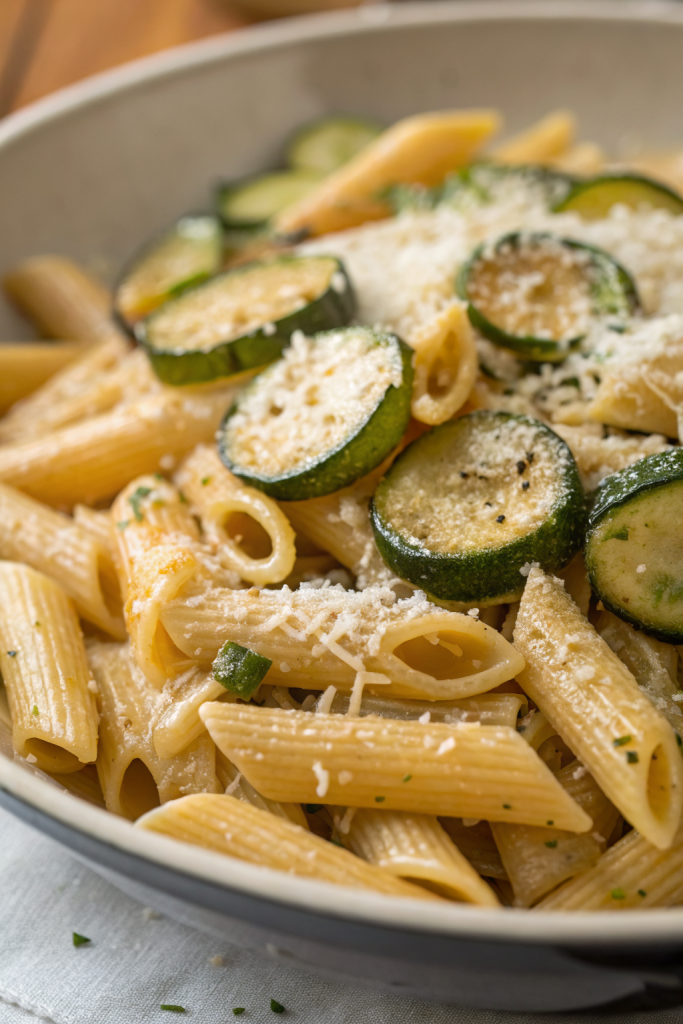
Pasta Con Zucchini with Ricotta and Parmesan tastes creamy, garlicky, and a little bit sweet from the sautéed zucchini, with salty Parmesan tying it all together. It works perfectly for busy weeknights, date nights at home, or anyone who wants a cozy pasta dinner in about 30 minutes. I first cooked a version of this on a broke college night, and it still feels like my favorite “I actually have my life together” bowl of pasta.
Why Make This Pasta Con Zucchini with Ricotta and Parmesan at Home
You control the texture of the zucchini, the creaminess of the ricotta, and the saltiness of the Parmesan, so the pasta tastes exactly how you like it. Restaurants often drown zucchini in oil or cream, while this version tastes lighter but still rich and comforting.
You also use mostly pantry ingredients and one skillet, so cleanup stays easy. The recipe works nicely for meatless Mondays, but it still satisfies the “I need real dinner” crowd at the table.
“This Pasta Con Zucchini with Ricotta and Parmesan tastes like a fancy trattoria dish that secretly came from a 30-minute, one-pan weeknight miracle. ★★★★★”
Ingredients You Need
Pasta
- 12 ounces short pasta
- I like rigatoni, penne, or fusilli because they hold the creamy zucchini sauce in all the little ridges.
- Use any good-quality Italian brand you enjoy; bronze-cut pasta clings to the sauce especially well.
Zucchini and aromatics
-
3 medium zucchini, thinly sliced or cut into half-moons
- Smaller zucchini taste sweeter and have fewer seeds.
- If you only find large zucchini, scoop out the seedy center so the sauce stays thick, not watery.
-
3 tablespoons extra-virgin olive oil
- Use your everyday cooking oil; no need for a super fancy bottle.
-
3 cloves garlic, finely minced
- Jarred minced garlic works in a pinch, but fresh garlic gives better flavor.
-
1 small yellow onion or 2 shallots, finely chopped
- Shallots taste slightly sweeter and more delicate, which pairs nicely with the ricotta.
Cheeses and dairy
-
1 cup whole-milk ricotta
- Whole-milk ricotta gives the creamiest sauce; part-skim tastes thinner but still works.
- If your ricotta looks very watery, drain it in a fine-mesh strainer for 10 to 15 minutes.
-
1 cup freshly grated Parmesan cheese
- Grate it yourself if possible; pre-grated tubs often contain anti-caking agents that keep it from melting smoothly.
- Pecorino Romano works as a sharper, saltier substitute; use a bit less and taste as you go.
-
2 to 4 tablespoons pasta cooking water
- This starchy water helps the ricotta and Parmesan cling to the pasta and zucchini.
Seasoning and finishing touches
- 1 teaspoon kosher salt, plus more for pasta water
- 1/2 teaspoon freshly ground black pepper
- 1/4 teaspoon red pepper flakes, optional, for a little heat
- Zest of 1 lemon
- 1 to 2 tablespoons fresh lemon juice
- 1/4 cup fresh basil leaves, torn or thinly sliced
- Fresh parsley also works if basil hides from you at the store.
Pantry shortcuts and substitutions
- Use frozen zucchini slices if fresh zucchini looks sad; pat them dry after thawing so they do not water down the sauce.
- Swap ricotta with mascarpone for an extra rich version, or use a thick Greek yogurt for a lighter, tangier twist.
- Use gluten-free pasta if needed; just cook it slightly under al dente so it holds up in the skillet.
Equipment list
- Large pot for boiling pasta
- Large wide skillet or sauté pan
- Colander
- Wooden spoon or spatula
- Microplane or small grater for lemon zest and Parmesan
- Measuring cups and spoons
- Chef’s knife and cutting board
Tips & Mistakes
- Salt the pasta water generously so the noodles taste seasoned before they meet the sauce.
- Slice zucchini evenly so they cook at the same rate and do not turn half mushy, half crunchy.
- Let the zucchini get some golden color; pale zucchini tastes bland, while browned edges taste sweet and nutty.
- Keep the heat at medium when you cook the garlic so it turns fragrant, not bitter and burnt.
- Reserve pasta water before you drain the pot; that starchy liquid turns ricotta into a silky sauce.
- Add ricotta off the direct heat so it stays creamy and does not turn grainy.
- Taste the sauce before adding more salt, since Parmesan already brings a lot of saltiness.
- Do not overload the skillet with zucchini; cook in two batches if needed so the slices sauté instead of steaming.
- Stir gently once you add the pasta so you do not break the zucchini into mush.
- Add lemon juice gradually; you can always add more brightness, but you cannot pull it back out.
How to Make Pasta Con Zucchini with Ricotta and Parmesan
Step 1: Boil the pasta
Bring a large pot of water to a strong boil and salt it generously. Add the pasta and cook it until just shy of al dente, usually 1 to 2 minutes less than the package suggests. Scoop out at least 1 cup of pasta water, then drain the pasta and set it aside.
Step 2: Prep and cook the zucchini
While the water heats, slice the zucchini into thin rounds or half-moons. Heat the olive oil in a large wide skillet over medium to medium-high heat. Add the zucchini in a single layer, or as close as you can manage, and cook until the first side turns golden in spots, about 4 to 5 minutes.
Flip the zucchini and cook the other side until tender and nicely browned in places, about 3 to 4 minutes more. If your skillet looks crowded, cook the zucchini in two batches so it caramelizes instead of steaming. Transfer the cooked zucchini to a plate and keep the skillet on the stove.
Step 3: Build the flavor base
Lower the heat to medium. Add a small drizzle of olive oil if the skillet looks dry, then add the chopped onion or shallots. Cook, stirring often, until they turn soft and translucent with light golden edges, about 4 to 5 minutes.
Add the minced garlic and red pepper flakes. Stir and cook until the garlic smells fragrant, about 30 to 60 seconds. Add a splash of pasta water to loosen any browned bits from the bottom of the pan and stir them into the onions.
Step 4: Combine zucchini and aromatics
Return the zucchini to the skillet and toss with the onion, garlic, and any juices on the plate. Season with salt and black pepper. Cook together for 1 to 2 minutes so the flavors mingle.
Sprinkle in the lemon zest and stir again. Taste a piece of zucchini and adjust salt and pepper if needed. Turn the heat down to low so the mixture stays warm but does not scorch.
Step 5: Make the ricotta and Parmesan sauce
In a small bowl, stir together the ricotta, half of the grated Parmesan, a pinch of salt, and a spoonful of warm pasta water. Mix until the ricotta loosens into a creamy, spoonable mixture. Add more pasta water a tablespoon at a time until it looks like a thick sauce.
Turn off the heat under the skillet. Add the ricotta mixture to the zucchini and stir gently until everything looks creamy and coated. If the sauce looks too thick, splash in a bit more pasta water until it reaches a silky consistency.
Step 6: Add the pasta
Add the drained pasta directly to the skillet with the creamy zucchini mixture. Toss gently but thoroughly so every piece of pasta gets coated. Turn the heat to low and cook for 1 to 2 minutes, adding a bit more pasta water if the sauce tightens too much.
Sprinkle in the remaining Parmesan and toss again until it melts into the sauce. Add lemon juice to taste, starting with 1 tablespoon and adding more if you like extra brightness. Stir in most of the basil, saving a little for garnish.
Step 7: Taste and finish
Taste a piece of pasta and adjust salt, pepper, and lemon juice until the flavors pop. If you want a looser sauce, add another spoonful of pasta water and toss again. Turn off the heat and let the pasta sit for 1 minute so the sauce clings nicely.
Serve the Pasta Con Zucchini with Ricotta and Parmesan in warm bowls. Top with the remaining basil, extra Parmesan, and a crack of black pepper. I also like a tiny drizzle of olive oil on top for a glossy finish.
Variations I've Tried
I sometimes add a handful of peas or chopped asparagus tips with the zucchini for extra green goodness. Cherry tomatoes taste great too; I toss them in during the last couple of minutes so they soften and burst slightly. If my fridge holds a stray cooked chicken breast, I slice it thin and warm it in the skillet with the zucchini.
You can turn this into a baked pasta by undercooking the noodles a bit more, stirring in the sauce, topping with extra Parmesan and a few dollops of ricotta, then baking until bubbly and golden on top. I also like a version with a spoonful of pesto stirred in at the end, which gives the whole dish a herby, almost summery vibe. If you crave extra richness, you can add a splash of cream or a knob of butter when you mix in the pasta water.
How to Serve Pasta Con Zucchini with Ricotta and Parmesan
Serve Pasta Con Zucchini with Ricotta and Parmesan hot, right out of the skillet, while the sauce feels silky and the cheese still melts. I like to pair it with a simple green salad, maybe just lettuce, cucumber, and a lemony vinaigrette to cut through the richness. Garlic bread or warm crusty bread always disappears fast next to this bowl of pasta.
You can offer toppings like extra Parmesan, red pepper flakes, and more fresh basil so everyone customizes their bowl. A cold sparkling water with lemon or a fruity iced tea matches the creamy, cheesy flavors nicely.
How to store
- Cool leftovers to room temperature, then store in an airtight container in the fridge for up to 3 days.
- Reheat gently on the stove over low heat with a splash of water or milk, stirring often until the sauce loosens and turns creamy again.
- You can freeze portions in freezer-safe containers for up to 2 months, though the zucchini softens more after thawing.
- Thaw frozen pasta overnight in the fridge, then reheat on the stove with a bit of extra ricotta or Parmesan to refresh the texture and flavor.
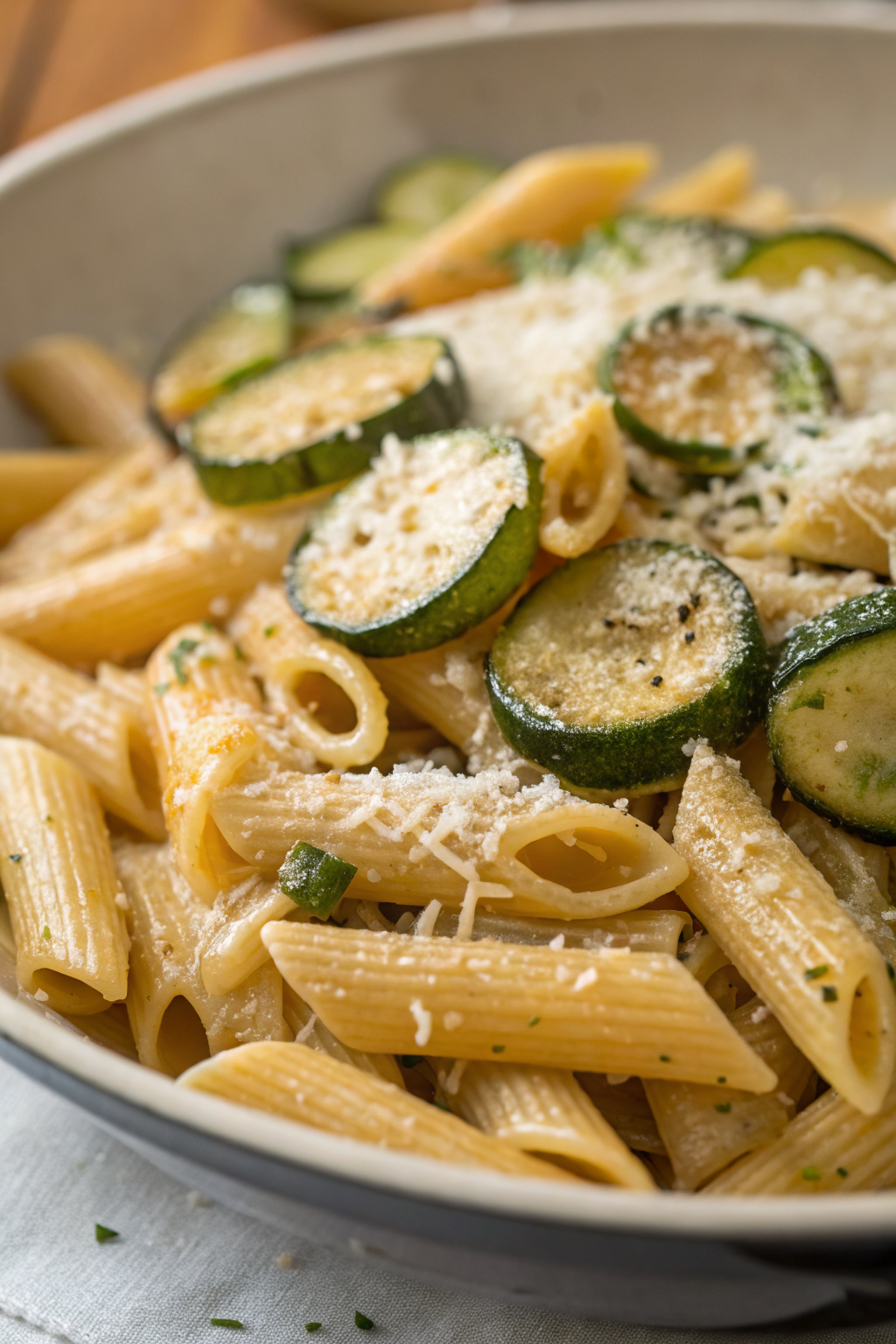
Pasta Con Zucchini with Ricotta and Parmesan
Ingredients
Instructions
- Bring a large pot of water to a strong boil and salt it generously. Add the pasta and cook until just shy of al dente, 1 to 2 minutes less than the package suggests. Scoop out at least 1 cup of pasta cooking water, then drain the pasta and set aside.
- While the water heats and the pasta cooks, slice the zucchini into thin rounds or half-moons. Heat the olive oil in a large wide skillet over medium to medium-high heat. Add the zucchini in as close to a single layer as possible and cook until the first side turns golden in spots, about 4 to 5 minutes.
- Flip the zucchini and cook the other side until tender and nicely browned in places, about 3 to 4 minutes more. If the skillet is crowded, cook the zucchini in two batches so it browns instead of steaming. Transfer the cooked zucchini to a plate and keep the skillet on the stove.
- Lower the heat to medium. If the skillet looks dry, add a small drizzle of olive oil, then add the chopped onion or shallots. Cook, stirring often, until soft and translucent with light golden edges, about 4 to 5 minutes.
- Add the minced garlic and red pepper flakes (if using). Stir and cook until the garlic smells fragrant, 30 to 60 seconds. Add a splash of reserved pasta water to loosen any browned bits on the bottom of the pan and stir them into the onions.
- Return the zucchini and any accumulated juices to the skillet and toss with the onion and garlic mixture. Season with kosher salt and black pepper. Cook together for 1 to 2 minutes so the flavors mingle, then sprinkle in the lemon zest and stir again. Taste a piece of zucchini and adjust seasoning as needed. Turn the heat down to low to keep warm.
- In a small bowl, stir together the ricotta, half of the grated Parmesan, a pinch of salt, and a spoonful of warm pasta water. Mix until the ricotta loosens into a creamy, spoonable mixture, adding more pasta water a tablespoon at a time until it resembles a thick sauce.
- Turn off the heat under the skillet. Add the ricotta mixture to the zucchini and aromatics, stirring gently until everything looks creamy and coated. If the sauce seems too thick, add a bit more pasta water until it reaches a silky consistency.
- Add the drained pasta directly to the skillet with the creamy zucchini mixture. Toss gently but thoroughly over low heat for 1 to 2 minutes so every piece of pasta is coated, adding more pasta water as needed if the sauce tightens.
- Sprinkle in the remaining Parmesan and toss until it melts into the sauce. Add lemon juice to taste, starting with 1 tablespoon and adding more if you prefer extra brightness. Stir in most of the basil, reserving a little for garnish.
- Taste the pasta and adjust salt, pepper, and lemon juice until the flavors are balanced and vibrant. If you want a looser sauce, add another spoonful of pasta water and toss again. Turn off the heat and let the pasta sit for 1 minute so the sauce clings to the noodles.
- Serve the pasta hot in warm bowls, topped with the remaining basil, extra Parmesan, and a crack of black pepper. Add a light drizzle of olive oil on top if you like a glossy finish.
Notes
Approximate per serving (4 servings): 560 calories; fat 26 g; saturated fat 10 g; carbohydrates 62 g; fiber 4 g; sugars 8 g; protein 23 g; sodium 760 mg. Values will vary based on specific ingredient brands, exact amounts used, and portion size.
Leave a Reply