

Original Matcha Japanese Cheesecake Recipe tastes light, fluffy, and creamy with a gentle green tea flavor that feels like a cloud of cheesecake. It suits matcha lovers, cheesecake fans, and anyone who wants an impressive dessert in about 2 hours total, including baking and cooling. I tested this version so many times that my neighbors now judge all cheesecake by this one.
Why Original Matcha Japanese Cheesecake Recipe Is Worth It
This Japanese style cheesecake gives you the best of both worlds: the tang and richness of classic cheesecake with the airy texture of a souffle. The matcha adds a gentle bitterness that balances the sweetness, so each slice tastes rich but never heavy.
You also bake it in a water bath, which keeps the texture silky and tender. The recipe uses simple ingredients and basic tools, so you can pull it off in a home kitchen without pastry school training.
Tastes like a matcha latte and a cheesecake had a fluffy baby, and I would happily eat it every week. ★★★★★
Ingredients You Need
Main ingredients
-
Cream cheese:
- 8 ounces (225 g) full fat cream cheese, room temperature
- I prefer Philadelphia or a good store brand that lists few stabilizers.
- Avoid low fat cream cheese, which turns the texture grainy.
-
Butter:
- 3 tablespoons (40 g) unsalted butter, room temperature
- Salted butter works in a pinch; skip extra salt if you use it.
-
Milk:
- ½ cup (120 ml) whole milk
- You can use 2 percent milk, but whole milk gives better richness.
-
Eggs:
- 4 large eggs, separated, room temperature
- Room temperature whites whip more easily and hold more air.
-
Sugar:
- ½ cup (100 g) granulated sugar for the meringue
- 2 tablespoons (25 g) granulated sugar for the yolk mixture
- Superfine sugar dissolves faster, but regular sugar works fine.
-
Cake flour:
- ½ cup (60 g) cake flour, sifted
- If you only have all purpose flour, measure ½ cup, remove 1 tablespoon, and add 1 tablespoon cornstarch, then sift well.
-
Cornstarch:
- 2 tablespoons (15 g), sifted
- This gives the cheesecake a tender, fluffy crumb.
-
Matcha powder:
- 1 to 1½ tablespoons high quality culinary grade matcha, sifted
- Use a bright green matcha with a fresh, grassy smell.
- Avoid old, dull, brownish matcha, which tastes flat and bitter.
-
Salt:
- 1 pinch fine sea salt
- This balances sweetness and sharpens the matcha flavor.
-
Lemon juice:
- 1 teaspoon fresh lemon juice
- This helps stabilize the meringue and brightens the flavor.
Optional flavor boosters
- ½ teaspoon vanilla extract for a softer, rounder flavor
- Extra 1 teaspoon matcha for dusting the top after baking
- 1 to 2 tablespoons sugar for sweetened whipped cream topping
Pantry shortcuts and notes
- Use pre sifted cake flour if you can, which saves time and reduces lumps.
- Buy matcha in small tins so it stays fresh and vibrant.
- Use parchment rounds and strips to line the pan, which makes removal easy and keeps the sides smooth.
- Use room temperature ingredients so the batter mixes smoothly without lumps.
Equipment list
- 8 inch round cake pan or 8 inch springform pan with no removable bottom leaks
- Large roasting pan or deep baking tray for the water bath
- Mixing bowls: 1 large, 1 medium, 1 small
- Electric hand mixer or stand mixer with whisk attachment
- Fine mesh sieve for flour and matcha
- Rubber spatula
- Parchment paper
- Aluminum foil
- Kitchen scale if you want precise measurements
- Kettle or pot for hot water
- Toothpick or thin skewer to check doneness
Quick Tips & substitutions
- Use room temperature cream cheese, butter, eggs, and milk to avoid lumps.
- Sift matcha, flour, and cornstarch together to keep the batter smooth and prevent green clumps.
- Wrap the outside of the pan tightly with foil so water does not seep into the cheesecake.
- Place a kitchen towel under the pan in the water bath to reduce bubbles and keep the bottom from overcooking.
- Whip egg whites until soft peaks first, then add sugar gradually to reach glossy medium stiff peaks.
- Fold the meringue into the batter gently with a spatula so you keep the air and get a fluffy texture.
- Reduce matcha to 1 tablespoon if you prefer a milder flavor, or increase slightly if you love strong matcha.
- Swap cake flour with all purpose plus cornstarch as described if you do not keep cake flour at home.
- Use lactose free milk and lactose free cream cheese if you need a gentler option, but keep full fat versions.
- Bake low and slow at 300°F (150°C) to avoid cracks and keep the cheesecake soft and jiggly.
How to Make Original Matcha Japanese Cheesecake Recipe
Prep the pan and oven
- Preheat the oven to 300°F (150°C).
- Line the bottom of an 8 inch round pan with parchment and line the sides with a tall strip of parchment that rises about 1 inch above the rim.
- Wrap the outside of the pan tightly with 2 to 3 layers of foil to keep water out.
- Place a folded kitchen towel in a large roasting pan and set the cake pan on top of the towel.
Make the cream cheese base
- In a medium heatproof bowl, add cream cheese, butter, and milk.
- Set the bowl over a pot of gently simmering water and stir until the mixture turns smooth and glossy.
- Remove from heat and let it cool until just warm, not hot.
- Whisk in the 2 tablespoons of sugar, then add egg yolks one at a time and mix until smooth.
Add dry ingredients and matcha
- In a small bowl, sift together cake flour, cornstarch, salt, and matcha powder.
- Sift this mixture again directly into the cream cheese mixture to avoid lumps.
- Whisk gently until the batter turns smooth and even in color, then set aside.
Whip the meringue
- In a clean large bowl, add egg whites and lemon juice.
- Beat on medium speed until the whites look foamy.
- Gradually add the ½ cup sugar while you beat, a tablespoon at a time.
- Continue whipping until the meringue reaches glossy medium stiff peaks that curl slightly at the tip.
Fold the batter
- Add one third of the meringue to the matcha batter and whisk gently to lighten it.
- Switch to a rubber spatula and fold in the next third of meringue with slow, sweeping motions.
- Fold in the final third until no white streaks remain, but stop before you deflate the mixture.
- Tap the bowl gently on the counter to release a few large air bubbles.
Fill the pan and set up the water bath
- Pour the batter into the prepared pan and smooth the top with a spatula.
- Tap the pan lightly on the counter a couple of times to pop surface bubbles.
- Place the roasting pan with the cake pan on the oven rack.
- Pour hot water into the roasting pan until it reaches halfway up the sides of the cake pan.
Bake the cheesecake
- Bake at 300°F (150°C) for about 60 minutes until the top looks set and lightly golden.
- Check the center with a toothpick; it should come out mostly clean with a few moist crumbs, and the center should still jiggle slightly.
- Turn off the oven, crack the door slightly, and leave the cheesecake inside for 15 to 20 minutes so it cools gradually.
- Remove the roasting pan from the oven and lift the cake pan out of the water.
Cool and unmold
- Place the cake pan on a wire rack and let it cool until just slightly warm.
- Run a thin knife around the edge if needed, then remove the cheesecake from the pan and peel away the parchment.
- Chill in the fridge for at least 3 hours for clean slices and a fully set texture.
- Dust the top lightly with extra matcha or powdered sugar right before serving if you like.
Recipe Variations
- Gluten free: Use a gluten free cake flour blend or replace cake flour with a mix of superfine rice flour and cornstarch in equal parts.
- Vegan style: Use vegan cream cheese, plant based butter, and full fat oat milk, and replace eggs with aquafaba meringue plus a little cornstarch, then keep the gentle baking temperature.
- Low carb: Swap sugar with a granulated erythritol or monk fruit blend and replace cake flour with a mix of almond flour and a bit more cornstarch, which keeps some fluff.
- Extra matcha kick: Swirl a teaspoon of matcha paste on top before baking or dust more matcha on each slice.
- Chocolate matcha: Fold in ¼ cup mini dark chocolate chips or drizzle melted dark chocolate over chilled slices.
- Citrus twist: Add extra lemon zest or a bit of yuzu juice to brighten the flavor.
- Berry topping: Spoon macerated strawberries or raspberries over each slice for a fresh, juicy contrast.
Ways to Serve Original Matcha Japanese Cheesecake Recipe
- Serve chilled with a small dollop of lightly sweetened whipped cream.
- Add fresh berries like strawberries, raspberries, or blueberries on the side.
- Pair with hot matcha, green tea, jasmine tea, or a simple latte.
- Cut into small cubes and serve on a dessert platter with fruit and mochi.
- Top each slice with a drizzle of honey or condensed milk for extra sweetness.
- Serve slightly warm from the oven for a softer, souffle like texture.
Storage Success
Store leftover matcha Japanese cheesecake in an airtight container in the fridge for up to 4 days. Keep slices in a single layer or separate them with parchment so they stay neat. Chill the cheesecake fully before you wrap it so condensation does not make the top soggy. If you want to keep it longer, freeze individual slices on a tray, then wrap them tightly and store them for up to 1 month, and thaw in the fridge before serving.
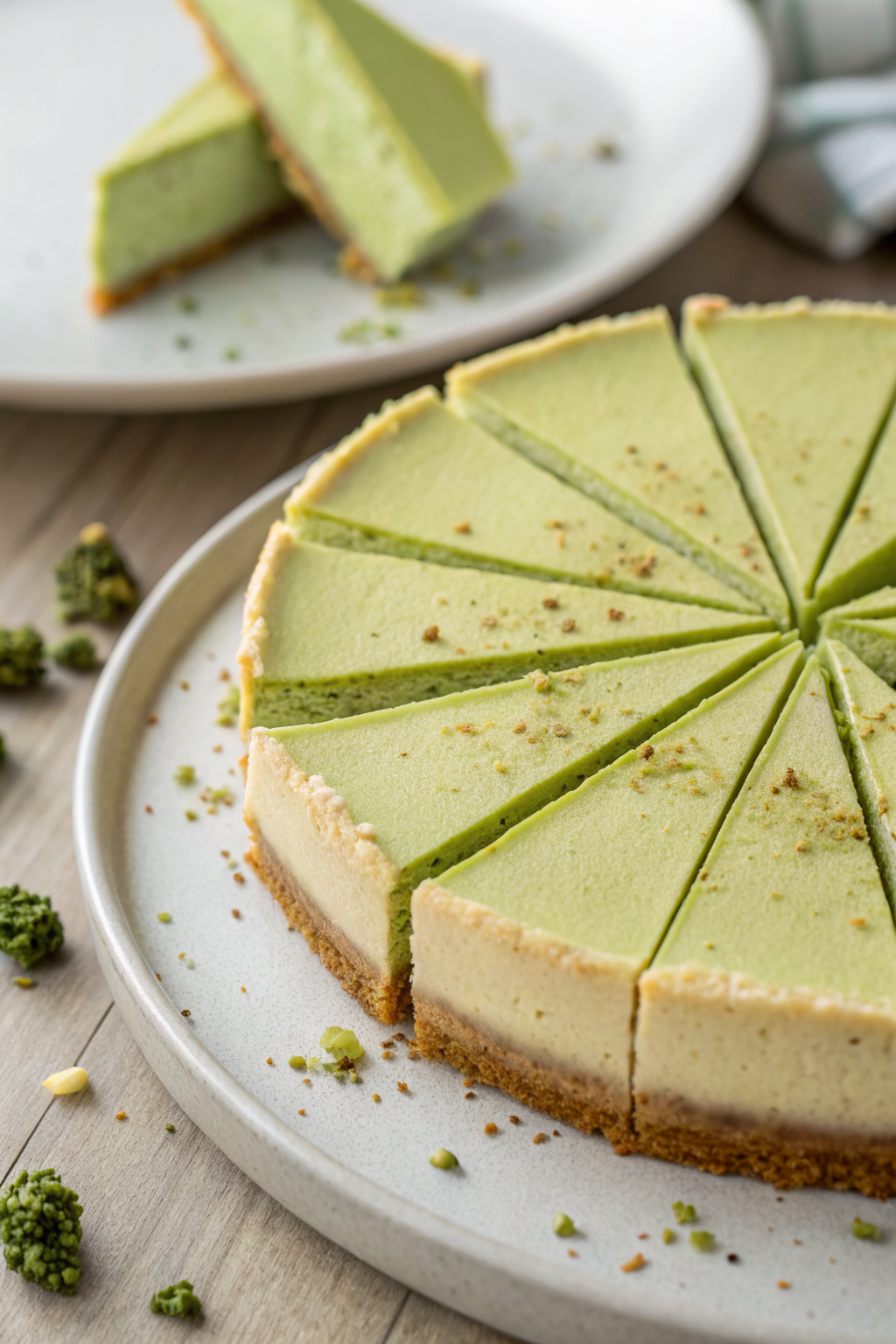
Original Matcha Japanese Cheesecake
Ingredients
Instructions
- Preheat the oven to 320°F (160°C). Line the bottom of an 8-inch round cake pan with parchment paper and wrap the outside of the pan tightly with aluminum foil to prevent water from seeping in. Lightly grease the sides of the pan.
- Prepare a water bath by placing a larger baking pan in the oven. You will place the cake pan inside this pan and fill it with hot water later.
- In a medium heatproof bowl set over a pot of gently simmering water (double boiler), combine cream cheese, butter, and milk. Stir until smooth and fully melted. Remove from heat and let cool slightly.
- Whisk half of the sugar into the warm cream cheese mixture. Add the egg yolks one at a time, whisking well after each addition until smooth.
- Sift the cake flour, cornstarch, and matcha powder together, then gently whisk into the cream cheese-yolk mixture until just combined and no lumps remain. Stir in vanilla extract if using. Set aside.
- In a clean large mixing bowl, add the egg whites, cream of tartar, and salt. Beat with an electric mixer on medium speed until foamy. Gradually add the remaining sugar and continue beating on medium-high until soft to medium peaks form; the meringue should be glossy and hold its shape but still slightly droop at the tip.
- Fold one-third of the meringue into the matcha cream cheese batter using a spatula to lighten it. Gently fold in the remaining meringue in two more additions, being careful not to deflate the mixture.
- Pour the batter into the prepared cake pan and tap the pan lightly on the counter to remove large air bubbles.
- Place the cake pan into the larger baking pan and pour hot water into the larger pan until it reaches about halfway up the sides of the cake pan, creating a water bath.
- Bake at 320°F (160°C) for 20 minutes, then reduce the oven temperature to 300°F (150°C) and bake for an additional 35–40 minutes, or until the top is set and lightly browned and a skewer inserted in the center comes out mostly clean.
- Turn off the oven, crack the oven door slightly, and let the cheesecake cool inside for 10–15 minutes to prevent sudden temperature changes that can cause cracking.
- Remove the cake pan from the water bath and let the cheesecake cool completely on a wire rack. Carefully remove from the pan, peel off the parchment, and transfer to a serving plate.
- Dust the top lightly with powdered sugar or extra matcha powder if desired. Slice with a warm, clean knife and serve at room temperature or slightly chilled.
Notes
Approximate per 1 slice (1/10 of cake): 210–230 calories; fat 15 g; saturated fat 9 g; carbohydrates 15 g; fiber 1 g; sugars 12 g; protein 6 g; sodium 170 mg. Values will vary based on exact ingredients, brands, and portion size.
Leave a Reply