
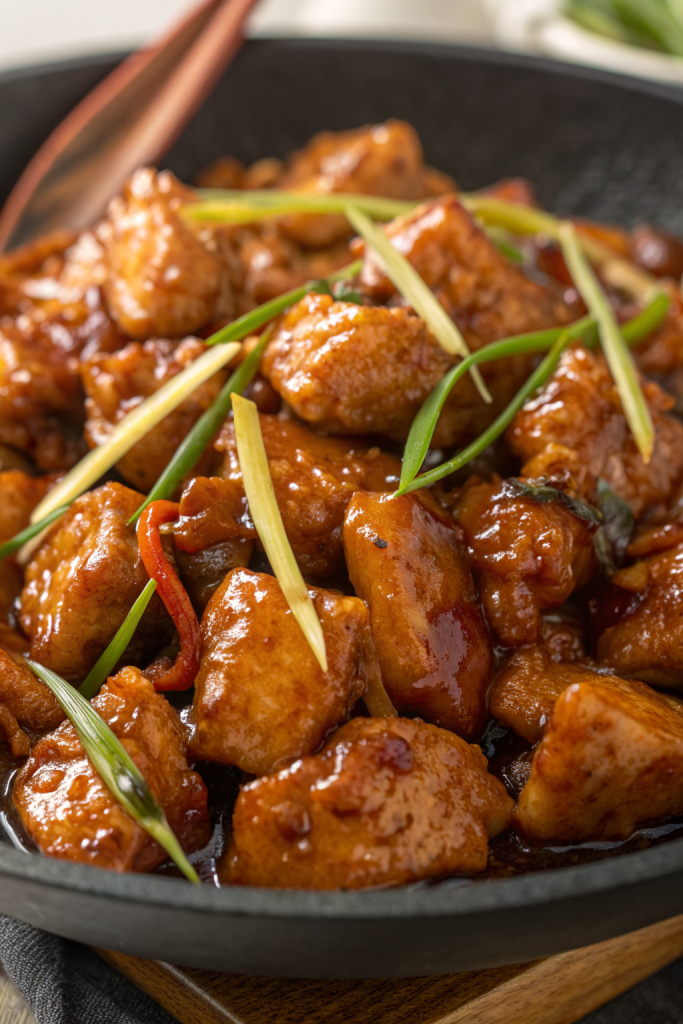
Mongolian Chicken Recipe hits that perfect balance of sweet, salty, garlicky, and just-spicy-enough, and I reach for it on busy weeknights when I want takeout flavor in about 30 minutes. It works for beginners who want an easy stir fry and for seasoned home cooks who crave a reliable, crowd-pleasing dinner. I tested this version so many times that my neighbors started “checking on me” right around dinnertime.
Why Make This Mongolian Chicken Recipe at Home
You control the sweetness, the heat, and the quality of the chicken, so the flavor stays bright and clean instead of heavy or greasy. The sauce clings to every piece of chicken, and the texture stays crisp-tender instead of soggy.
You also save money and time, since the whole recipe cooks faster than delivery arrives. Cleanup stays simple, and you can tweak it for gluten free or low sodium needs without stress.
“This Mongolian Chicken Recipe tastes better than my usual takeout spot and still comes together on a weeknight without chaos in the kitchen.” ★★★★★
Ingredients You Need
Chicken and marinade
- 1 ½ pounds boneless skinless chicken thighs, thinly sliced
- Use thighs for juicy texture; swap with chicken breast if you prefer leaner meat and shorten cooking time slightly.
- 2 tablespoons low sodium soy sauce
- 1 tablespoon cornstarch
- 1 teaspoon toasted sesame oil
Sauce
- ½ cup low sodium soy sauce
- Regular soy sauce works, but the dish may taste saltier; add a splash of water if needed.
- ½ cup water or low sodium chicken broth
- ½ cup packed light brown sugar
- Coconut sugar works if you want a deeper caramel note.
- 3 tablespoons hoisin sauce
- I like Lee Kum Kee or Kikkoman; store brands usually work fine.
- 1 tablespoon rice vinegar
- 1 to 1 ½ teaspoons crushed red pepper flakes, to taste
- 5 cloves garlic, minced
- 1 tablespoon fresh ginger, finely grated
To cook the chicken
- 3 tablespoons cornstarch, for coating the chicken
- 3 tablespoons neutral oil with high smoke point
- Use avocado, canola, or peanut oil; avoid extra virgin olive oil here.
Vegetables and garnish
- 4 to 5 green onions, cut into 1-inch pieces
- 1 small yellow onion, thinly sliced (optional but tasty)
- 1 red bell pepper, thinly sliced (optional, for color and crunch)
- 1 to 2 tablespoons toasted sesame seeds
- Extra sliced green onions for topping
Pantry shortcuts and substitutions
- Use jarred minced garlic and ginger if you need speed; use 1 ½ teaspoons each.
- Swap hoisin with oyster sauce plus 1 teaspoon extra brown sugar if you run out.
- Use gluten free tamari instead of soy sauce for a gluten free version.
Equipment
- Large nonstick skillet or wok
- Cutting board and sharp knife
- Mixing bowls
- Whisk or fork for the sauce
- Tongs or spatula
- Measuring cups and spoons
Tips & Mistakes
- Slice chicken thinly and evenly so it cooks quickly and stays tender.
- Pat chicken dry before coating with cornstarch so the crust turns crisp instead of gummy.
- Heat the pan until the oil shimmers; add chicken only when the pan feels hot so it sears instead of steams.
- Cook chicken in batches; crowding the pan leads to pale, soggy pieces.
- Stir the sauce before you pour it in, since cornstarch and sugar like to settle at the bottom.
- Keep the sauce on a gentle simmer; high heat can burn the sugar and turn it bitter.
- Taste the sauce before you add all the red pepper flakes; you can always add more heat but you cannot pull it back.
- Add vegetables near the end so they stay crisp-tender and bright, not limp.
- Serve the chicken right after the sauce thickens; overcooking at this stage can toughen the meat.
- Store leftovers quickly once they cool to room temperature so the texture and flavor stay fresh.
How to Make Mongolian Chicken Recipe
Step 1: Prep the chicken
Slice the chicken thighs into thin strips, about ¼ inch thick. Place them in a bowl and add 2 tablespoons soy sauce, 1 tablespoon cornstarch, and 1 teaspoon sesame oil. Toss until every piece looks coated, then set the bowl aside while you mix the sauce.
Step 2: Mix the sauce
In a separate bowl, whisk together ½ cup soy sauce, ½ cup water or broth, ½ cup brown sugar, 3 tablespoons hoisin, 1 tablespoon rice vinegar, red pepper flakes, minced garlic, and grated ginger. Stir until the sugar dissolves and the mixture looks smooth. Taste a small spoonful and adjust sweetness or heat to your liking.
Step 3: Coat the chicken
Sprinkle 3 tablespoons cornstarch over the marinated chicken. Toss until the cornstarch coats the strips in a thin, even layer. Shake off any big clumps so the coating stays light.
Step 4: Sear the chicken
Heat 2 tablespoons oil in a large skillet or wok over medium high heat until it shimmers. Add half the chicken in a single layer and let it cook undisturbed for 2 to 3 minutes so it browns. Flip and cook another 2 to 3 minutes until the chicken turns golden and cooks through, then transfer it to a plate and repeat with the remaining chicken, adding the last tablespoon of oil if the pan looks dry.
Step 5: Cook the aromatics and vegetables
Lower the heat to medium. Add the sliced onion and bell pepper to the same pan and sauté for 2 to 3 minutes until they start to soften but still feel crisp. Add the white parts of the green onions and cook 30 to 60 seconds so they turn fragrant.
Step 6: Add the sauce
Give the sauce a quick stir, then pour it into the pan with the vegetables. Stir and bring it to a gentle simmer. Cook 2 to 3 minutes, stirring often, until the sauce thickens and turns glossy.
Step 7: Combine chicken and sauce
Return the cooked chicken and any juices from the plate to the pan. Toss everything together so the sauce coats every piece of chicken and vegetable. Add the green parts of the green onions and cook 1 more minute so the flavors blend.
Step 8: Finish and serve
Turn off the heat and sprinkle sesame seeds over the top. Taste one piece and adjust with a splash of water if the sauce feels too thick or strong. Serve the Mongolian Chicken Recipe hot over rice, noodles, or steamed vegetables.
Variations I've Tried
I swap chicken thighs with thinly sliced flank steak when I crave a classic Mongolian beef vibe but still want this sauce. I also use chicken breast strips and shorten the cooking time by a minute or two so they stay juicy. Sometimes I bulk it up with broccoli florets, snap peas, or carrots to turn it into a full stir fry in one pan.
I tested a lighter version with half the brown sugar and extra broth, which tastes less sticky-sweet but still satisfies. I also tried an air fryer twist by air frying the cornstarch-coated chicken at high heat, then tossing it in the hot sauce on the stove, which gives a slightly crispier texture.
How to Serve Mongolian Chicken Recipe
Serve Mongolian Chicken Recipe over hot jasmine rice, brown rice, or cauliflower rice if you want a lighter base. I like to add a side of steamed broccoli or green beans to soak up extra sauce. You can spoon it over plain noodles or stir fried noodles for a takeout-style bowl at home.
Top each serving with extra green onions and sesame seeds for crunch and color. If you want a little freshness, add thin cucumber slices or a simple side salad with a light soy and lime dressing.
How to store
- Fridge: Cool leftovers to room temperature, then store in an airtight container in the fridge for up to 4 days.
- Freezer: Portion the Mongolian Chicken Recipe into freezer-safe containers, label them, and freeze for up to 2 months.
- Reheating on stove: Reheat gently in a skillet over medium heat with a splash of water until hot and saucy again.
- Reheating in microwave: Cover loosely and heat in short bursts, stirring between each, until the chicken warms through without drying out.
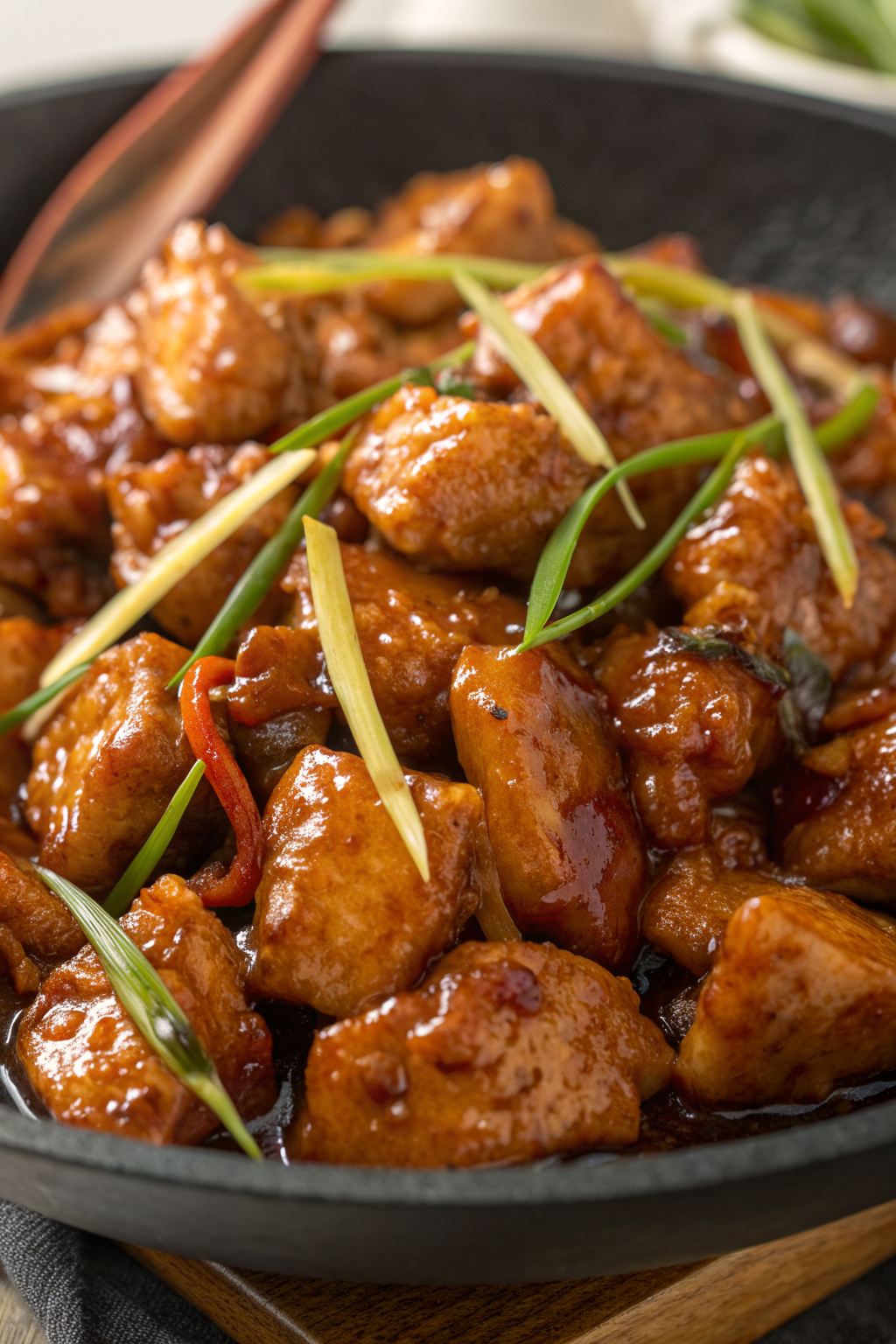
Mongolian Chicken Recipe
Ingredients
Instructions
- Slice the boneless skinless chicken thighs into thin strips, about 1/4 inch thick. Place them in a bowl and add 2 tablespoons low sodium soy sauce, 1 tablespoon cornstarch, and 1 teaspoon toasted sesame oil. Toss until every piece is evenly coated, then set aside while you prepare the sauce.
- In a separate bowl, whisk together 1/2 cup low sodium soy sauce, 1/2 cup water or low sodium chicken broth, 1/2 cup packed light brown sugar, 3 tablespoons hoisin sauce, 1 tablespoon rice vinegar, 1 to 1 1/2 teaspoons crushed red pepper flakes, 5 minced garlic cloves, and 1 tablespoon finely grated fresh ginger until the sugar dissolves and the sauce is smooth. Taste and adjust sweetness or heat as desired.
- Sprinkle 3 tablespoons cornstarch over the marinated chicken. Toss until the cornstarch coats the strips in a thin, even layer, shaking off any large clumps so the coating stays light.
- Heat 2 tablespoons neutral oil in a large nonstick skillet or wok over medium-high heat until it shimmers. Add about half of the chicken in a single layer and cook undisturbed for 2 to 3 minutes, until the bottom is browned. Flip and cook another 2 to 3 minutes, until golden and cooked through. Transfer the chicken to a plate and repeat with the remaining chicken, adding the remaining 1 tablespoon oil if the pan looks dry.
- Reduce the heat to medium. In the same pan, add the sliced yellow onion and red bell pepper (if using). Sauté for 2 to 3 minutes until they start to soften but still stay crisp. Add the white parts of the green onions and cook for 30 to 60 seconds until fragrant.
- Stir the prepared sauce, then pour it into the pan with the vegetables. Bring to a gentle simmer and cook for 2 to 3 minutes, stirring often, until the sauce thickens and looks glossy.
- Return the cooked chicken and any accumulated juices to the pan. Toss well so the sauce coats all the chicken and vegetables. Add the green parts of the green onions and cook for 1 more minute so the flavors blend.
- Turn off the heat and sprinkle toasted sesame seeds over the top. Taste and add a splash of water if the sauce seems too thick or strong. Serve hot over rice, noodles, or steamed vegetables, topped with extra sliced green onions if desired.
Notes
Approximate per serving (4 servings): 420 calories; fat 18 g; saturated fat 3 g; carbohydrates 34 g; fiber 1 g; sugars 23 g; protein 30 g; sodium 1180 mg. Values are estimates and will vary based on specific ingredients, brands, optional vegetables, and portion size.
Leave a Reply