

Japanese Silky Custard Purin Recipe tastes like a cross between a French crème caramel and the smoothest pudding of your dreams, with a deep caramel top and a barely-there wobble. It suits anyone who loves gentle, not-too-sweet desserts and wants a café-style treat in about 1 hour total, including chilling time if you work ahead. I tested this version so many times that my family started calling it “breakfast,” so you can say I feel pretty invested in your success here.
Why You Should Try This Japanese Silky Custard Purin Recipe
This Japanese Silky Custard Purin Recipe gives you a dessert that feels fancy but uses simple pantry ingredients. The texture turns out ultra smooth, almost like a custard cloud, and the caramel adds a slightly bitter edge that keeps it from tasting heavy.
You can serve purin straight from the fridge, so it works perfectly for make-ahead desserts and dinner parties. Kids usually love it, adults ask for seconds, and you only need a pot, a whisk, and some ramekins.
“This Japanese Silky Custard Purin Recipe tastes like a dessert from a Tokyo café, but my kitchen smelled like caramel heaven in under an hour. ★★★★★”
Ingredients You’ll Need
Custard base
- 2 cups (480 ml) whole milk
- Whole milk gives the best silky texture; avoid low-fat milk because it turns out thin and less creamy.
- 4 large eggs, room temperature
- Use fresh eggs; older eggs can give a slightly eggy aroma.
- 4 tablespoons (50 g) granulated sugar
- You can use superfine sugar if you want it to dissolve faster.
- 1 teaspoon pure vanilla extract
- I like Nielsen-Massey or a good-quality store brand; avoid artificial vanilla because it tastes harsh in such a simple dessert.
- Small pinch of fine sea salt
- This tiny bit of salt rounds out the sweetness.
Caramel layer
- 6 tablespoons (75 g) granulated sugar
- 2 tablespoons (30 ml) water
- 1–2 tablespoons hot water, to loosen the caramel at the end (optional but helpful)
Optional flavor twists
You can keep the purin classic or add a tiny twist. Try one of these per batch:
- 1 teaspoon instant espresso powder, dissolved in 1 tablespoon hot milk, for coffee purin
- 1 tablespoon dark brown sugar in place of 1 tablespoon white sugar, for deeper caramel notes
- 1 strip of lemon peel infused in the warm milk, then removed, for a light citrus aroma
Equipment list
- 4 to 6 heatproof ramekins or small pudding cups
- Aim for 4-ounce to 6-ounce size; I like 4-ounce for smaller portions.
- 1 medium saucepan
- 1 small saucepan or skillet for caramel
- 1 large mixing bowl
- Fine mesh strainer
- Whisk
- Baking dish or deep roasting pan to use as a water bath
- Kettle or extra pot to heat water for the water bath
- Aluminum foil or a lid to cover the pan in the oven
Tips & Tricks
- Warm the milk gently and avoid boiling it, so the custard stays smooth and does not taste eggy.
- Strain the custard through a fine mesh sieve to catch any egg bits and bubbles.
- Tap the filled ramekins lightly on the counter to pop surface bubbles before baking.
- Use hot tap water or just-boiled water in the water bath so the custard cooks evenly.
- Keep the water level around halfway up the sides of the ramekins to avoid overcooking the tops.
- Cover the pan loosely with foil so the tops stay pale and silky instead of rubbery.
- Bake at a low temperature and start checking early, since every oven runs a little differently.
- Stop baking when the edges set but the centers still jiggle like soft jelly when you nudge the ramekin.
- Cool the purin to room temperature before chilling, so condensation does not drip onto the surface.
- Run a thin knife around the edge before unmolding, and warm the bottom of the ramekin briefly in hot water if the caramel sticks.
How to Make Japanese Silky Custard Purin Recipe
Step 1: Prepare the ramekins and water bath
Set your oven to 300°F (150°C). Place your ramekins in a deep baking dish or roasting pan.
Heat a kettle or a pot of water until hot but not boiling; you will pour this around the ramekins later.
Keep a piece of foil ready to cover the pan.
Step 2: Make the caramel
Add 6 tablespoons sugar and 2 tablespoons water to a small saucepan. Swirl the pan gently to moisten the sugar, but do not stir with a spoon.
Set the pan over medium heat and cook until the syrup turns a deep amber color, about 5 to 8 minutes, swirling occasionally for even color.
Once the caramel reaches a rich amber, remove it from the heat and carefully add 1 to 2 tablespoons hot water to loosen it, swirling the pan. The caramel will bubble vigorously, so stand back.
Step 3: Coat the ramekins with caramel
Working quickly, pour a little caramel into each ramekin, tilting each one so the caramel coats the bottom evenly.
If the caramel thickens in the pan, warm it gently again over low heat until it loosens.
Set the caramel-coated ramekins aside while you prepare the custard.
Step 4: Warm the milk
Pour the milk into a medium saucepan and add the pinch of salt.
Heat over low to medium-low heat until the milk feels warm to the touch and small bubbles appear around the edges, but do not let it boil.
If you use any flavor infusions like lemon peel or coffee, add them now and let the milk sit off the heat for a few minutes, then remove any solids.
Step 5: Mix the eggs and sugar
In a large bowl, whisk the eggs and 4 tablespoons sugar together until the mixture looks smooth and slightly pale.
Whisk gently and avoid whipping in too much air, since extra bubbles can affect the silky texture.
Add the vanilla extract and whisk again to combine.
Step 6: Combine warm milk and egg mixture
Slowly pour the warm milk into the egg mixture while you whisk constantly but gently.
Pour in a thin stream so the eggs adjust to the heat and do not scramble.
Once combined, skim off any foam on top with a spoon.
Step 7: Strain the custard
Set a fine mesh strainer over a clean bowl or large measuring cup.
Pour the custard through the strainer to catch any tiny cooked egg bits and bubbles.
This step makes a big difference in the final silky texture, so do not skip it.
Step 8: Fill the ramekins
Pour the strained custard gently into the caramel-lined ramekins.
Leave a little space at the top of each ramekin so the custard does not spill into the water bath.
Tap each ramekin lightly on the counter to release any surface bubbles.
Step 9: Set up the water bath
Slide the baking dish with the filled ramekins into the oven rack.
Carefully pour the hot water into the baking dish around the ramekins until the water reaches about halfway up their sides.
Cover the dish loosely with foil so steam can escape a little while still protecting the custard surface.
Step 10: Bake the purin
Bake at 300°F (150°C) for 30 to 40 minutes, depending on the size of your ramekins.
Check at 25 minutes and gently shake one ramekin; the edges should look set while the center still jiggles softly.
If the center looks liquid, keep baking and check every 5 minutes.
Step 11: Cool and chill
Use tongs or oven mitts to carefully lift the ramekins out of the water bath.
Place them on a wire rack and let them cool to room temperature.
Once cool, cover each ramekin with plastic wrap and chill in the fridge for at least 3 hours, or overnight for the best flavor and texture.
Step 12: Unmold and serve
To unmold, run a thin knife around the edge of each custard to loosen it.
Dip the bottom of the ramekin in a bowl of hot water for about 10 to 15 seconds to soften the caramel.
Place a small plate on top of the ramekin, flip it over, and give it a gentle shake until the purin slides out and the caramel sauce flows over the top.
What to Serve with Japanese Silky Custard Purin Recipe
This Japanese Silky Custard Purin Recipe pairs beautifully with fresh fruit like sliced strawberries, kiwi, or a few juicy orange segments on the side. You can add a little whipped cream if you want a café-style presentation, but keep it lightly sweetened so it does not overpower the custard. Green tea, matcha latte, or a simple cup of hot black tea balance the sweetness nicely. If you serve it after a heavier meal, keep portions on the smaller side so everyone finishes feeling satisfied, not stuffed.
Storage Options
- Store the purin in the fridge, covered, for up to 3 days; keep it in the ramekins until you plan to serve.
- If you want to unmold ahead of time, cover each plate tightly with plastic wrap and keep in the fridge for up to 24 hours.
- Avoid freezing purin, since freezing changes the silky custard texture and makes it grainy.
- Serve purin chilled straight from the fridge; do not reheat, since heat can cause the custard to curdle and the caramel to thin out too much.
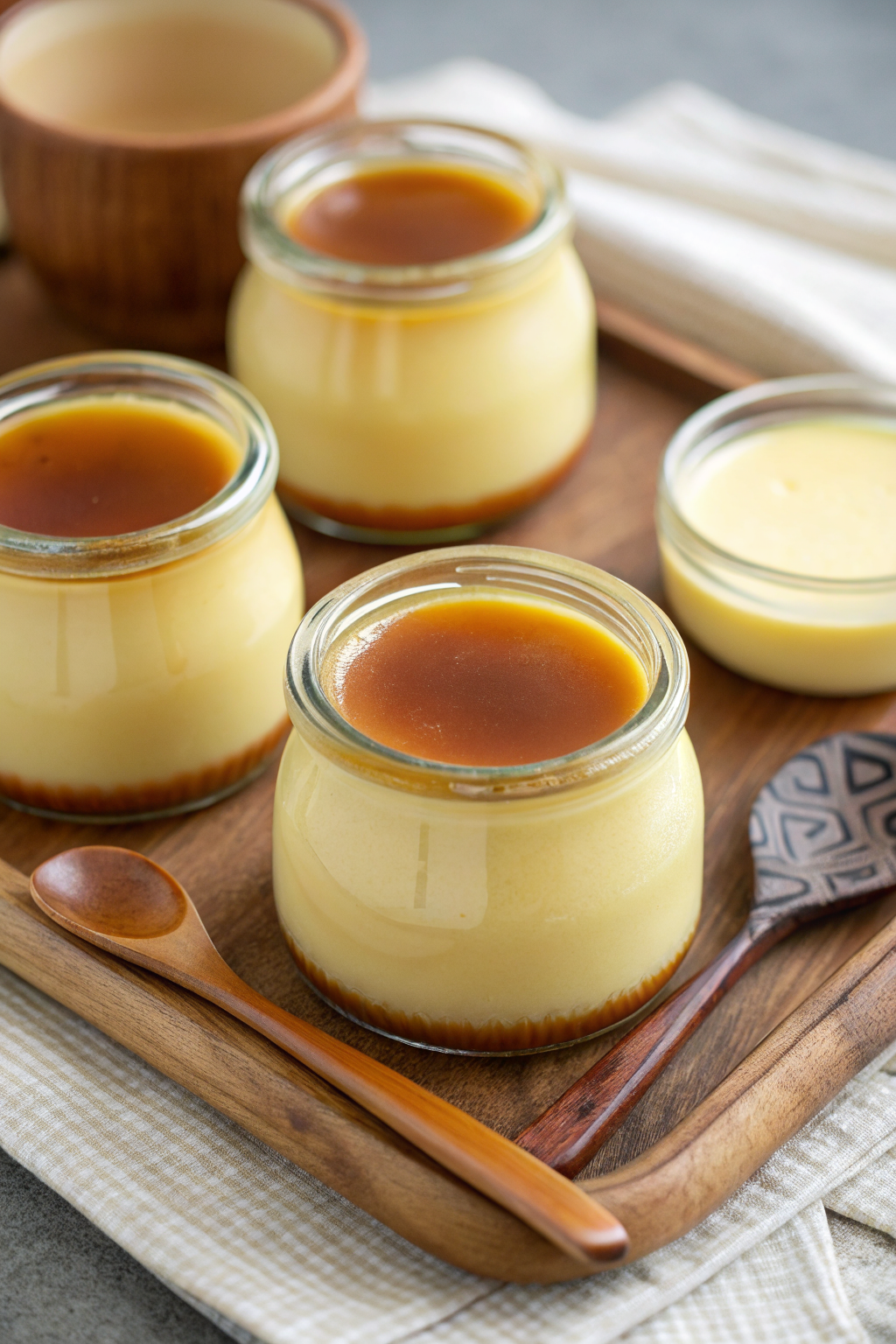
Japanese Silky Custard Purin
Ingredients
Instructions
- Preheat the oven to 300°F (150°C). Place a kitchen towel in the bottom of a deep baking dish or roasting pan and set aside.
- In a small saucepan, add sugar and water for the caramel. Heat over medium heat without stirring until the sugar dissolves and turns a deep amber color, gently swirling the pan as needed.
- Once the caramel reaches a rich amber color, remove from heat immediately and, if using, carefully add the hot water to thin slightly, swirling to combine.
- Quickly pour the caramel into 4 heatproof ramekins, tilting each ramekin to coat the bottom evenly. Set aside to allow the caramel to harden.
- In a small saucepan, gently heat the milk over low heat until warm to the touch but not boiling, then remove from heat and let cool slightly.
- In a mixing bowl, whisk together the eggs and sugar until just combined, avoiding creating too many bubbles.
- Slowly pour the warm milk into the egg mixture while whisking gently. Add vanilla extract and a pinch of salt, then whisk again lightly to combine.
- Strain the custard mixture through a fine-mesh sieve into a clean bowl or measuring jug to remove any egg chalazae and bubbles, ensuring a silky texture.
- Pour the strained custard gently into the caramel-lined ramekins, dividing it evenly among them. Skim off any surface bubbles with a spoon if needed.
- Place the filled ramekins in the prepared baking dish. Pour hot water into the dish to come about halfway up the sides of the ramekins, creating a gentle water bath.
- Cover the baking dish loosely with aluminum foil to prevent a skin from forming and bake for 30–35 minutes, or until the custard is set around the edges but slightly jiggly in the center when gently shaken.
- Remove the ramekins from the water bath and let them cool to room temperature. Then cover and refrigerate for at least 3 hours, or preferably overnight, until fully chilled and set.
- To serve, run a thin knife around the edge of the custard. Place a plate over each ramekin and quickly invert to release the purin, allowing the caramel sauce to flow over the custard.
Notes
Approximate per serving (1 of 4): 210 calories; fat 8 g; saturated fat 3.5 g; carbohydrates 27 g; fiber 0 g; sugars 26 g; protein 8 g; sodium 90 mg. Values are estimates and will vary based on exact ingredients, brands, and portion size.
Leave a Reply