
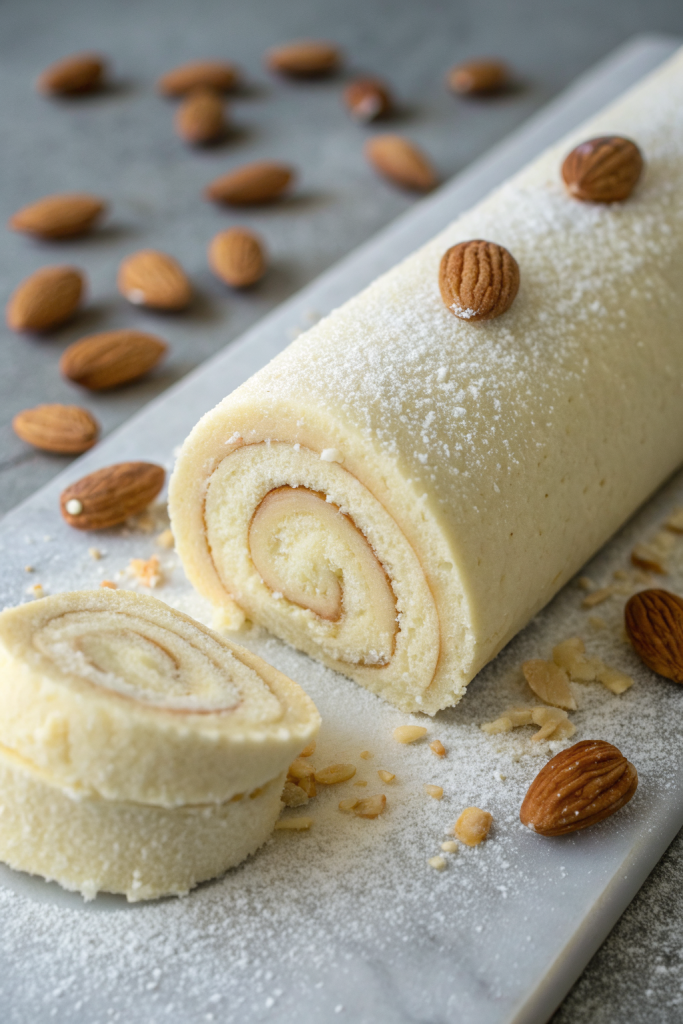
Homemade Marzipan Recipe tastes sweet, nutty, and slightly chewy, perfect for anyone who loves almond desserts and wants a 10-minute candy that looks fancy with almost no effort. This Homemade Marzipan Recipe works for beginners, holiday bakers, and cake decorators who want a smooth, moldable almond paste without weird additives. I started making it in my tiny apartment kitchen with a $20 food processor and never went back to store-bought.
Why Make This Homemade Marzipan Recipe at Home
Homemade marzipan tastes fresher, softer, and more almond-forward than most packaged brands. You control the sweetness, texture, and flavor strength, so it fits your exact taste instead of the other way around.
You also skip preservatives and mystery ingredients and save money, especially if you buy almond flour in bulk. The recipe uses pantry basics, comes together in minutes, and works for candy, cake decorating, and edible gifts.
Soft, rich, and perfectly almondy, this Homemade Marzipan Recipe beats every store-bought version I tried ★★★★★
Ingredients You Need
-
Almond flour
- Use super-fine blanched almond flour for the smoothest Homemade Marzipan Recipe.
- I like Bob’s Red Mill or King Arthur because they grind it very fine.
- Avoid almond meal with skins, since it gives a speckled look and slightly rough texture.
-
Powdered sugar
- Use regular powdered sugar that contains cornstarch; it helps the marzipan set and hold shape.
- Sift it if it looks lumpy so the mixture turns out smooth.
- If you want a less sweet marzipan, reduce the sugar slightly and add a spoonful more almond flour.
-
Almond extract
- This ingredient gives that classic marzipan flavor, so choose a good-quality pure almond extract.
- Start small and taste, since some brands taste stronger than others.
- If you prefer a milder flavor, cut the extract in half and add a drop of vanilla.
-
Rose water or orange blossom water (optional)
- A tiny splash adds a traditional European-style aroma.
- Use a light hand, since too much can taste soapy.
- Skip it if you want a simple, straight almond flavor.
-
Vanilla extract (optional)
- Adds warmth and rounds out the sweetness.
- I like half almond extract and half vanilla for a softer flavor profile.
-
Salt
- A pinch of fine sea salt balances the sweetness and makes the almond flavor pop.
- Do not skip it; the difference in taste surprises most people.
-
Egg white or water
- Classic marzipan uses one small pasteurized egg white to bind everything.
- If you avoid eggs, use 2 to 3 tablespoons of water or aquafaba and add it slowly until the dough comes together.
- Pasteurized egg whites in a carton work well and keep things simple.
-
Optional add-ins
- Gel food coloring for decorations and fruit shapes.
- Cocoa powder for a chocolate twist.
- Finely ground pistachios to swap part of the almond flour.
Equipment List
- Food processor or high-powered blender
- Measuring cups and spoons
- Small bowl for egg white or water
- Rubber spatula
- Plastic wrap or reusable silicone wrap
- Kitchen scale (optional, but very helpful for accuracy)
Tips & Mistakes
- Use blanched, super-fine almond flour so the marzipan turns out smooth and not gritty.
- Weigh ingredients when possible to keep the texture consistent every time.
- Add liquid slowly; a few drops can take the dough from crumbly to sticky very fast.
- Stop the food processor as soon as the dough clumps; over-processing can make the oils separate.
- Taste as you go and adjust almond extract; too much can taste bitter or artificial.
- Chill the dough before rolling or shaping so it stays firm and easy to handle.
- Dust your hands and work surface with powdered sugar so the marzipan does not stick.
- Wrap leftovers tightly; air dries marzipan and gives it a crusty surface.
- Keep egg-based marzipan in the fridge and use it within the safe time window.
- If the dough turns sticky, knead in more almond flour or powdered sugar until it feels smooth and pliable.
How to Make Homemade Marzipan Recipe
Step 1: Measure and prep
Measure almond flour and powdered sugar by weight if possible for best texture. Sift the powdered sugar into a bowl to remove any lumps. Separate one small egg and place the egg white in a small bowl, or measure your water or aquafaba.
Step 2: Combine dry ingredients
Add almond flour, powdered sugar, and a pinch of salt to the food processor. Pulse several times until the mixture looks evenly combined and fine. Scrape down the sides so no dry pockets hide in the corners.
Step 3: Add flavorings
Pour in almond extract and any optional vanilla, rose water, or orange blossom water. Start with the smaller amounts, since you can always add more. Pulse a few times to distribute the flavor evenly.
Step 4: Add egg white or water
Add about half of the egg white or half of the water to the processor. Pulse until the mixture starts to clump together. Add the remaining liquid a teaspoon at a time, pulsing between each addition, until the mixture forms a soft dough that holds when you pinch it.
Step 5: Check texture and adjust
Pinch a bit of dough between your fingers. It should feel smooth, slightly tacky, and hold its shape without cracking. If it feels dry or crumbly, add a few drops of water; if it feels sticky, pulse in a spoonful of almond flour or powdered sugar.
Step 6: Knead briefly
Turn the dough out onto a surface lightly dusted with powdered sugar. Knead it gently for 20 to 30 seconds until it looks smooth and uniform. Shape it into a log or disk.
Step 7: Chill
Wrap the marzipan tightly in plastic wrap or a reusable wrap. Chill it in the fridge for at least 30 minutes so it firms up and becomes easier to roll and sculpt. Use this time to clean the food processor and plan your shapes or decorations.
Step 8: Shape and use
Unwrap the chilled Homemade Marzipan Recipe and cut off the amount you need. Roll it out between two sheets of parchment with a little powdered sugar if you plan to cover a cake. Shape it into fruits, candies, or figures with your hands, and tint small portions with gel food coloring if you like.
Variations I've Tried
I swap part of the almond flour with finely ground pistachios for a pale green marzipan that tastes amazing with chocolate desserts. I also mix in a spoonful of cocoa powder and a touch more liquid for a chocolate marzipan that kids inhale. Around the holidays, I add orange zest and a tiny splash of orange blossom water for a bright, citrusy version.
For a lower-sugar option, I reduce the powdered sugar and replace part of it with extra almond flour, then sweeten lightly with powdered erythritol. I also like to roll small marzipan balls in shredded coconut or finely chopped nuts for quick no-bake treats.
How to Serve Homemade Marzipan Recipe
Use this Homemade Marzipan Recipe to cover cakes, especially fruitcakes or sponge cakes, since it adds sweetness and a soft almond layer. Shape it into tiny fruits, hearts, or flowers and place them on cupcakes, cookies, or birthday cakes. Roll it into bite-size logs, dip one end in melted chocolate, and serve as candy with coffee, tea, or hot cocoa.
You can also crumble small pieces into ice cream, yogurt bowls, or oatmeal for a sweet almond surprise. Kids love simple marzipan shapes with sprinkles, chocolate chips, or crushed nuts on top.
How to store
- Room temperature (no egg white, short term): Wrap tightly and keep in an airtight container up to 3 days in a cool, dry spot.
- Fridge (with egg white or for longer storage): Wrap in plastic, place in a sealed container, and refrigerate up to 2 weeks.
- Freezer: Wrap the marzipan log in plastic, then place it in a freezer bag and freeze up to 3 months; label it with the date.
- Thawing: Move frozen marzipan to the fridge overnight, then let it sit at room temperature for 15 to 20 minutes before using.
- Best way to refresh: Knead the marzipan with clean hands; if it feels dry, work in a few drops of water or a tiny bit of egg white until it softens again.
Homemade Marzipan Recipe
Ingredients
Instructions
- Measure the almond flour and powdered sugar. Sift the powdered sugar to remove any lumps. Separate one small egg and place the egg white in a small bowl, or measure your water or aquafaba if not using egg.
- Add the almond flour, sifted powdered sugar, and a pinch of fine sea salt to a food processor. Pulse several times until the mixture looks evenly combined and very fine, scraping down the sides as needed.
- Add the almond extract and any optional vanilla, rose water, or orange blossom water. Pulse a few times to distribute the flavor evenly through the dry mixture.
- Pour in about half of the egg white (or half of the measured water or aquafaba). Pulse until the mixture starts to look slightly damp and clumpy. Add the remaining liquid a teaspoon at a time, pulsing between each addition, until the mixture forms a soft dough that holds together when pinched.
- Check the texture by pinching a small piece of dough between your fingers. It should feel smooth, slightly tacky, and hold its shape without cracking. If it seems dry or crumbly, add a few drops of water. If it turns sticky, pulse in a spoonful of almond flour or powdered sugar until it feels smooth and pliable.
- Turn the dough out onto a surface lightly dusted with powdered sugar. Knead gently for 20 to 30 seconds, just until the marzipan looks smooth and uniform. Shape it into a log or disk.
- Wrap the marzipan tightly in plastic wrap or reusable wrap. Chill in the refrigerator for at least 30 minutes so it firms up and becomes easier to roll or sculpt.
- Unwrap the chilled marzipan and cut off the amount you need. Roll it out between two sheets of parchment dusted with powdered sugar to cover cakes, or shape it into fruits, candies, or figures by hand. Tint small portions with gel food coloring, or knead in cocoa powder or finely ground pistachios for variations, if desired.
Notes
Approximate per serving (about 1/12 of the batch): 210 calories; fat 12 g; saturated fat 1 g; carbohydrates 24 g; fiber 2 g; sugars 21 g; protein 4 g; sodium 35 mg. Values are estimates and will vary based on exact ingredient brands, optional add-ins, and portion size.