
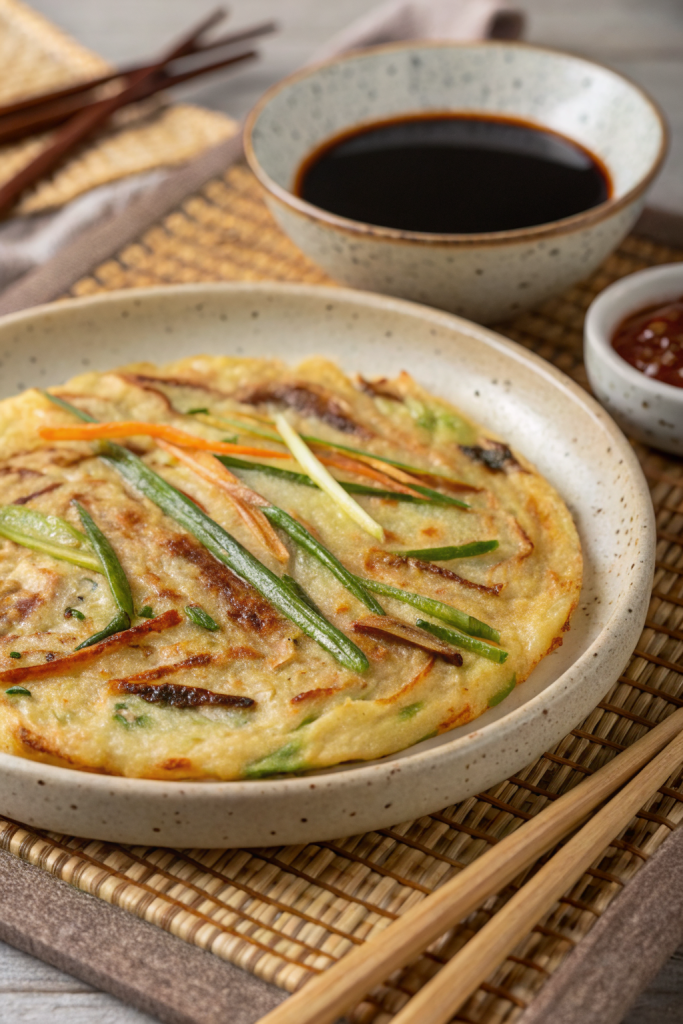
Hobak Buchim – Korean Zucchini Pancakes Recipe tastes light, crispy at the edges, and savory with a gentle sweetness from fresh zucchini and green onion. It works perfectly for busy weeknights, picky eaters, and anyone who wants a 25-minute veggie side that feels like a snack. I first learned this from a Korean neighbor in college, and I still hear her voice in my head every time my batter looks too thick.
Why You Should Try This Hobak Buchim – Korean Zucchini Pancakes Recipe
These Korean zucchini pancakes hit that magic spot between comfort food and “hey, I just ate vegetables.” The outside turns golden and crisp, while the inside stays tender and juicy, so every bite feels satisfying without feeling heavy.
You can serve Hobak Buchim as a snack, side dish, or light meal, so it fits into almost any menu. Kids usually approve because it looks like a pancake and tastes mild, and adults love it with a punchy dipping sauce that wakes everything up.
“These Hobak Buchim taste like the best parts of tempura and scallion pancakes combined, and I could eat the whole plate by myself. ★★★★★”
Ingredients You’ll Need
Zucchini and aromatics
- 2 medium zucchini, about 1 pound total, grated
- Any firm zucchini works; avoid very old, seedy ones.
- 3 green onions, thinly sliced
- 1 small carrot, julienned or grated (optional, adds color and a touch of sweetness)
- 1 small garlic clove, minced (or 1/4 teaspoon garlic powder as a pantry shortcut)
Batter
- 1 large egg
- 1/2 cup all-purpose flour
- You can swap with Korean pancake mix if you keep it in your pantry; it adds a slightly chewier texture.
- 1/4 cup potato starch or cornstarch
- Potato starch gives a crisper bite; cornstarch works fine if that is what you have.
- 1/2 teaspoon fine sea salt
- 1/4 teaspoon ground black pepper
- 1/4 cup cold water, plus 1–2 tablespoons more as needed
Pan-frying
- 4–6 tablespoons neutral oil with a high smoke point
- Use canola, grapeseed, sunflower, or avocado oil. Avoid extra virgin olive oil because it smokes too quickly.
Simple dipping sauce
- 2 tablespoons soy sauce
- 1 tablespoon rice vinegar
- 1 teaspoon toasted sesame oil
- 1 teaspoon sugar or honey
- 1 teaspoon finely chopped green onion
- 1/4 teaspoon Korean red pepper flakes (gochugaru), optional for a mild kick
- If you do not have gochugaru, use a pinch of regular red pepper flakes or skip it for a kid-friendly version.
Equipment list
- Box grater or food processor with grating disc
- Large mixing bowl
- Fine mesh strainer or clean kitchen towel
- Measuring cups and spoons
- Whisk or fork
- Large nonstick skillet or well-seasoned cast iron pan
- Spatula (thin, wide one works best)
- Small bowl for dipping sauce
- Paper towels and a plate or wire rack for draining pancakes
Tips & Tricks
- Salt the grated zucchini and squeeze out the liquid so the pancakes turn crisp instead of soggy.
- Keep the batter slightly thick, like loose oatmeal, so it holds together in the pan.
- Use cold water in the batter to help the outside crisp faster.
- Preheat the pan and oil until a small drop of batter sizzles right away.
- Spread the batter thin in the pan for extra crisp edges, or keep it a bit thicker for a softer center.
- Avoid crowding the pan; cook in batches so the pancakes fry instead of steam.
- Stir the batter between batches because the zucchini and starch like to settle at the bottom.
- Taste the first pancake and adjust salt in the batter or dipping sauce before you cook the rest.
- Use Korean pancake mix if you want a shortcut; just follow the package liquid ratio and fold in the salted zucchini.
- Serve the dipping sauce on the side so everyone can control the level of salt and spice.
How to Make Hobak Buchim – Korean Zucchini Pancakes Recipe
Step 1: Prep and salt the zucchini
Wash the zucchini and trim the ends. Grate them on the large holes of a box grater into a large bowl. Sprinkle the grated zucchini with 1/2 teaspoon of the salt from the batter ingredients and toss well.
Let the salted zucchini sit for 10 minutes so it releases water. After that, squeeze handfuls of zucchini over the sink or over a strainer until you remove as much liquid as you can. The pile should feel slightly dry and clump together.
Step 2: Mix the batter
In a clean large bowl, whisk the egg, remaining salt, and black pepper until the egg loosens. Add the flour and potato starch, then pour in the cold water. Whisk until the mixture looks smooth with no dry pockets.
Fold the squeezed zucchini, green onions, carrot, and garlic into the batter. The mixture should look thick but scoopable. If it feels too stiff and does not drop easily from a spoon, add 1 tablespoon more water at a time until it loosens slightly.
Step 3: Make the dipping sauce
In a small bowl, combine soy sauce, rice vinegar, sesame oil, and sugar or honey. Stir until the sugar dissolves. Add chopped green onion and gochugaru if you use it.
Taste and adjust seasoning; add a splash more vinegar for brightness or a pinch more sugar if it tastes too sharp. Set the sauce aside so the flavors mingle while you cook the pancakes.
Step 4: Heat the pan and test the batter
Place a large nonstick or cast iron skillet over medium heat. Add 2 tablespoons of oil and let it heat until it shimmers. Drop a tiny spoonful of batter into the pan; if it sizzles right away and starts to set, the pan sits at the right temperature.
If the batter spreads too thin, add a spoonful of flour or starch to thicken it slightly. If it sits like a blob and does not spread at all, loosen it with a teaspoon or two of water.
Step 5: Cook the pancakes
Scoop about 1/4 to 1/3 cup of batter into the hot pan for each pancake. Gently spread each portion with the back of a spoon into a thin round, about 4 to 5 inches wide. Leave a little space between pancakes so you can flip them easily.
Cook each side for 3 to 4 minutes until the edges look golden and the bottom turns nicely browned. Flip carefully with a wide spatula and cook the second side until it browns and the center feels set. Adjust the heat if the pancakes brown too fast or too slowly.
Step 6: Finish batches and keep them crisp
Transfer cooked Hobak Buchim to a plate lined with paper towels or to a wire rack set over a baking sheet. If you cook several batches, keep them in a low oven at about 200°F so they stay warm and crisp. Add a little more oil to the pan between batches and let it heat before you add more batter.
Stir the batter each time you scoop more into the pan so the vegetables and starch stay evenly distributed. Continue until you use all the batter and you have a stack of golden Korean zucchini pancakes.
Step 7: Serve
Slice larger pancakes into wedges or serve the smaller ones whole. Arrange them on a platter with the dipping sauce in a small bowl in the center. Sprinkle a few sesame seeds or extra green onion on top if you want a restaurant-style look.
Serve Hobak Buchim hot or warm, while the edges still crunch when you bite into them.
What to Serve with Hobak Buchim – Korean Zucchini Pancakes Recipe
Hobak Buchim pairs nicely with a simple bowl of steamed white rice or multigrain rice and a few small side dishes like kimchi, cucumber salad, or seasoned spinach. You can add a bowl of miso soup or Korean seaweed soup for a cozy, light meal. Kids often enjoy these pancakes with a side of fruit and plain yogurt for balance. For drinks, go with cold barley tea, iced green tea, or sparkling water with lemon.
Storage Options
- Store leftover Hobak Buchim in an airtight container in the fridge for up to 3 days, and place parchment between layers so they do not stick.
- Freeze cooked pancakes in a single layer on a tray, then move them to a freezer bag once solid; they keep well for about 2 months.
- Reheat in a lightly oiled skillet over medium heat or in an air fryer at 350°F for 4–6 minutes until hot and crisp again.
- Avoid microwaving if you care about texture, because the pancakes turn soft and lose their crisp edges.

Hobak Buchim - Korean Zucchini Pancakes Recipe
Ingredients
Instructions
- Wash the zucchini and trim the ends. Grate on the large holes of a box grater into a large bowl. Sprinkle with about half of the salt and toss well. Let sit for 10 minutes to release water, then squeeze handfuls of zucchini over the sink or a strainer until as much liquid as possible is removed and the zucchini feels slightly dry and clumps together.
- In a clean large bowl, whisk the egg with the remaining salt and black pepper. Add the flour and potato starch or cornstarch, then pour in the cold water. Whisk until smooth with no dry pockets. Fold in the squeezed zucchini, sliced green onions, carrot if using, and minced garlic. The batter should be thick but scoopable; if too stiff, add a little more water a tablespoon at a time until it drops easily from a spoon.
- Make the dipping sauce by combining soy sauce, rice vinegar, toasted sesame oil, and sugar or honey in a small bowl. Stir until the sugar dissolves, then add chopped green onion and gochugaru if using. Taste and adjust with more vinegar or a pinch of sugar to balance. Set aside.
- Heat a large nonstick or well-seasoned cast iron skillet over medium heat. Add about 2 tablespoons of neutral oil and heat until it shimmers. Drop a tiny spoonful of batter into the pan; if it sizzles immediately and begins to set, the pan is ready. If the batter spreads too much, stir in a little more flour or starch; if it stays in a thick blob, loosen with a bit of water.
- For each pancake, scoop about 1/4 to 1/3 cup of batter into the hot pan. Spread gently with the back of a spoon into a thin round about 4 to 5 inches wide, leaving space between pancakes. Cook for 3 to 4 minutes per side, or until the edges are golden, the bottom is nicely browned, and the center feels set. Adjust the heat as needed so they brown without burning.
- Transfer cooked pancakes to a plate lined with paper towels or to a wire rack set over a baking sheet. If making multiple batches, keep them warm in a low oven at about 200°F. Add a little more oil to the pan between batches and let it heat before adding more batter. Stir the batter briefly before each new batch so the vegetables and starch stay evenly distributed. Repeat until all the batter is used.
- Serve the Hobak Buchim hot or warm, whole or sliced into wedges, arranged on a platter with the dipping sauce in a small bowl in the center. Enjoy while the edges are still crisp.
Notes
Approximate per serving (1 of 4, including a share of the dipping sauce): 220 calories; fat 13 g; saturated fat 2 g; carbohydrates 21 g; fiber 2 g; sugars 5 g; protein 6 g; sodium 520 mg. Values will vary based on specific ingredients, oil absorbed during frying, and portion size.
Leave a Reply