

Cream-free Tomato Rigatoni Pasta Recipe tastes rich, tangy, and silky without a drop of cream, so it works for anyone who wants comfort food that still feels light. It suits busy weeknights, date nights at home, or a casual dinner with friends, and you can get it on the table in about 35 minutes. I tested versions of this sauce so many times that my neighbors started “checking in” right at dinnertime.
Why You Should Try This Cream-free Tomato Rigatoni Pasta Recipe
This pasta hits that cozy, restaurant-level flavor while it keeps the ingredient list simple and budget friendly. You get a thick, clingy tomato sauce that coats every tube of rigatoni, with garlic, herbs, and a touch of richness from olive oil and starchy pasta water.
You can make it with mostly pantry staples, so it saves you when the fridge looks empty. It also works for a range of eaters, since it skips cream and stays vegetarian, yet still tastes hearty and satisfying.
“This Cream-free Tomato Rigatoni Pasta Recipe tastes like a fancy Italian restaurant dish that someone secretly simplified for weeknights.” ★★★★★
Ingredients You’ll Need
Pasta
- 12 ounces rigatoni
- Any short, ridged pasta works, like penne rigate or ziti, but rigatoni holds the sauce best.
- Use bronze-cut or “rigate” styles if possible, since the rough surface grabs more sauce.
Tomatoes and Sauce Base
- 2 tablespoons extra-virgin olive oil
- Use a flavorful one, since it carries a lot of the richness.
- 3 cloves garlic, minced
- 1 small yellow onion, finely diced
- 1 can (28 ounces) crushed tomatoes or whole peeled tomatoes
- I like San Marzano style for sweetness and low acidity.
- If you use whole tomatoes, crush them by hand or with a spoon in the pot.
- 2 tablespoons tomato paste
- Tube tomato paste works great and stores easily in the fridge.
- 1 teaspoon sugar, optional
- Add only if the sauce tastes too sharp.
- ½ teaspoon red pepper flakes, optional
- Adjust to taste if you like a little heat.
- ½ teaspoon dried oregano
- ½ teaspoon dried basil or Italian seasoning
- ½ to 1 teaspoon kosher salt, plus more for pasta water
- ¼ teaspoon freshly ground black pepper
Fresh Finish
- ¼ cup grated Parmesan or Pecorino Romano, plus more for serving
- Use a wedge and grate it yourself if possible, since it melts smoother than pre-grated.
- 2 tablespoons butter or vegan butter
- This adds creaminess without actual cream.
- ¼ to ½ cup reserved starchy pasta water
- Small handful fresh basil leaves, torn or sliced
- If you do not have basil, use flat-leaf parsley for freshness.
Pantry Shortcuts & Substitutions
- Use jarred marinara instead of canned tomatoes and tomato paste if you feel rushed. Simmer it with garlic, onion, and herbs to boost flavor.
- Swap butter with more olive oil for a dairy-light version.
- Skip cheese or use a plant-based Parmesan-style topping if you cook for dairy-free eaters.
- Add cooked Italian sausage, meatballs, or roasted vegetables if you want extra protein or bulk.
Equipment List
- Large pot for boiling pasta
- Large deep skillet or wide saucepan for the sauce
- Wooden spoon or silicone spatula
- Measuring cups and spoons
- Colander
- Ladle or heatproof cup to scoop pasta water
- Microplane or grater for cheese
- Chef’s knife and cutting board
Tips & Tricks
- Salt the pasta water generously so the rigatoni tastes seasoned from the inside.
- Cook the pasta just to al dente, since it will finish in the sauce and soak up flavor.
- Scoop out at least 1 cup of pasta water before you drain, so you have enough to adjust the sauce.
- Let the garlic turn fragrant and just barely golden, since dark garlic tastes bitter.
- Simmer the tomato sauce until it thickens and looks glossy, not watery.
- Stir in butter and cheese off the heat so they melt smoothly and keep the sauce silky.
- Toss the pasta in the pan with the sauce, rather than spooning sauce on top, so every piece gets coated.
- Taste and adjust salt, pepper, and red pepper flakes at the end, since tomatoes vary in acidity and sweetness.
- Add a splash of pasta water if leftovers look thick when you reheat them.
- Use a wide skillet instead of a tiny pot, since a larger surface helps the sauce reduce faster.
How to Make Cream-free Tomato Rigatoni Pasta Recipe
Step 1: Boil the Rigatoni
Bring a large pot of water to a strong boil. Salt it generously so it tastes like the sea. Add the rigatoni and stir so it does not stick. Cook until al dente, usually 1 to 2 minutes less than the package suggests.
Scoop out at least 1 cup of the starchy pasta water and set it aside. Drain the rigatoni in a colander. Do not rinse the pasta, since the starch on the surface helps the sauce cling.
Step 2: Build the Tomato Base
While the pasta cooks, heat the olive oil in a large skillet over medium heat. Add the diced onion with a pinch of salt and cook until it turns soft and translucent, about 5 to 7 minutes, stirring often. Add the minced garlic and cook 30 to 60 seconds, until it smells fragrant and just starts to turn pale gold.
Stir in the tomato paste and cook it for 1 to 2 minutes. Let it darken slightly and stick in spots, then scrape the bottom of the pan. This step deepens the flavor and removes that raw tomato taste.
Step 3: Simmer the Tomato Sauce
Pour in the crushed tomatoes and stir well. Add dried oregano, dried basil or Italian seasoning, red pepper flakes if you use them, black pepper, and a pinch of salt. Bring the sauce to a gentle simmer.
Lower the heat so the sauce bubbles softly. Let it cook 10 to 15 minutes, stirring every couple of minutes. The sauce should thicken, darken slightly, and leave a trail when you drag a spoon through it. Taste and add sugar only if the sauce tastes too sharp or acidic.
Step 4: Finish the Sauce Without Cream
Turn the heat to low. Add the butter and stir until it melts into the sauce. Sprinkle in the grated Parmesan and stir until it blends and the sauce looks glossy.
Add a splash of reserved pasta water, about ¼ cup, and stir. The starch in the water helps the sauce turn silky and clingy, similar to a cream sauce. Taste again and adjust salt, pepper, and red pepper flakes.
Step 5: Toss the Rigatoni in the Sauce
Add the drained rigatoni straight into the skillet with the sauce. Toss and stir so every tube gets coated. If the sauce looks too thick, add more pasta water a little at a time until it reaches your ideal consistency.
Let the pasta simmer in the sauce for 1 to 2 minutes so it finishes cooking and absorbs flavor. Turn off the heat. Stir in the fresh basil. Add another sprinkle of cheese if that makes you happy, which it usually does.
Step 6: Serve
Spoon the Cream-free Tomato Rigatoni Pasta into warm bowls. Top with extra grated Parmesan, more basil, and a pinch of red pepper flakes if you like heat. Serve right away while the sauce still clings perfectly to the pasta.
What to Serve with Cream-free Tomato Rigatoni Pasta Recipe
This pasta pairs nicely with a simple green salad, like mixed greens with olive oil, lemon, and a pinch of salt. Add garlic bread or toasted baguette slices so you can swipe up every last bit of tomato sauce. Steamed or roasted vegetables such as broccoli, green beans, or zucchini balance the richness. Serve it with sparkling water, iced tea, or a citrusy mocktail for a fresh, family-friendly meal.
Storage Options
- Store leftover Cream-free Tomato Rigatoni Pasta in an airtight container in the fridge for up to 3 days.
- Reheat gently on the stove over low to medium heat with a splash of water, broth, or extra tomato sauce, and stir often until hot.
- Freeze the sauce by itself in a freezer-safe container for up to 3 months, then thaw in the fridge and reheat on the stove.
- Avoid freezing the pasta already mixed with sauce, since the texture turns softer; cook fresh rigatoni and toss it with reheated sauce instead.
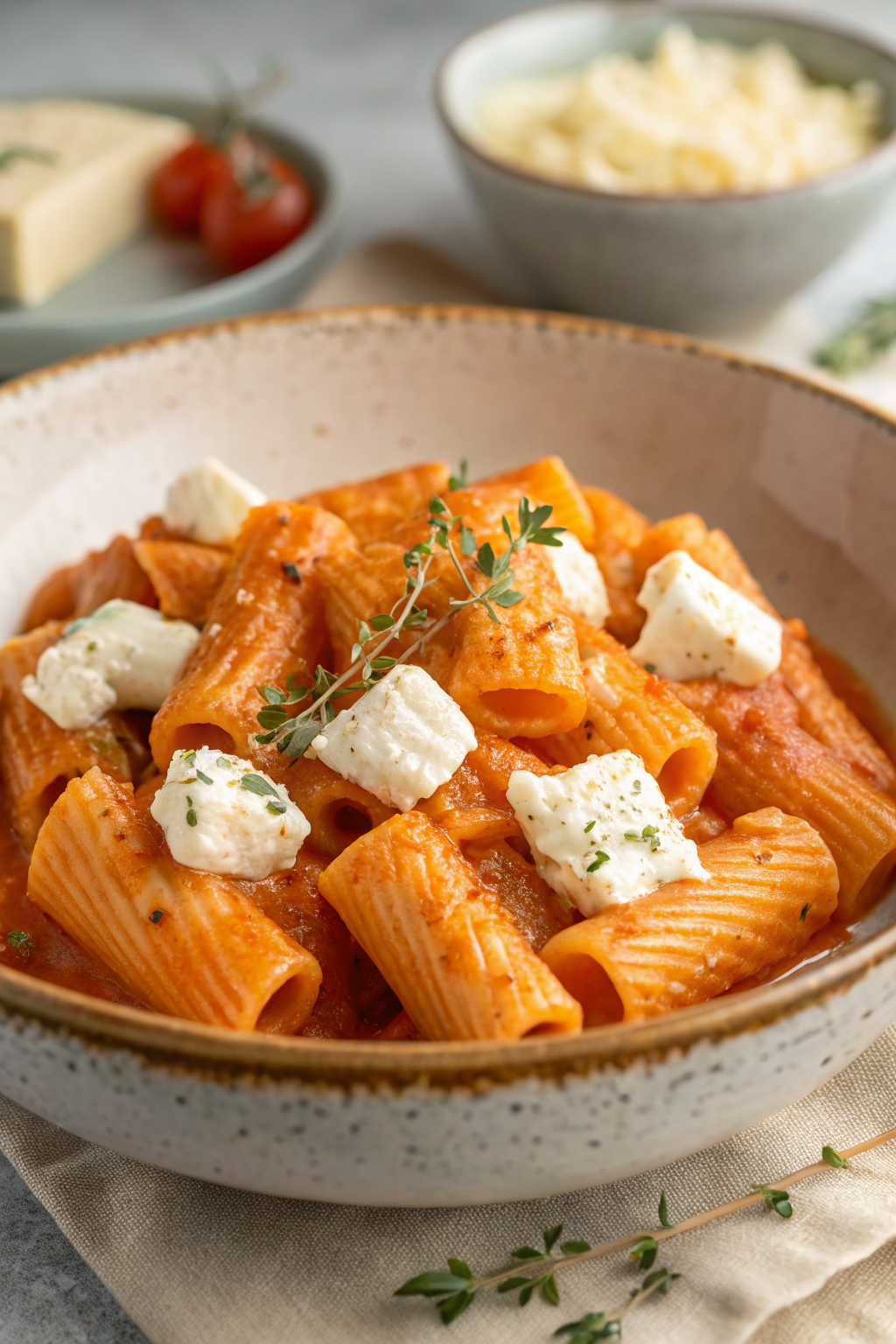
Cream-free Tomato Rigatoni Pasta Recipe
Ingredients
Instructions
- Bring a large pot of water to a strong boil and salt it generously so it tastes like the sea.
- Add the rigatoni, stir to prevent sticking, and cook until al dente, 1 to 2 minutes less than the package directions.
- Scoop out at least 1 cup of the starchy pasta water and set aside, then drain the rigatoni in a colander without rinsing.
- While the pasta cooks, heat the olive oil in a large deep skillet over medium heat.
- Add the diced onion with a pinch of salt and cook, stirring often, until soft and translucent, about 5 to 7 minutes.
- Stir in the minced garlic and cook for 30 to 60 seconds, until fragrant and just starting to turn pale gold.
- Add the tomato paste and cook for 1 to 2 minutes, letting it darken slightly and stick in spots before scraping the bottom of the pan.
- Pour in the crushed tomatoes and stir to combine with the aromatics and tomato paste.
- Season with dried oregano, dried basil or Italian seasoning, red pepper flakes if using, black pepper, and a pinch of salt.
- Bring the sauce to a gentle simmer, then lower the heat so it bubbles softly.
- Cook for 10 to 15 minutes, stirring every couple of minutes, until the sauce thickens, darkens slightly, and looks glossy. Taste and add the sugar only if the sauce tastes too sharp or acidic.
- Turn the heat to low. Add the butter and stir until completely melted into the sauce.
- Sprinkle in the grated Parmesan and stir until it melts and the sauce looks smooth and glossy.
- Stir in about 1/4 cup of the reserved pasta water to loosen the sauce and help it turn silky and clingy. Taste and adjust salt, pepper, and red pepper flakes as needed.
- Add the drained rigatoni directly to the skillet with the sauce.
- Toss and stir until every piece of pasta is well coated, adding more pasta water a little at a time if the sauce seems too thick.
- Let the pasta simmer in the sauce for 1 to 2 minutes so it finishes cooking and absorbs flavor, then turn off the heat and stir in the fresh basil.
- Spoon the Cream-free Tomato Rigatoni Pasta into warm bowls.
- Top with extra grated Parmesan, more basil, and a pinch of red pepper flakes if desired. Serve immediately while the sauce still clings to the pasta.
Notes
Approximate per serving (1/4 of recipe): 520 calories; fat 18 g; saturated fat 7 g; carbohydrates 74 g; fiber 6 g; sugars 12 g; protein 17 g; sodium 760 mg. Values will vary based on exact brands, cheese amount, butter type, and portion size.
Leave a Reply