
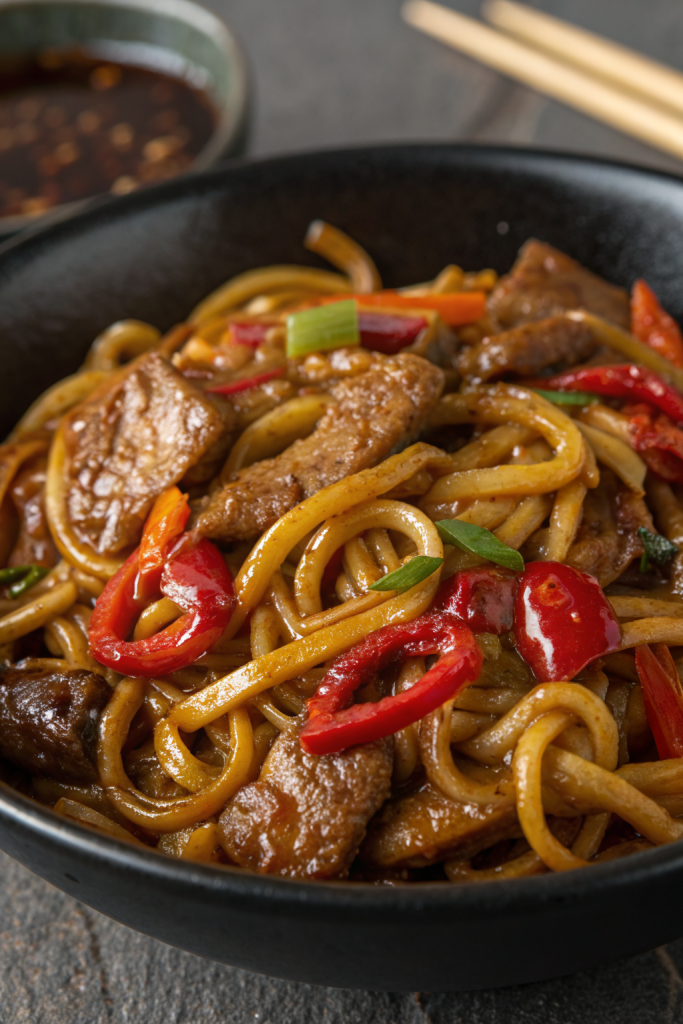
Black Pepper Beef Udon Recipe hits with chewy noodles, tender beef, and a punchy, garlicky black pepper sauce that feels cozy and bold at the same time. It suits busy weeknights, date nights at home, or anyone who wants takeout-style noodles in about 30 minutes. I tested this on a Monday after a long day, and it turned my couch dinner into a small victory.
Why Make This Black Pepper Beef Udon Recipe at Home
You control the pepper level, the veggie mix, and the quality of the beef, so every bowl fits your taste. Restaurant versions often taste too salty or oily, while this version keeps strong flavor with a lighter feel.
You also save money and time, since frozen udon cooks quickly and the sauce uses pantry staples. Once you slice the beef and mix the sauce, the whole thing comes together faster than delivery.
“This Black Pepper Beef Udon Recipe tastes like a cozy noodle bar at home, with springy noodles, juicy beef, and a bold pepper kick that keeps you slurping until the bowl looks spotless. ★★★★★”
Ingredients You Need
Udon and Beef
- 2 portions frozen udon noodles
- I like Sanuki-style frozen udon for the best chewy texture.
- You can use shelf-stable udon in a pinch, but it turns softer, so cook it slightly under package time.
- 8 to 10 ounces beef
- Use thinly sliced sirloin, ribeye, flank, or hot pot style beef.
- Slice against the grain so the beef stays tender.
Vegetables
- 1 small yellow onion, thinly sliced
- 1 small bell pepper, thinly sliced
- Any color works; red or yellow adds sweetness.
- 1 small carrot, cut into thin matchsticks
- 2 to 3 green onions, cut into 1 inch pieces
- 2 to 3 cloves garlic, minced
- 1 teaspoon grated fresh ginger
- Tube ginger works fine as a shortcut; use about 1 teaspoon.
Black Pepper Sauce
- 1 tablespoon coarse freshly ground black pepper
- Use a pepper grinder on a coarse setting; pre-ground pepper tastes flatter.
- If you feel nervous about heat, start with 2 teaspoons and add more at the end.
- 2 tablespoons soy sauce
- I use Kikkoman or Yamasa; low sodium soy sauce works if you watch salt.
- 1 tablespoon oyster sauce
- Lee Kum Kee or Megachef both give deep flavor.
- 1 tablespoon dark soy sauce
- This adds color and a hint of sweetness; if you skip it, add 1 extra teaspoon regular soy plus 1 teaspoon brown sugar.
- 1 tablespoon mirin or mild rice cooking wine substitute
- If you avoid any alcohol, use 1 tablespoon water plus 1 teaspoon sugar.
- 1 tablespoon brown sugar
- 1 teaspoon sesame oil
Slurry and Stir Fry Oil
- 1 teaspoon cornstarch
- 2 tablespoons water
- 1 to 2 tablespoons neutral oil
- Use canola, vegetable, grapeseed, or avocado oil.
Optional Toppings
- Toasted sesame seeds
- Extra sliced green onion
- Chili flakes or chili oil for more heat
Equipment List
- Large nonstick skillet or wok
- Pot for boiling udon
- Cutting board and sharp knife
- Small bowl for sauce
- Tongs or chopsticks for tossing noodles
Tips & Mistakes
- Slice beef thin and across the grain so it cooks quickly and stays tender.
- Pat the beef dry before cooking so it sears instead of steaming.
- Use frozen udon straight from the freezer and loosen it in boiling water just until it separates, or it turns mushy.
- Mix the sauce and cornstarch slurry before you start cooking so you avoid scrambling at the stove.
- Use high heat when stir frying so the vegetables stay crisp and the beef browns instead of turning gray.
- Do not crowd the pan with beef; cook in two batches if needed so you keep that nice sear.
- Add the udon at the end and toss quickly so the noodles coat in sauce without overcooking.
- Taste before adding extra salt, since soy sauce and oyster sauce already bring plenty of seasoning.
- Start with less black pepper if you feel unsure, then sprinkle more at the end to match your spice comfort zone.
- Keep vegetables sliced thin so they cook at the same pace as the beef and noodles.
How to Make Black Pepper Beef Udon Recipe
Step 1: Prep the Beef and Vegetables
Slice the beef thinly across the grain and place it in a bowl. Pat it dry with paper towels so it browns nicely. Slice onion, bell pepper, carrot, and green onions, then mince garlic and grate ginger.
Step 2: Mix the Sauce
In a small bowl, combine soy sauce, oyster sauce, dark soy sauce, mirin or substitute, brown sugar, sesame oil, and coarse black pepper. Stir until the sugar dissolves. In another small cup, mix cornstarch with water until smooth.
Step 3: Cook the Udon
Bring a pot of water to a boil. Add frozen udon and cook just until the strands loosen and separate, usually 1 to 2 minutes. Drain immediately and rinse briefly with hot water, then shake off excess moisture so the noodles stay bouncy.
Step 4: Sear the Beef
Heat 1 tablespoon neutral oil in a large skillet or wok over medium high heat. Add the beef in a single layer and let it sear for about 30 to 60 seconds before you stir. Stir fry until the beef turns mostly browned with a hint of pink, then transfer it to a plate.
Step 5: Stir Fry the Vegetables
In the same pan, add a little more oil if the surface looks dry. Add onion, bell pepper, and carrot, then stir fry for 2 to 3 minutes until they soften slightly but still keep some crunch. Add garlic, ginger, and the white parts of the green onion, then cook 30 seconds until fragrant.
Step 6: Build the Sauce
Give the sauce a quick stir, then pour it into the pan with the vegetables. Let it bubble for about 30 seconds so the flavors concentrate. Stir the cornstarch slurry again and drizzle it into the sauce while you stir, then cook another 30 to 60 seconds until the sauce thickens and turns glossy.
Step 7: Combine Beef and Udon
Add the cooked beef and any juices from the plate back into the pan. Toss to coat the beef in the sauce. Add the drained udon noodles and use tongs to gently toss everything together until the noodles soak up the sauce and look evenly coated.
Step 8: Finish and Taste
Add the green parts of the green onion and toss again. Taste a noodle and a piece of beef, then adjust with more black pepper or a splash of soy sauce if you want stronger flavor. Turn off the heat and plate the noodles while they still feel hot and glossy.
Variations I've Tried
Use chicken thigh instead of beef and slice it thin; it stays juicy and works great with the pepper sauce. Swap in shrimp and cook it just until it turns opaque, then add it back at the end so it does not turn rubbery. Go veggie and use mushrooms, tofu, and extra bell peppers, then bump up the soy sauce slightly for deeper flavor.
Try a spicy version with a spoon of chili crisp or a pinch of Korean chili flakes in the sauce. Add baby spinach or bok choy at the end and toss just until the greens wilt. Use thick udon for a chewier bite or slightly thinner udon if you like a softer slurp.
How to Serve Black Pepper Beef Udon Recipe
Serve the noodles in wide bowls so the sauce coats every strand and the beef sits on top instead of hiding. Sprinkle with toasted sesame seeds and extra green onions for a little crunch and color. Pair with cucumber salad, steamed edamame, or a simple miso soup for a full meal. Kids often like a lighter pepper level, so keep extra pepper on the table for the spice fans.
How to store
- Cool leftovers to room temperature within 1 hour, then place them in an airtight container and store in the fridge for up to 3 days.
- Freeze portions in freezer safe containers or bags for up to 2 months; press out extra air so ice crystals stay minimal.
- Reheat on the stove over medium heat with a splash of water, stirring gently until hot and loosened.
- Use the microwave in short bursts, stirring between each round, and add a teaspoon of water if the noodles look dry.
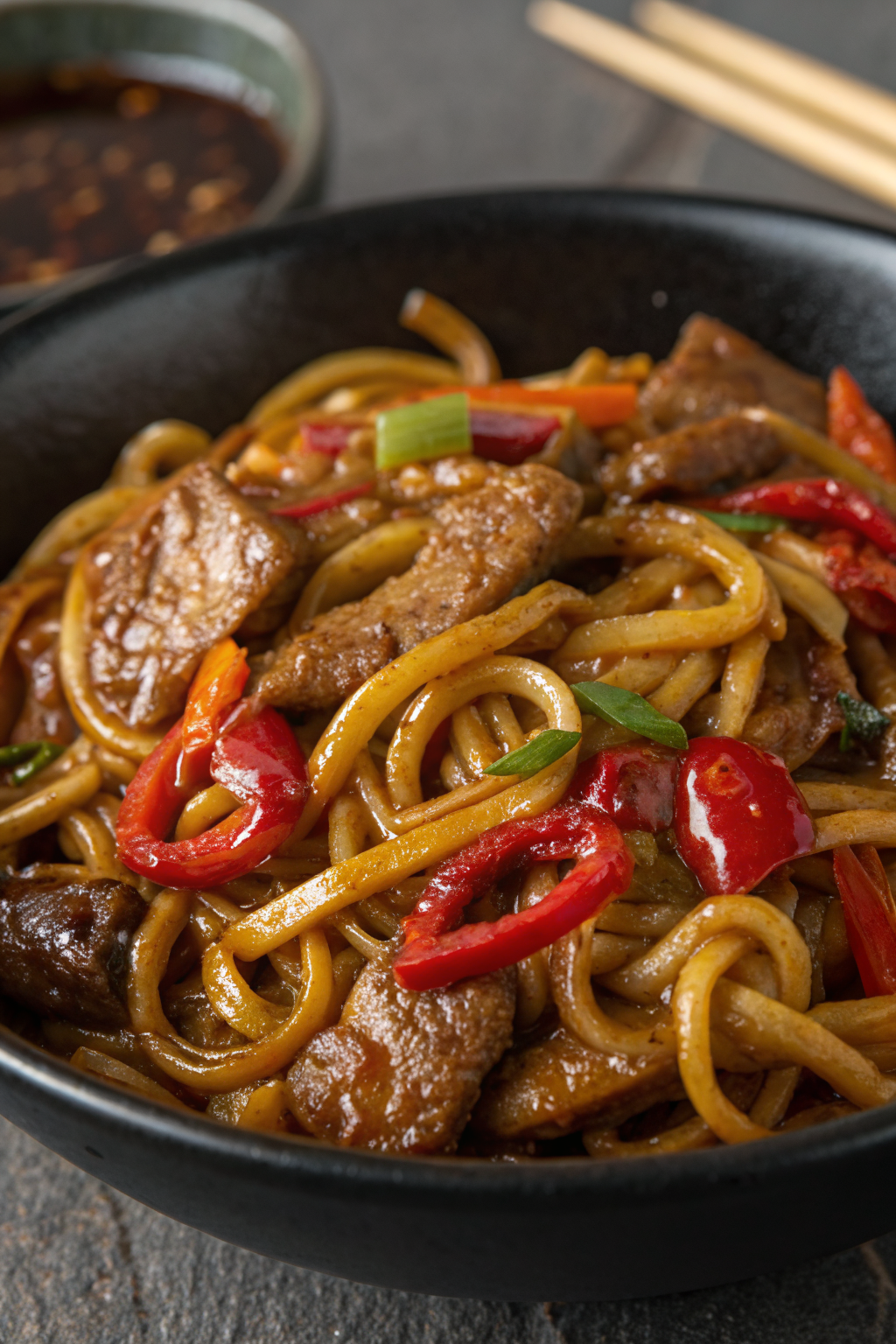
Black Pepper Beef Udon Recipe
Ingredients
Instructions
- Slice the beef thinly across the grain and place it in a bowl. Pat it dry with paper towels so it browns nicely.
- Slice the onion, bell pepper, and carrot. Cut the green onions into 1-inch pieces, then mince the garlic and grate the ginger.
- In a small bowl, combine the soy sauce, oyster sauce, dark soy sauce, mirin, brown sugar, sesame oil, and coarse black pepper. Stir until the sugar dissolves.
- In another small cup, mix the cornstarch with the water until smooth to make a slurry.
- Bring a pot of water to a boil. Add the frozen udon and cook just until the strands loosen and separate, about 1–2 minutes. Drain and rinse briefly with hot water, then shake off excess moisture.
- Heat 1 tablespoon neutral oil in a large skillet or wok over medium-high heat. Add the beef in a single layer and let it sear for 30–60 seconds before stirring. Stir fry until mostly browned with a hint of pink, then transfer to a plate.
- In the same pan, add a little more oil if needed. Add the onion, bell pepper, and carrot. Stir fry for 2–3 minutes until slightly softened but still crisp. Add the garlic, ginger, and white parts of the green onion, then cook about 30 seconds until fragrant.
- Stir the sauce and pour it into the pan with the vegetables. Let it bubble for about 30 seconds. Stir the cornstarch slurry again and drizzle it into the sauce while stirring. Cook another 30–60 seconds until the sauce thickens and turns glossy.
- Add the cooked beef and any collected juices back into the pan, tossing to coat in the sauce. Add the drained udon noodles and gently toss until the noodles are evenly coated and have absorbed the sauce.
- Add the green parts of the green onion and toss again. Taste and adjust with more black pepper or a splash of soy sauce if desired. Serve hot, topped with toasted sesame seeds, extra green onion, and chili flakes or chili oil if you like more heat.
Notes
Approximate per serving: 630 calories; fat 24 g; saturated fat 6 g; carbohydrates 80 g; fiber 5 g; sugars 20 g; protein 28 g; sodium 1900 mg. Values will vary based on exact ingredients, brands, and portion sizes.
Leave a Reply