
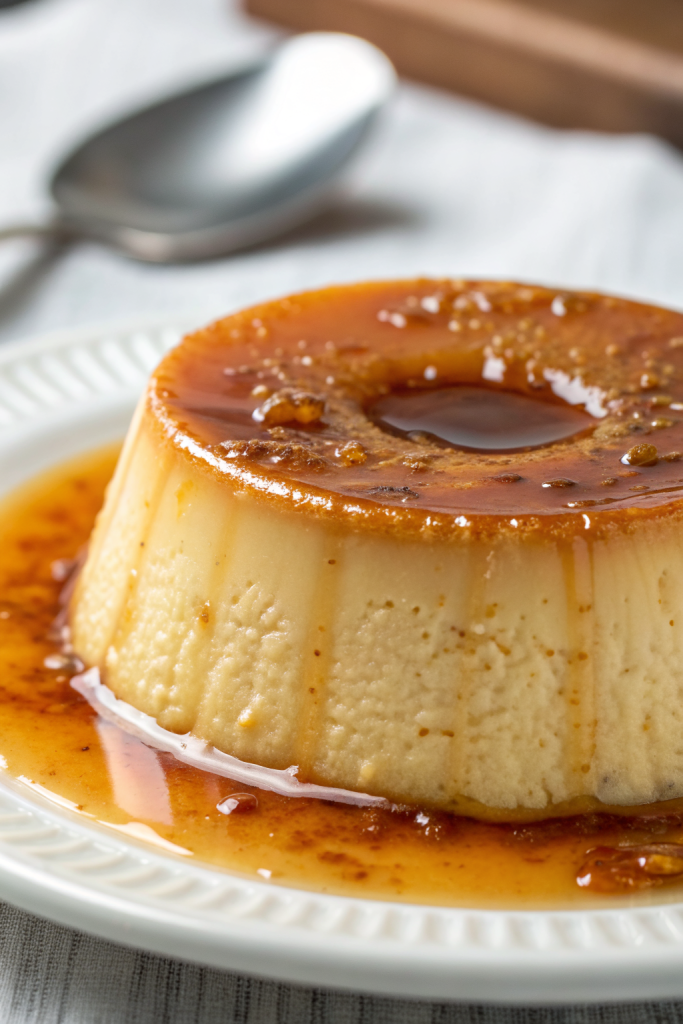
Japanese Silky Custard Purin Recipe tastes like a cross between crème caramel and flan, but lighter, milkier, and ridiculously smooth. It suits anyone who loves gentle, not-too-sweet desserts and wants a café-style treat in about 1 hour total, including chilling time if you work ahead. I first fell in love with purin in a tiny Tokyo coffee shop, and I have chased that silky spoonful ever since in my own kitchen.
Why You Should Try This Japanese Silky Custard Purin Recipe
This Japanese Silky Custard Purin Recipe gives you a soft, jiggly custard with a glossy surface and a deep amber caramel that tastes slightly bitter in the best way. The texture feels ultra smooth, with no bubbles, so it slides off the spoon like velvet.
You can make this purin with basic ingredients you probably already keep in your kitchen. It looks fancy enough for guests, but the method stays simple enough for a weeknight dessert.
“This Japanese Silky Custard Purin Recipe tastes like something from a Tokyo kissaten, but you can pull it off at home with zero drama. ★★★★★”
Ingredients You’ll Need
Custard base
- 2 large eggs, room temperature
- 2 large egg yolks, room temperature
- 2 cups whole milk (avoid low fat; it turns out less creamy)
- 1/2 cup heavy cream (or replace with more whole milk for a lighter purin)
- 1/3 cup granulated sugar
- 1 teaspoon vanilla extract (or 1/2 teaspoon vanilla paste for stronger flavor)
- Small pinch of fine sea salt
Caramel layer
- 1/2 cup granulated sugar
- 2 tablespoons water
- 1–2 tablespoons hot water to loosen the caramel at the end
Equipment
- 4–6 heatproof ramekins or small pudding cups (about 4–6 ounces each)
- Small saucepan for caramel
- Medium saucepan for milk mixture
- Fine mesh strainer
- Large baking dish or deep roasting pan for water bath
- Kettle or pot to heat water for the water bath
- Plastic wrap or foil
- Small offset spatula or thin knife for unmolding
Ingredient notes, shortcuts, and swaps
Use whole milk for the best Japanese Silky Custard Purin Recipe texture, since skim milk makes the custard watery. You can skip heavy cream and use all whole milk, but the custard will feel slightly less rich. Vanilla extract works well, but vanilla paste or half a scraped vanilla bean gives a more classic kissaten-style flavor.
Granulated sugar keeps the flavor clean and neutral, which lets the caramel shine. You can use light brown sugar in the custard for a subtle toffee note, though it changes the color slightly. If you avoid dairy, you can try a mix of oat milk and coconut cream, but the texture and flavor will shift away from traditional purin.
Tips & Tricks
- Heat the milk mixture until warm and steamy, not boiling, so you avoid scrambled eggs.
- Stir the caramel gently and stop stirring once it starts to color, since extra stirring can cause crystals.
- Swirl the pan instead of stirring with a spoon during the final caramel stage to keep it smooth.
- Add the hot water to the finished caramel carefully and stand back, since it bubbles vigorously.
- Strain the custard through a fine mesh sieve to catch any tiny egg bits and keep the purin silky.
- Tap the filled ramekins lightly on the counter to pop surface bubbles before baking.
- Use a low oven temperature and a gentle water bath to prevent curdling and holes.
- Keep the water in the baking dish hot but not boiling, about 160–175°F, for the smoothest texture.
- Cover the ramekins loosely with foil to avoid a skin on top of the custard.
- Chill the purin at least 4 hours, or overnight, so it sets fully and the caramel flavor deepens.
- Run a thin knife around the edge and tilt the ramekin slightly to release air before inverting.
- If the purin refuses to drop, dip the ramekin bottom in warm water for 10–15 seconds and try again.
How to Make Japanese Silky Custard Purin Recipe
Step 1: Prepare the ramekins and oven
Preheat your oven to 300°F (150°C). Place your ramekins in a deep baking dish or roasting pan, leaving a little space between each one. Boil a kettle of water so you have hot water ready for the water bath.
Lightly grease the inside of each ramekin with a tiny bit of neutral oil or butter if you worry about sticking. I often skip this step with smooth ceramic ramekins, but it helps with metal molds.
Step 2: Make the caramel
Add 1/2 cup sugar and 2 tablespoons water to a small saucepan. Stir gently to moisten all the sugar, then place the pan over medium heat. Let the sugar mixture bubble without stirring once it starts to simmer.
Watch the color closely as it shifts from clear to pale gold to amber. When it reaches a deep amber color and smells toasty but not burnt, turn off the heat. Add 1–2 tablespoons hot water carefully to loosen the caramel, then swirl until smooth.
Step 3: Coat the ramekins with caramel
Immediately pour a small amount of hot caramel into each ramekin, tilting each one so the caramel coats the bottom evenly. Work quickly, since caramel firms up fast. If it thickens too much, place the pan back over low heat briefly to loosen it.
Set the caramel-coated ramekins aside while you prepare the custard. The caramel will firm up, and that helps it stay at the bottom during baking.
Step 4: Warm the milk mixture
In a medium saucepan, combine the whole milk, heavy cream, and 1/3 cup sugar. Heat over medium-low heat, stirring occasionally, until the sugar dissolves and the mixture feels hot and steamy. Do not let it boil, since that can toughen the custard.
Turn off the heat and stir in the vanilla and a small pinch of salt. Let the mixture cool for 3–5 minutes so it does not shock the eggs.
Step 5: Mix the eggs
In a medium bowl, whisk together the eggs and egg yolks until they look smooth and blended. Whisk gently and avoid whipping in lots of air, since extra bubbles show up in the final purin. The mixture should look uniform but not frothy.
Step 6: Temper the eggs
Slowly pour a small amount of the warm milk mixture into the eggs while you whisk constantly. This step warms the eggs gradually so they do not scramble. Keep adding the milk mixture in a thin stream, whisking until everything combines.
Once you mix all the milk into the eggs, you have your custard base. Taste a tiny bit if you like and adjust the vanilla or salt slightly.
Step 7: Strain the custard
Place a fine mesh strainer over a large measuring cup or bowl with a spout. Pour the custard through the strainer to remove any egg bits or foam. This step makes a big difference in the smoothness of your Japanese Silky Custard Purin Recipe.
Skim off any remaining bubbles on top with a spoon. You can also press a piece of paper towel lightly on the surface to pick up foam.
Step 8: Fill the ramekins
Pour the strained custard gently into the caramel-lined ramekins, leaving a little space at the top. Tap each ramekin lightly on the counter to release trapped air bubbles. If you see stubborn bubbles, pop them with a toothpick.
Cover the baking dish loosely with foil so steam does not drip directly onto the custard. Do not seal it tightly; you want some airflow.
Step 9: Set up the water bath
Slide the baking dish with the ramekins onto the middle oven rack. Carefully pour hot water into the baking dish around the ramekins until it reaches about halfway up their sides. Move slowly so water does not splash into the custard.
Close the oven and bake at 300°F (150°C) for about 35–45 minutes. Start checking at 30 minutes, since every oven behaves a little differently.
Step 10: Check for doneness
Gently jiggle the baking dish. The purin should look set around the edges but still wobble softly in the center, like soft-set jelly. If the entire surface waves loosely like liquid, bake for 5–10 minutes more and check again.
You can also insert a thin knife near the edge; it should come out mostly clean, with a bit of creamy custard. Avoid overbaking, since that leads to a firm, eggy texture instead of silky.
Step 11: Cool and chill
Carefully remove the ramekins from the water bath and place them on a cooling rack. Let them cool to room temperature, about 30–45 minutes. Once cool, cover each ramekin with plastic wrap.
Chill in the refrigerator for at least 4 hours, or overnight for the best flavor and texture. The caramel will soften and turn into a sauce as it sits.
Step 12: Unmold and serve
To unmold, run a thin knife or small offset spatula around the inside edge of each ramekin. Place a dessert plate on top, hold both together, and flip them quickly but gently. Give the ramekin a little shake until the purin drops onto the plate and the caramel sauce flows over it.
If it sticks, dip the bottom of the ramekin in warm water for 10–15 seconds and try again. Serve chilled, with the caramel pooling around the custard.
What to Serve with Japanese Silky Custard Purin Recipe
Japanese Silky Custard Purin Recipe pairs beautifully with fresh fruit like sliced strawberries, kiwi, or a few segments of mandarin orange. A small scoop of vanilla or matcha ice cream on the side turns it into a café-style dessert plate. You can also add a spoonful of lightly sweetened whipped cream and a sprinkle of toasted nuts for crunch.
Serve it with hot green tea, hojicha, or a simple cup of coffee for a cozy contrast to the cold custard. Kids usually love it plain, while adults often enjoy the slightly bitter caramel with a strong cup of tea.
Storage Options
- Store the purin in the ramekins, covered tightly with plastic wrap, in the refrigerator for up to 3 days.
- Keep the custards level in the fridge so the caramel sauce stays evenly distributed on top.
- Avoid freezing, since freezing changes the silky texture and can cause separation.
- Serve the purin chilled straight from the fridge; do not reheat, since heat can cause the custard to curdle.
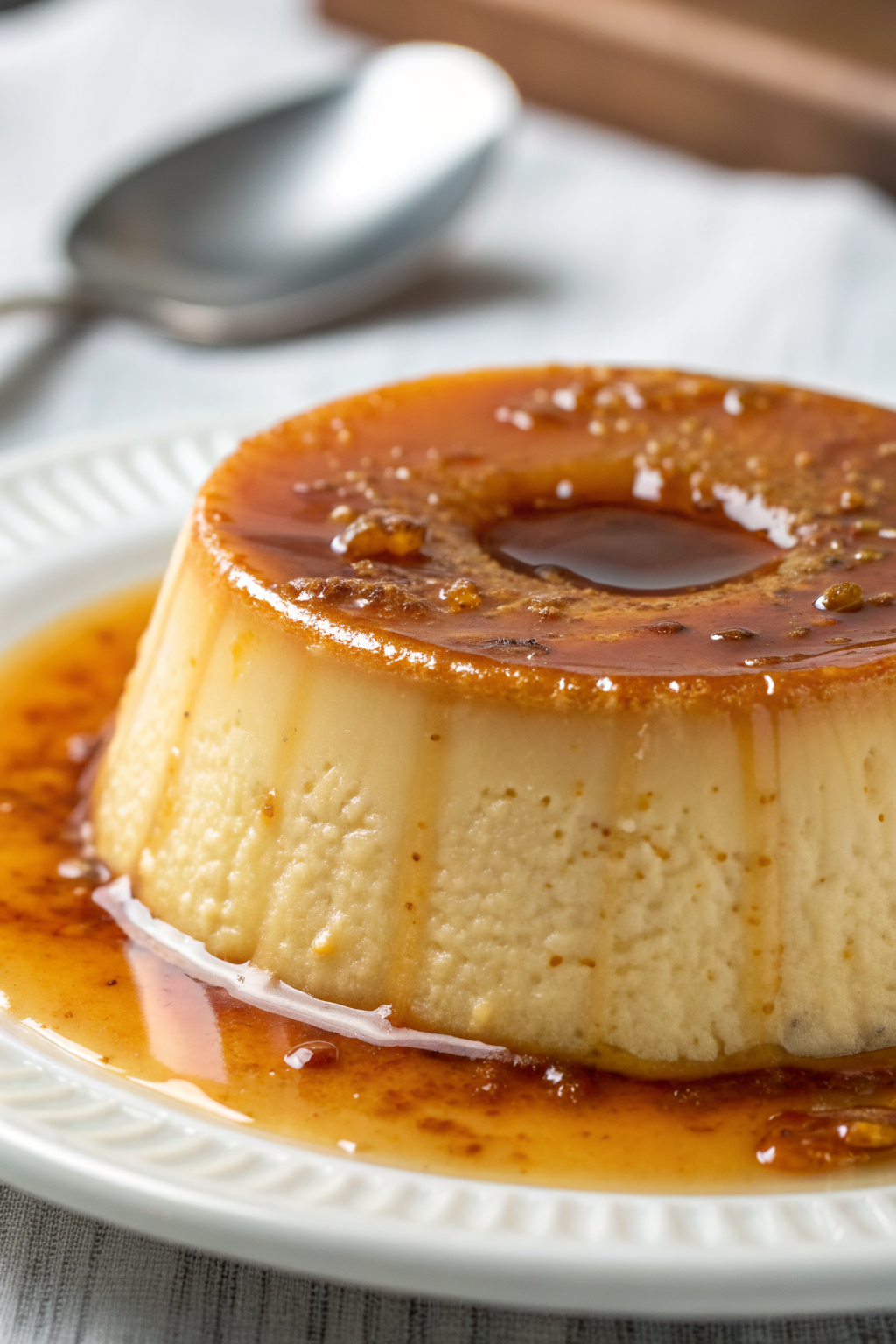
Japanese Silky Custard Purin Recipe
Ingredients
Instructions
- Preheat the oven to 300°F (150°C). Place 4–6 heatproof ramekins in a deep baking dish or roasting pan and set a kettle of water to boil for the water bath.
- Lightly grease the inside of each ramekin with a tiny bit of neutral oil or butter if you are worried about sticking.
- Add 1/2 cup granulated sugar and 2 tablespoons water to a small saucepan and stir gently to moisten all the sugar.
- Place over medium heat and cook without stirring once it begins to simmer, letting it bubble until the color turns from clear to pale gold to a deep amber and smells toasty but not burnt.
- Turn off the heat and carefully add 1–2 tablespoons hot water to loosen the caramel, swirling the pan until smooth.
- Immediately pour a small amount of hot caramel into each ramekin, tilting so the caramel coats the bottom evenly. Work quickly, reheating the caramel gently if it thickens too much.
- Set the caramel-coated ramekins aside to let the caramel firm up while you prepare the custard.
- In a medium saucepan, combine the whole milk, heavy cream, and 1/3 cup granulated sugar. Heat over medium-low heat, stirring occasionally, until the sugar dissolves and the mixture is hot and steamy but not boiling.
- Turn off the heat, then stir in the vanilla extract and a pinch of fine sea salt. Let the mixture cool for 3–5 minutes so it is warm but not scalding.
- In a medium bowl, whisk together the eggs and egg yolks gently until smooth and well blended, avoiding whipping in too much air.
- Slowly pour a little of the warm milk mixture into the eggs while whisking constantly to warm them gradually.
- Continue adding the remaining milk mixture in a thin stream, whisking until fully combined into a smooth custard base.
- Place a fine mesh strainer over a large measuring cup or bowl with a spout and pour the custard through the strainer to remove any bits of egg and foam.
- Skim off any remaining bubbles on the surface with a spoon if needed.
- Gently pour the strained custard into the caramel-lined ramekins, leaving a little space at the top, and tap each ramekin lightly on the counter to release air bubbles.
- Cover the baking dish loosely with foil so steam does not drip directly onto the custard.
- Slide the baking dish with ramekins onto the middle oven rack, then carefully pour hot water into the baking dish around the ramekins until it reaches about halfway up their sides.
- Bake at 300°F (150°C) for about 35–45 minutes, starting to check at 30 minutes.
- The purin is done when the edges are set but the center still wobbles softly like soft-set jelly when the pan is gently jiggled.
- Remove the ramekins from the water bath and place them on a cooling rack. Let cool to room temperature, about 30–45 minutes.
- Cover each ramekin with plastic wrap and refrigerate for at least 4 hours or overnight until fully chilled and set.
- To unmold, run a thin knife around the inside edge of each ramekin, place a dessert plate on top, then invert and give a gentle shake until the purin drops out and the caramel sauce flows over it.
- Serve chilled, with the caramel pooling around the custard.