
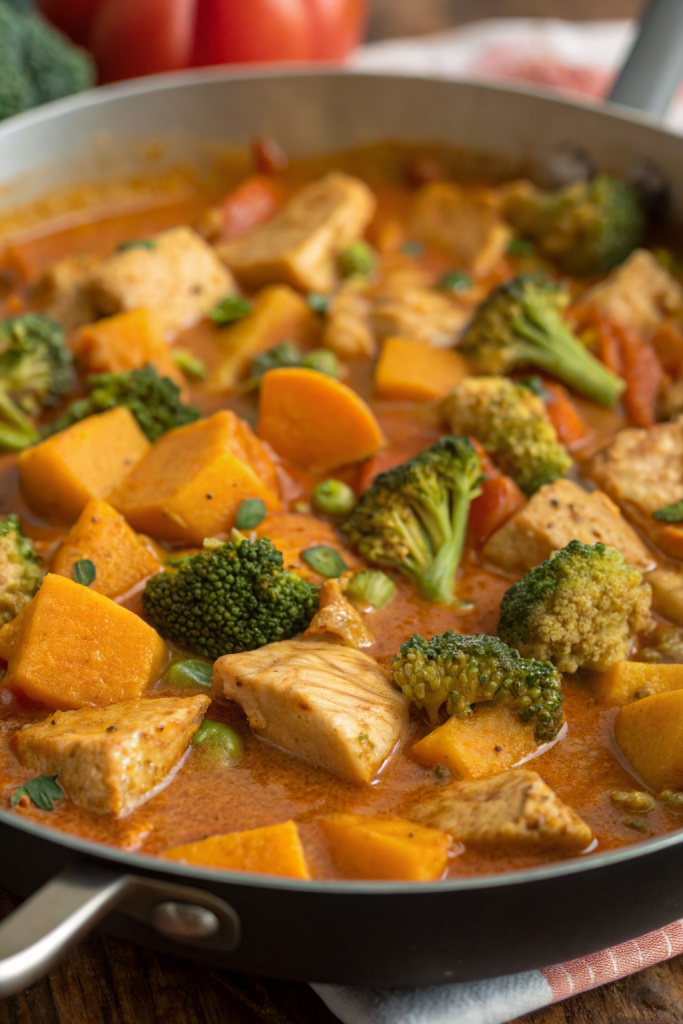
Pumpkin Thai Curry Recipe tastes creamy, cozy, a little spicy, and slightly sweet, with that classic coconut and lime combo that makes your taste buds do a happy dance. It works perfectly for busy weeknights, meal prep, or casual dinners with friends, and you can get it on the table in about 35–40 minutes. I first cooked a version of this in a tiny apartment kitchen with one sad skillet, so if I managed it there, you can absolutely nail it at home too.
Why Make This Pumpkin Thai Curry Recipe at Home
You control the heat level, the sweetness, and the veggies, so the curry fits your taste instead of the other way around. Restaurant versions often taste great but come with mystery oils, extra sugar, and not enough vegetables, while this version stays rich and flavorful without feeling heavy.
You also save money and use pantry ingredients you probably already own, like canned pumpkin and coconut milk. Once you cook it once, you can repeat it from memory, which makes this Pumpkin Thai Curry Recipe a true weeknight hero.
“This Pumpkin Thai Curry Recipe tastes like cozy fall in a bowl with takeout-level flavor and zero takeout guilt. ★★★★★”
Ingredients You Need
Core ingredients
-
Pumpkin:
- 1 can pumpkin puree (not pumpkin pie filling) or 2 cups roasted pumpkin cubes
- Canned pumpkin gives a silky texture and saves time.
- Fresh pumpkin or kabocha squash works great if you already have it cooked.
-
Coconut milk:
- 1 can full-fat coconut milk for a rich, creamy curry.
- Light coconut milk works if you want a lighter version, but the sauce turns slightly thinner.
-
Thai red curry paste:
- 2 to 3 tablespoons Thai red curry paste, to taste.
- I like brands such as Maesri or Mae Ploy because they taste bold and balanced.
- Check the label if you cook vegetarian or vegan, since some pastes include shrimp paste.
-
Aromatics:
- 1 small onion, thinly sliced.
- 3 to 4 cloves garlic, minced.
- 1 to 2 tablespoons fresh ginger, minced or grated.
-
Oil:
- 1 to 2 tablespoons neutral oil such as avocado, canola, or light olive oil.
- Coconut oil also works and adds a little extra coconut aroma.
Veggies and protein
-
Vegetables:
- 1 red bell pepper, sliced.
- 1 cup snap peas or green beans, trimmed.
- 1 cup baby spinach or kale, roughly chopped.
- You can swap in carrots, zucchini, broccoli, or mushrooms based on what sits in your fridge.
-
Protein options:
- 1 block extra-firm tofu, pressed and cubed, or
- 1 pound chicken breast or thighs, thinly sliced, or
- 1 can chickpeas, drained and rinsed, for a plant-based option.
Flavor boosters
- 2 to 3 tablespoons soy sauce or tamari.
- 1 to 2 tablespoons brown sugar, coconut sugar, or maple syrup.
- Juice of 1 lime, plus extra wedges for serving.
- 1 to 2 teaspoons fish sauce, optional but tasty if you eat fish.
- 1 teaspoon salt, more to taste.
- 1 teaspoon chili flakes or sliced fresh chili if you like extra heat.
Garnishes
- Fresh cilantro or Thai basil, chopped.
- Sliced green onions.
- Crushed peanuts or cashews.
- Extra lime wedges.
Pantry shortcuts
- Use frozen stir fry vegetables to skip chopping and speed things up.
- Use pre-minced garlic and ginger from a jar if you need a shortcut on a busy night.
- Use pre-cooked rice or microwave rice packs to get dinner on the table faster.
Equipment list
- Large skillet, sauté pan, or wide pot.
- Cutting board and sharp knife.
- Wooden spoon or spatula.
- Can opener.
- Measuring cups and spoons.
- Small saucepan if you cook rice on the side.
Tips & Mistakes
- Use full-fat coconut milk if you want a thick, restaurant-style sauce.
- Taste the curry paste before you add more, since heat levels vary a lot between brands.
- Sauté the curry paste with oil and aromatics to wake up the flavor instead of stirring it in at the end.
- Add delicate veggies like spinach near the end so they stay bright and tender.
- Do not boil the coconut milk hard, since it can separate and turn grainy.
- Adjust sweetness, salt, and acid at the end so the curry tastes balanced, not flat.
- Slice protein into thin, even pieces so it cooks quickly and stays tender.
- Do not crowd the pan with too many veggies at once, or they steam instead of sauté.
How to Make Pumpkin Thai Curry Recipe
Step 1: Prep everything
Chop the onion, bell pepper, and any other vegetables you use.
Mince the garlic and ginger.
Cube the tofu or slice the chicken if you use those, and pat them dry so they brown better.
Step 2: Cook the aromatics
Heat the oil in a large skillet over medium heat.
Add the onion and cook until it softens and turns slightly golden around the edges.
Stir in the garlic and ginger and cook about 30 seconds until fragrant, so they do not burn.
Step 3: Toast the curry paste
Add the Thai red curry paste to the pan with the aromatics.
Stir it into the oil and cook 1 to 2 minutes, until it smells bold and fragrant.
This step deepens the flavor and makes the curry taste like you ordered it from your favorite Thai spot.
Step 4: Add pumpkin and coconut milk
Spoon in the pumpkin puree and stir until it blends with the curry paste.
Pour in the coconut milk and whisk or stir until the sauce looks smooth and creamy.
If the sauce looks too thick, add 1⁄2 to 1 cup water or vegetable broth to reach your preferred consistency.
Step 5: Season the sauce
Stir in soy sauce or tamari, brown sugar, and fish sauce if you use it.
Bring the mixture to a gentle simmer, not a hard boil.
Taste and adjust with more curry paste, soy sauce, or sugar if you want stronger flavor or more balance.
Step 6: Add protein
Add tofu, chicken, or chickpeas to the simmering sauce.
Cook until the protein cooks through and absorbs some of the curry flavor.
Stir occasionally so nothing sticks to the bottom of the pan.
Step 7: Add vegetables
Add bell pepper and green beans or snap peas.
Simmer 5 to 7 minutes until the vegetables turn tender but still hold a little crunch.
Stir in spinach or kale during the last 1 to 2 minutes so the greens wilt but stay bright.
Step 8: Finish with lime and herbs
Turn off the heat and squeeze in the lime juice.
Taste again and adjust with more lime, salt, or a pinch of sugar until the flavors pop.
Stir in a handful of chopped cilantro or Thai basil.
Step 9: Garnish and serve
Spoon the Pumpkin Thai Curry Recipe over cooked jasmine rice, brown rice, or rice noodles.
Top with more herbs, sliced green onions, and crushed peanuts or cashews.
Serve with extra lime wedges so everyone can adjust the brightness at the table.
Variations I've Tried
I swap the pumpkin for butternut squash or sweet potato when I want a slightly different sweetness and texture.
I use chickpeas and extra vegetables for a fully plant-based version that still tastes rich and filling.
I add a spoonful of peanut butter to the sauce for a thicker, nutty twist that feels like a cross between curry and peanut sauce.
I sometimes stir in cooked rice noodles directly into the pan and turn the whole thing into a one-pan curry noodle bowl.
How to Serve Pumpkin Thai Curry Recipe
Serve this Pumpkin Thai Curry Recipe over fluffy jasmine rice, brown rice, or rice noodles so the sauce has something to soak into. Add a side of steamed or roasted vegetables if you want extra crunch and color on the plate. Offer lime wedges, fresh cilantro, and crushed peanuts at the table so everyone can customize their bowl. Pair it with sparkling water, iced tea, or a light fruit juice for a refreshing contrast to the warm spices.
How to store
- Store leftovers in an airtight container in the fridge for up to 4 days.
- Freeze portions in freezer-safe containers for up to 2 months, leaving a little space at the top for expansion.
- Reheat gently on the stove over low to medium heat, and add a splash of water or coconut milk if the sauce thickens too much.
- You can also reheat in the microwave in short bursts, stirring between each round so the curry heats evenly.
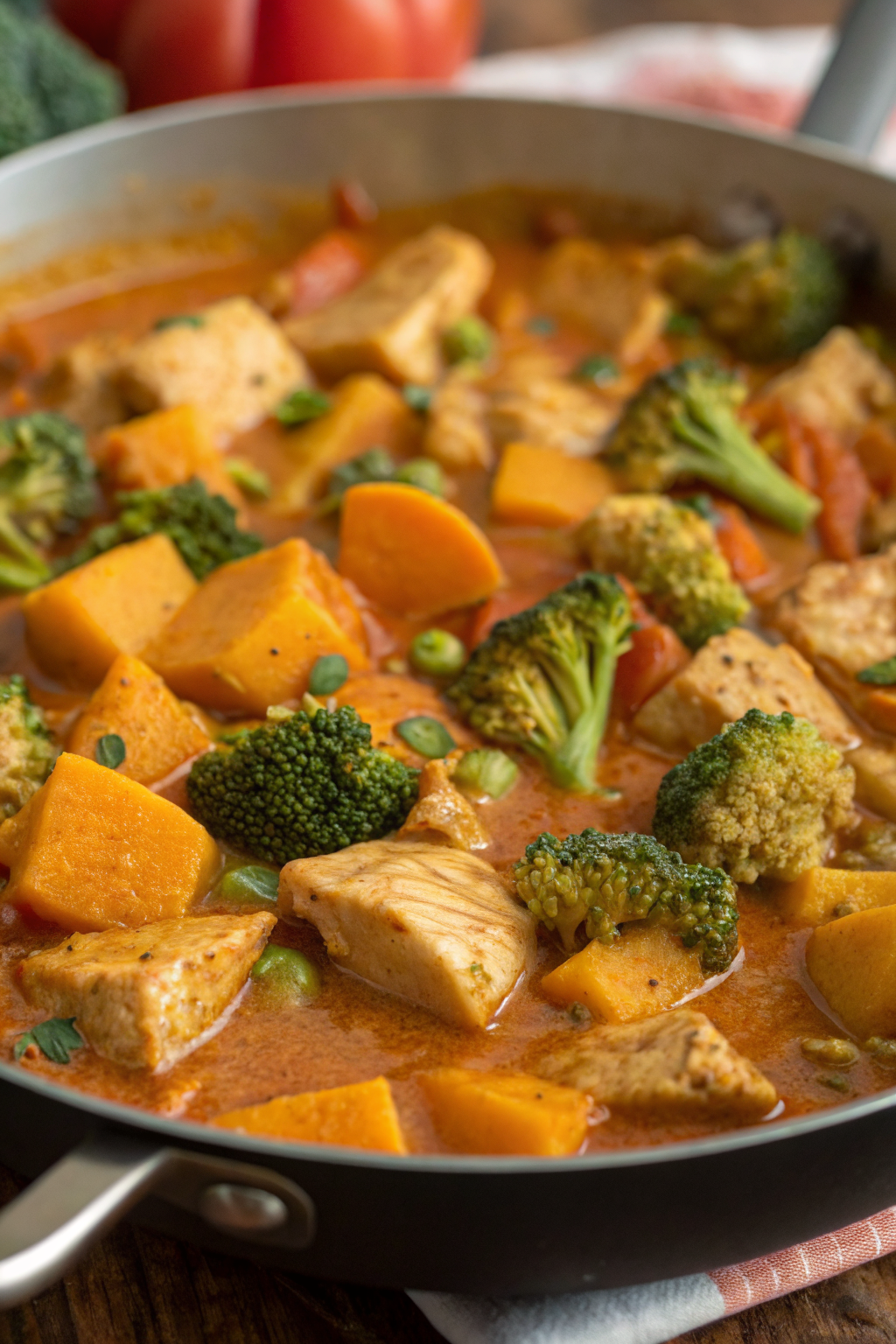
Pumpkin Thai Curry Recipe
Ingredients
Instructions
- Prep the vegetables by chopping the onion, bell pepper, and any additional vegetables. Mince the garlic and ginger. Cube the tofu or slice the chicken if using, and pat dry.
- Heat the oil in a large skillet or wide pot over medium heat. Add the onion and cook until softened and lightly golden around the edges.
- Stir in the garlic and ginger and cook for about 30 seconds, just until fragrant, so they do not burn.
- Add the Thai red curry paste to the pan. Stir it into the oil and aromatics and cook for 1–2 minutes, until it smells bold and fragrant.
- Stir in the pumpkin puree until it is fully combined with the curry paste. Pour in the coconut milk and stir or whisk until the sauce is smooth and creamy. If it seems too thick, add 1/2–1 cup water or vegetable broth to reach your desired consistency.
- Season the sauce with soy sauce or tamari, brown sugar, and fish sauce if using. Bring to a gentle simmer (do not hard boil) and taste, adjusting with more curry paste, soy sauce, or sugar as needed.
- Add the tofu, chicken, or chickpeas to the simmering sauce. Cook until the protein is heated through and absorbs some of the curry flavor, stirring occasionally so it does not stick.
- Add the bell pepper and snap peas or green beans. Simmer for 5–7 minutes, until the vegetables are tender but still slightly crisp.
- Stir in the spinach or kale during the last 1–2 minutes of cooking, just until the greens wilt and stay bright.
- Turn off the heat and squeeze in the lime juice. Taste and adjust with more lime, salt, or a pinch of sugar until the flavors are balanced and vibrant. Add chili flakes or fresh chili if you like extra heat.
- Serve the pumpkin Thai curry over cooked jasmine rice, brown rice, or rice noodles. Garnish with fresh cilantro or Thai basil, sliced green onions, and crushed peanuts or cashews. Offer extra lime wedges at the table.
Notes
Approximate per serving (4 servings, made with full-fat coconut milk, tofu, and the amounts listed): 420 calories; fat 26 g; saturated fat 17 g; carbohydrates 35 g; fiber 7 g; sugars 11 g; protein 13 g; sodium 980 mg. Values will vary based on protein choice, vegetable swaps, brands, and portion size.
Leave a Reply