
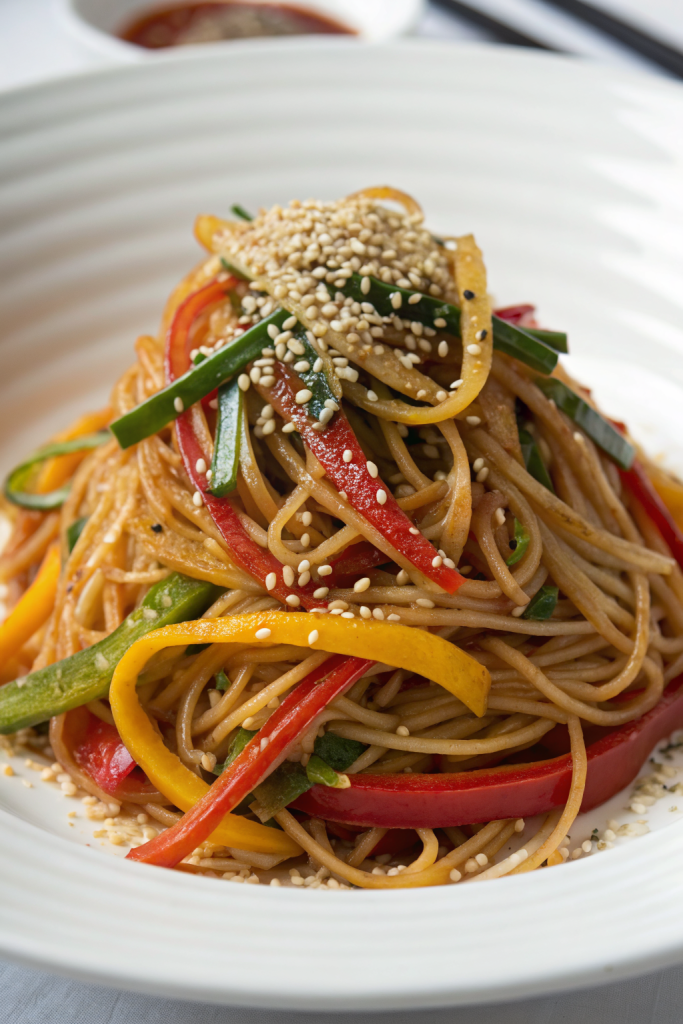
Thai Zucchini Noodles Recipe hits every craving with spicy, tangy, peanutty sauce wrapped around tender-crisp veggie “noodles” in under 30 minutes. It works perfectly for busy weeknights, lighter lunches, or anyone who wants takeout flavor without the heavy feeling afterward. I first tested this on a Tuesday when my jeans felt snug and my pad Thai cravings yelled louder than my willpower, so I met them in the middle with this bowl.
Why You Should Try This Thai Zucchini Noodles Recipe
This Thai Zucchini Noodles Recipe tastes like a lighter, veggie-forward cousin of peanut noodles from your favorite Thai spot. You get a creamy, nutty sauce, fresh lime, crunchy peanuts, and just enough heat to keep things interesting.
You spiralize zucchini instead of boiling pasta, so the whole recipe cooks fast and keeps the kitchen cool. You still get that twirlable, slurpable noodle experience, just with more vegetables and less post-dinner nap.
“This Thai Zucchini Noodles Recipe tastes like takeout-level peanut noodles that somehow decided to be healthy too, and I scraped the bowl clean in record time. ★★★★★”
Ingredients You’ll Need
You can adjust this recipe easily, so treat the ingredient list as a flexible guide, not a strict contract.
For the zucchini noodles
- 4 medium zucchini, spiralized into noodles
- Use firm zucchini without soft spots so the noodles stay crisp.
- If you do not own a spiralizer, use a julienne peeler or buy pre-spiralized zucchini from the produce section.
- 1 tablespoon avocado oil or light olive oil
- 1 red bell pepper, thinly sliced
- 1 medium carrot, julienned or shredded
- 2 green onions, thinly sliced
- 1 cup shredded purple cabbage (optional but adds crunch and color)
- 1 cup snap peas or snow peas, trimmed and halved (optional)
- 1 tablespoon fresh garlic, minced (about 3 cloves)
- 1 tablespoon fresh ginger, minced or grated
For the Thai-inspired peanut sauce
- 1/3 cup creamy peanut butter
- Use natural peanut butter with just peanuts and salt if possible. Stir well so the oil blends in.
- Swap with almond butter or sunflower seed butter for peanut allergies.
- 3 tablespoons low-sodium soy sauce or tamari
- 1–2 tablespoons fresh lime juice, to taste
- 1–2 tablespoons pure maple syrup or honey
- 1–2 teaspoons sriracha or chili garlic sauce
- Adjust to your heat tolerance. Start low, taste, and add more.
- 2–4 tablespoons warm water, to thin the sauce
- 1 teaspoon toasted sesame oil
- 1 teaspoon rice vinegar (unseasoned)
Toppings and garnish
- 1/3 cup roasted peanuts, roughly chopped
- Extra sliced green onions
- Fresh cilantro leaves, chopped
- Extra lime wedges
- Crushed red pepper flakes, optional
Protein add-ins (optional but recommended)
Pick one or mix and match to turn this into a full meal.
- 1 pound chicken breast, thinly sliced and sautéed
- 1 pound shrimp, peeled and deveined, quickly sautéed
- 1 block extra-firm tofu, pressed and cubed, then pan-seared
- 2 scrambled eggs, cooked separately and folded in at the end
Pantry shortcuts & brand notes
- Use jarred minced garlic and ginger if you feel tired or short on time. I keep both in my fridge for “I cannot chop another thing” nights.
- Use a good soy sauce brand like Kikkoman or San-J for consistent flavor.
- Use store-bought spiralized zucchini if you want to skip the spiralizer cleanup.
Equipment list
- Spiralizer, julienne peeler, or sharp chef’s knife
- Large skillet or wok
- Cutting board and knife
- Medium mixing bowl for the sauce
- Tongs for tossing the noodles
- Measuring cups and spoons
Tips & Tricks
- Salt the zucchini noodles lightly and let them sit in a colander for 10–15 minutes, then pat dry to reduce excess moisture.
- Cook zucchini noodles quickly over medium-high heat so they stay slightly crisp and do not turn soggy.
- Mix the peanut sauce in a separate bowl first so it coats the noodles evenly and does not clump.
- Thin the sauce with warm water a tablespoon at a time until it looks pourable but still creamy.
- Taste the sauce before you add it and adjust lime, soy, and sweetness until it hits that sweet-salty-tangy balance you like.
- Add protein separately and cook it fully before you toss it with the noodles.
- Use a wide skillet or wok so the veggies and noodles sauté instead of steam.
- Keep leftovers slightly under-sauced and add a splash of water or extra sauce when you reheat.
- Slice vegetables thinly so they cook fast and match the texture of the zucchini noodles.
- Garnish generously with peanuts and herbs, since texture and freshness carry a veggie-heavy dish like this.
How to Make Thai Zucchini Noodles Recipe
Step 1: Prep the zucchini noodles
Wash the zucchini and trim the ends. Spiralize each zucchini into noodles and place them in a large colander set over the sink. Sprinkle with a small pinch of salt, toss gently, and let them sit 10–15 minutes while you prep the sauce and vegetables.
After they rest, use clean kitchen towels or paper towels to gently squeeze and blot away excess moisture. Do not crush the noodles into mush, just press enough to dry them a bit. This step keeps the finished Thai Zucchini Noodles Recipe from turning watery.
Step 2: Mix the Thai peanut sauce
In a medium bowl, add peanut butter, soy sauce or tamari, lime juice, maple syrup or honey, sriracha, sesame oil, and rice vinegar. Whisk until the mixture turns smooth and thick. Add warm water 1 tablespoon at a time while you whisk until the sauce reaches a pourable, creamy consistency.
Taste and adjust the flavor. Add more lime for brightness, more soy for saltiness, more sweetener for balance, or more sriracha for heat. Set the bowl aside near the stove so you can grab it easily.
Step 3: Prep the vegetables and protein
Slice the bell pepper into thin strips, shred or julienne the carrot, slice the green onions, and chop the cabbage and snap peas. Mince the garlic and ginger. If you plan to use cilantro and peanuts, chop those now too.
If you add chicken, shrimp, tofu, or eggs, prep those ingredients as well. Slice chicken thinly, pat shrimp dry, or press and cube tofu. Keep everything in separate bowls so you can move quickly once the pan heats.
Step 4: Cook the protein
Heat a large skillet or wok over medium-high heat and add a drizzle of oil. Add your chosen protein in a single layer. Cook chicken or tofu 4–6 minutes, stirring occasionally, until the pieces turn golden and fully cooked.
Cook shrimp 2–3 minutes until they turn opaque and curl slightly. If you use eggs, scramble them in a little oil in the pan, then transfer them to a plate. Transfer cooked protein to a plate and keep it nearby.
Step 5: Sauté the vegetables
In the same skillet, add another small splash of oil if the pan looks dry. Add bell pepper, carrot, cabbage, and snap peas. Cook 2–3 minutes, stirring often, until the vegetables soften slightly but still feel crisp.
Add garlic and ginger and cook about 30 seconds until fragrant. Stir constantly so they do not burn. Turn the heat down slightly if the garlic starts to brown too fast.
Step 6: Cook the zucchini noodles
Add the zucchini noodles to the skillet with the vegetables. Toss gently with tongs to combine. Cook 2–3 minutes over medium-high heat until the noodles turn just tender but still hold a little bite.
Do not walk away from the pan, since zucchini can overcook quickly. Taste a strand to check the texture. Turn off the heat once the noodles reach that tender-crisp point.
Step 7: Add sauce and protein
Pour about two-thirds of the peanut sauce over the zucchini noodle mixture. Toss with tongs until the noodles and vegetables look evenly coated. Add the cooked protein and toss again.
If the mixture looks dry, add more sauce or a splash of warm water. Taste and adjust seasoning with extra lime juice, soy sauce, or sriracha. Keep the heat off while you do this so the zucchini does not overcook.
Step 8: Garnish and serve
Divide the Thai Zucchini Noodles Recipe into bowls. Top each serving with chopped peanuts, sliced green onions, cilantro, and a pinch of red pepper flakes if you like extra heat. Add lime wedges on the side so everyone can squeeze more brightness on top.
Serve immediately while the noodles feel warm and the vegetables still taste crisp. Enjoy the giant bowl of veggies that somehow tastes like comfort food.
What to Serve with Thai Zucchini Noodles Recipe
Serve this Thai Zucchini Noodles Recipe with a simple side of steamed jasmine rice or brown rice for anyone who wants extra carbs. A crisp cucumber salad with rice vinegar, a pinch of sugar, and sesame seeds pairs nicely and cools the heat. You can also add a side of edamame, fresh fruit like pineapple or mango, or a small bowl of miso soup for a more filling spread.
If you cook this for meal prep, pack some sliced cucumbers, cherry tomatoes, or carrot sticks on the side for crunch. Kids often like it with plain rice and a lighter drizzle of sauce, while adults usually go straight for the full spicy version.
Storage Options
- Store leftovers in an airtight container in the fridge for up to 3 days.
- Keep the zucchini noodles and sauce separate if possible, then toss them together right before reheating.
- Skip freezing the finished dish, since zucchini noodles turn mushy after thawing.
- Reheat gently in a skillet over medium heat with a splash of water until warm, then add a little extra peanut sauce or lime juice to freshen the flavor.
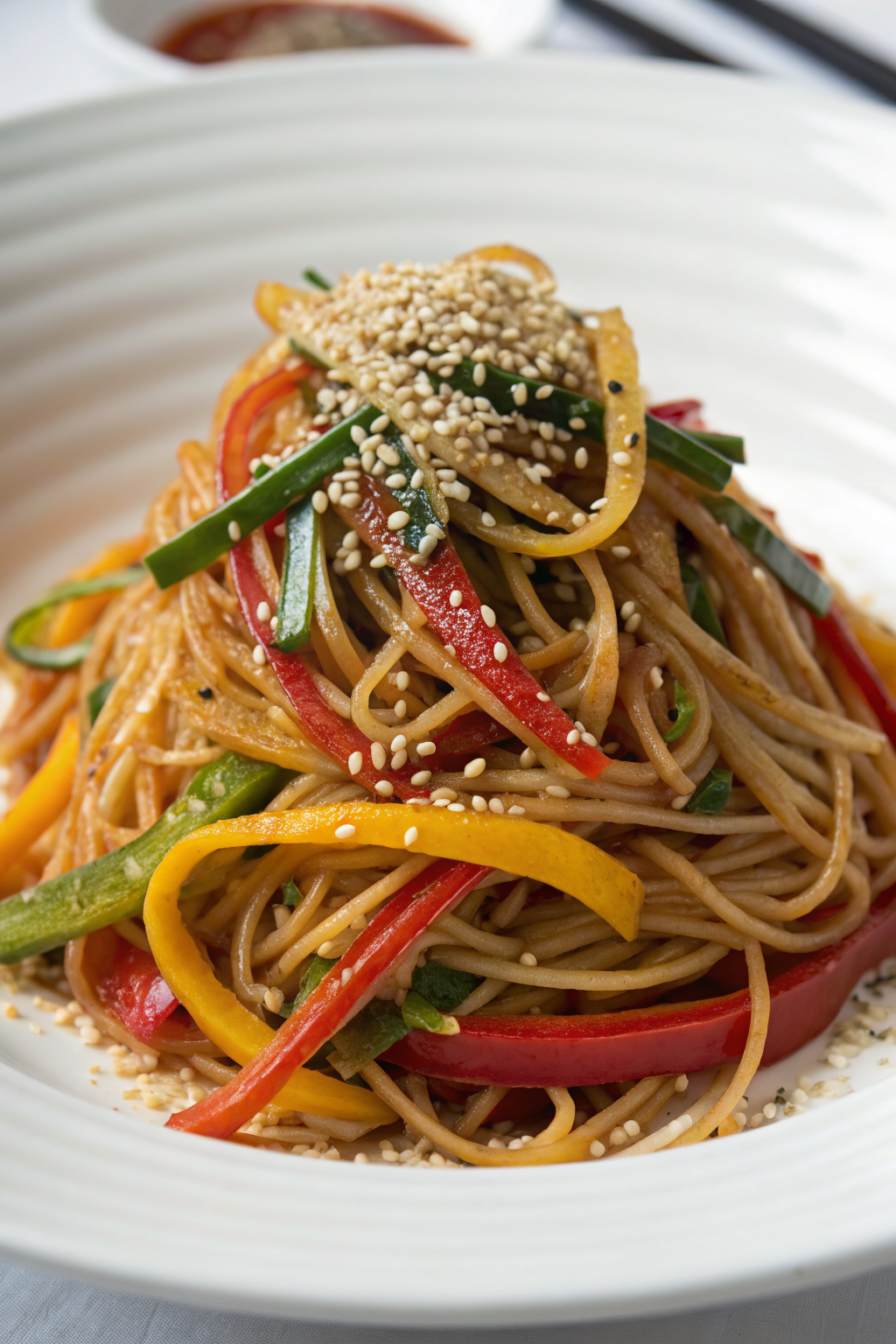
Thai Zucchini Noodles Recipe
Ingredients
Instructions
- Wash the zucchini and trim the ends. Spiralize into noodles and place in a large colander over the sink. Sprinkle lightly with salt, toss, and let sit 10–15 minutes.
- Gently squeeze and blot the zucchini noodles with clean towels to remove excess moisture without crushing them, then set aside.
- In a medium bowl, whisk together peanut butter, soy sauce or tamari, lime juice, maple syrup or honey, sriracha, sesame oil, and rice vinegar until smooth.
- Add warm water 1 tablespoon at a time, whisking, until the peanut sauce is creamy and pourable. Taste and adjust lime, soy, sweetness, and heat as desired, then set aside.
- Prep the vegetables: thinly slice the red bell pepper, julienne or shred the carrot, slice the green onions, and chop the cabbage and snap peas if using. Mince the garlic and ginger. Prep any protein add-ins and keep them in separate bowls.
- Heat a large skillet or wok over medium-high heat and add a drizzle of oil. Cook your chosen protein (chicken, shrimp, tofu, or scrambled eggs) until fully cooked, then transfer to a plate and keep nearby.
- In the same skillet, add a little more oil if needed. Add bell pepper, carrot, cabbage, and snap peas. Sauté 2–3 minutes, stirring often, until slightly softened but still crisp.
- Add the minced garlic and ginger and cook about 30 seconds, stirring constantly, until fragrant but not browned.
- Add the zucchini noodles to the skillet. Toss gently with tongs to combine with the vegetables and cook 2–3 minutes over medium-high heat until just tender but still crisp.
- Turn off the heat. Pour about two-thirds of the peanut sauce over the zucchini noodle mixture and toss until evenly coated. Add the cooked protein and toss again, adding more sauce or a splash of warm water if the noodles look dry.
- Taste and adjust with extra lime juice, soy sauce, or sriracha if desired. Divide into bowls and top with chopped peanuts, green onions, cilantro, red pepper flakes, and lime wedges. Serve immediately while warm and crisp.
Notes
Approximate values per serving without optional protein: 260 calories; fat 17 g; saturated fat 3 g; carbohydrates 22 g; fiber 5 g; sugars 13 g; protein 9 g; sodium 720 mg. Adding chicken, shrimp, tofu, or eggs will increase protein and calories. Values will vary based on brands, add-ins, and portion size.
Leave a Reply