
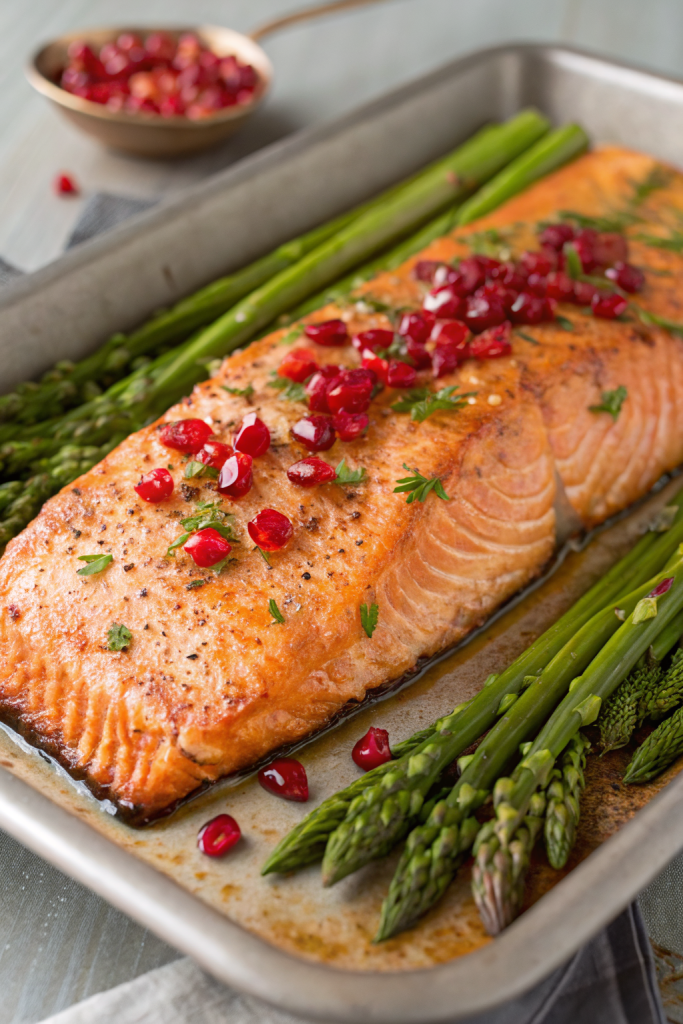
Pomegranate and Orange Glazed Salmon Recipe hits that perfect sweet-tangy-savory balance, with juicy salmon, sticky citrus glaze, and little pops of pomegranate crunch. It suits busy weeknights, at-home date nights, or a small dinner party, and you can get it on the table in about 30 minutes. I tested this on my own picky family and they stopped talking mid-bite, which counts as the highest compliment in my house.
Why Make This Pomegranate and Orange Glazed Salmon Recipe at Home
This salmon tastes bright, slightly sweet, and a little tart, with caramelized edges and a juicy center. The glaze clings to the fish, and every bite feels rich but still light enough for a weeknight.
You control the ingredients, so you skip weird additives and adjust sweetness or spice exactly how you like it. You also save money compared with restaurant salmon, and you get bragging rights when everyone asks how you made that glaze.
“This Pomegranate and Orange Glazed Salmon Recipe tastes like a restaurant special but comes together in my tiny kitchen in under 30 minutes, ★★★★★”
Ingredients You Need
Salmon
- 4 salmon fillets, about 5 to 6 ounces each, skin on or off
- Skin-on holds together better in the pan and tastes great when it crisps.
- 1 tablespoon olive oil
- 1 teaspoon kosher salt
- 1/2 teaspoon black pepper
- 1/2 teaspoon garlic powder
If you use frozen salmon, thaw it in the fridge overnight and pat it very dry. Wild salmon cooks a bit faster and tastes leaner, while farmed salmon tastes richer and more buttery.
Pomegranate and orange glaze
- 1/2 cup pomegranate juice
- 100 percent juice works best; avoid blends with added sugar if you want more control over sweetness.
- 1/2 cup orange juice
- Fresh squeezed tastes brightest, but a good not-from-concentrate carton works fine.
- 2 tablespoons honey
- Maple syrup works as a swap and gives a deeper flavor.
- 1 tablespoon brown sugar, light or dark
- 1 tablespoon soy sauce or tamari
- 1 tablespoon rice vinegar or apple cider vinegar
- 1 teaspoon Dijon mustard
- 1 teaspoon orange zest
- 1 small garlic clove, minced
- 1/2 teaspoon grated fresh ginger
- Use 1/4 teaspoon ground ginger if you do not have fresh.
- Pinch of red pepper flakes, optional, for a little heat
- 1 tablespoon unsalted butter, to finish the glaze
You can use bottled pomegranate juice like POM or a store brand. If you cannot find pomegranate juice, mix equal parts cranberry juice and grape juice as a backup, then reduce the sugar slightly.
Garnishes
- 1/3 cup pomegranate arils
- 1 tablespoon finely chopped fresh parsley or cilantro
- Extra orange zest, optional
These toppings add color and crunch, so I recommend them if you serve this to guests.
Pantry shortcuts
- Use bottled minced garlic and ginger if you need speed; use about 1/2 teaspoon of each.
- Use pre-portioned frozen salmon fillets; thaw in the fridge and dry well.
- Use bottled orange juice and skip zest if you do not have fresh oranges, though zest adds a big flavor boost.
Equipment
- Large nonstick skillet or cast iron skillet
- Small saucepan
- Whisk or fork
- Tongs or a thin spatula
- Microplane or small grater for zest and ginger
- Instant-read thermometer, very helpful for perfect salmon
Tips & Mistakes
- Pat the salmon very dry so it sears well and the glaze sticks instead of sliding off.
- Season the salmon generously; under-seasoned fish tastes flat under a sweet glaze.
- Heat the pan until it feels hot before you add salmon, or you risk pale, soggy fish.
- Do not crowd the pan; cook in batches if needed so the salmon browns instead of steaming.
- Simmer the glaze until it thickens to a syrup that coats a spoon; thin glaze will run off the fish.
- Watch the glaze closely near the end; high sugar content can scorch if the heat runs too high.
- Pull the salmon at 125 to 130°F for moist, tender results; overcooked salmon turns dry and chalky.
- Spoon glaze over the salmon right at the end; long cooking in the pan can burn the sugars.
- Taste the glaze before you finish it; add a pinch of salt or a squeeze of orange juice to balance.
- Add pomegranate arils and herbs at the very end so they stay bright and fresh.
How to Make Pomegranate and Orange Glazed Salmon Recipe
Step 1: Mix the glaze
Add pomegranate juice, orange juice, honey, brown sugar, soy sauce, vinegar, Dijon, orange zest, garlic, ginger, and red pepper flakes to a small saucepan. Whisk everything together until it looks smooth. Set the pan over medium heat and bring the mixture to a gentle simmer.
Step 2: Reduce the glaze
Let the glaze simmer and stir it occasionally. Cook it for about 8 to 12 minutes until it reduces by about half and thickens to a light syrup. When you drag a spoon through it, the glaze should coat the back of the spoon and leave a thin line.
Turn the heat to low and stir in the butter until it melts and the glaze looks glossy. Taste and adjust with a pinch of salt or a little extra honey if you want more sweetness. Keep the glaze warm on the lowest heat or turn it off and cover the pan.
Step 3: Prep the salmon
While the glaze simmers, pat the salmon fillets very dry with paper towels. Drizzle them with olive oil and rub it in on all sides. Season both sides with salt, pepper, and garlic powder.
Let the salmon sit at room temperature for about 10 to 15 minutes while you finish the glaze and heat the skillet. This short rest helps the fish cook more evenly.
Step 4: Sear the salmon
Place a large skillet over medium-high heat and let it heat until a drop of water sizzles on contact. Add a thin film of oil if the pan looks dry. Place the salmon in the pan, skin side down if it has skin, and press lightly with a spatula for a few seconds so it does not curl.
Cook the salmon without moving it for about 4 to 5 minutes, depending on thickness. The color will change from bright to opaque about two-thirds of the way up the sides.
Step 5: Flip and finish cooking
Flip the salmon carefully with a spatula or tongs. Cook the second side for 2 to 4 minutes, until the center looks just slightly translucent and an instant-read thermometer reads about 125 to 130°F. Lower the heat if the outside browns too quickly.
If you like the salmon more done, cook to 135°F, but try not to go higher. Turn off the heat.
Step 6: Glaze the salmon
Spoon the warm pomegranate and orange glaze generously over the top of each salmon fillet. Tilt the pan slightly and baste the fish with any glaze that pools around it. Let the salmon sit in the pan for 1 to 2 minutes so the glaze clings and thickens on the hot surface.
Transfer the salmon to a serving platter or plates. Drizzle a little extra glaze over the top and around the sides.
Step 7: Garnish and serve
Scatter pomegranate arils over the salmon. Sprinkle with chopped parsley or cilantro and a little extra orange zest if you like a stronger citrus aroma. Serve right away while the glaze still looks glossy and the salmon stays hot.
Variations I've Tried
I swap honey for maple syrup when I want a deeper, cozy flavor that leans slightly toward fall. I also add a pinch of smoked paprika to the glaze when I crave a subtle smoky note without using a grill. If I cook for kids, I skip the red pepper flakes and add a tiny bit more orange juice for extra fruit flavor.
Sometimes I roast the salmon in the oven at 400°F for about 10 to 12 minutes, then brush on the glaze in the last 3 to 4 minutes so it sets without burning. I also tried this glaze on chicken thighs and it worked beautifully, with a slightly longer cook time. When I want a sheet pan dinner, I roast salmon with broccoli and thin carrot slices and drizzle everything with extra glaze at the end.
How to Serve Pomegranate and Orange Glazed Salmon Recipe
Serve this Pomegranate and Orange Glazed Salmon Recipe with fluffy white rice, brown rice, or quinoa to soak up every drop of glaze. I like a simple side of roasted green beans, asparagus, or steamed broccoli to keep the plate colorful and fresh. You can also pair it with a citrusy salad, maybe with orange segments and cucumber, to echo the flavors in the glaze. Offer sparkling water with citrus slices or pomegranate arils in the glass for a fun, family-friendly touch.
How to store
- Cool leftover salmon to room temperature within 30 minutes, then store it in an airtight container in the fridge for up to 3 days.
- Keep extra glaze in a small jar in the fridge for up to 5 days and warm it gently before serving.
- Freeze cooked salmon tightly wrapped or in a freezer-safe container for up to 2 months; thaw overnight in the fridge before reheating.
- Reheat salmon low and slow in a 275°F oven, covered, for about 10 to 15 minutes, or warm it in a covered skillet over low heat with a spoonful of water and a little extra glaze to keep it moist.
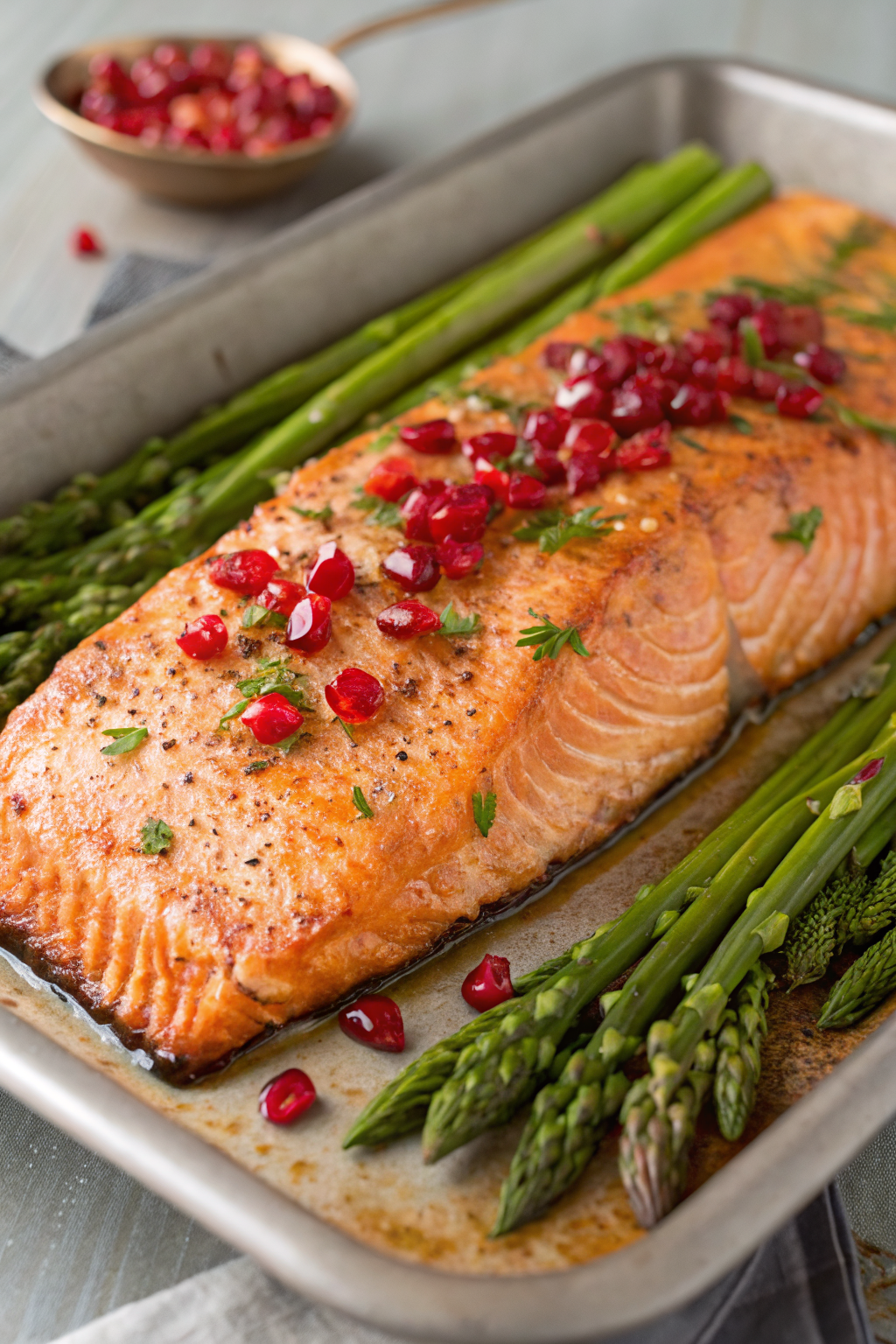
Pomegranate and Orange Glazed Salmon
Ingredients
Instructions
- Season the salmon fillets on both sides with kosher salt and black pepper, then set aside.
- In a small saucepan, combine the pomegranate juice, orange juice, orange zest, honey, soy sauce, garlic, and ginger (if using). Bring to a simmer over medium heat.
- Cook the glaze, stirring occasionally, until it reduces and thickens slightly, about 6–8 minutes. Remove from heat and set aside.
- Heat the olive oil in a large skillet over medium-high heat. Add the salmon fillets, skin-side down if using skin-on, and cook for 3–4 minutes until the bottom is golden and the fish is nearly cooked through.
- Flip the salmon carefully, then pour about half of the pomegranate-orange glaze over the fillets. Cook for another 2–3 minutes, spooning the glaze over the salmon as it thickens and coats the fish.
- Remove the skillet from the heat. Drizzle with additional reserved glaze if desired, and garnish with pomegranate arils and chopped herbs.
- Serve the Pomegranate and Orange Glazed Salmon immediately with your choice of sides.
Notes
Approximate per serving (1 salmon fillet with glaze): 360 calories; fat 18 g; saturated fat 3 g; carbohydrates 18 g; fiber 0 g; sugars 15 g; protein 32 g; sodium 520 mg. Values will vary based on exact salmon size, juice brands, and added garnishes.
Leave a Reply