
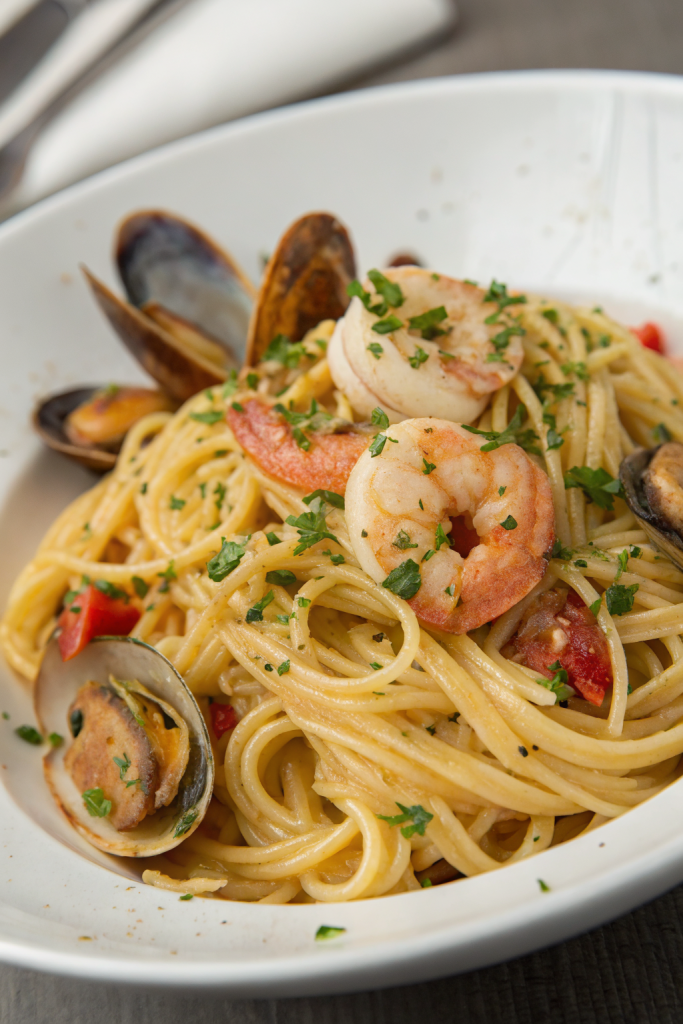
Seafood Pasta Recipe tastes rich, garlicky, a little briny from the ocean, and totally cozy, like a fancy restaurant dinner that snuck into your kitchen in sweatpants. It works perfectly for busy weeknights or at-home date nights and usually lands on the table in about 35 to 40 minutes. I tested this version so many times that my family started asking if we moved into an Italian seaside town.
Why Seafood Pasta Recipe Is Worth It
Seafood pasta feels special but cooks faster than most meat sauces, so you win on both flavor and time. The mix of shrimp, scallops, and tender pasta gives you a luxurious bowl that still feels light enough for a weeknight.
You can use frozen seafood, jarred marinara, and pantry pasta, so this recipe fits real-life kitchens, not just TV sets. Cleanup stays pretty easy because you cook everything in one large skillet and one pot.
“This Seafood Pasta Recipe tastes like a restaurant splurge but comes together on a Tuesday budget and schedule. ★★★★★”
Ingredients You Need
Seafood
- 1 pound large shrimp, peeled and deveined
- Frozen shrimp works great; just thaw and pat dry.
- I like 16 to 20 count shrimp for a meatier bite.
- 1/2 pound sea scallops or bay scallops
- Pat them very dry so they sear instead of steam.
- If scallops cost too much, use extra shrimp or a mild white fish.
- 1/2 pound firm white fish, cut in 1 inch chunks (cod, halibut, or haddock)
- Tilapia works in a pinch, but handle it gently so it does not fall apart.
- Optional: 1/2 pound mussels or clams, scrubbed and debearded
- Use only tightly closed ones; toss any cracked or open ones that do not close when tapped.
Pasta
- 12 ounces linguine, spaghetti, or fettuccine
- Use regular or bronze cut pasta for better sauce cling.
- Whole wheat pasta works if you like a nuttier flavor.
- Generous handful of kosher salt for the pasta water
Sauce base
- 3 tablespoons olive oil
- Use a decent extra virgin brand for the best flavor, but no need for the fancy bottle.
- 3 tablespoons unsalted butter
- 5 cloves garlic, minced
- 1 small yellow onion, finely chopped
- 1/2 teaspoon crushed red pepper flakes (adjust to taste)
- 1 cup cherry tomatoes, halved, or 1 cup canned diced tomatoes
- Canned San Marzano style tomatoes give a sweeter flavor.
- 1/2 cup seafood stock, chicken broth, or vegetable broth
- Pantry shortcut: use water plus 1 teaspoon better-than-bouillon style base.
- 1/2 cup jarred marinara sauce or tomato passata
- Use your favorite brand; I like Rao’s or a similar clean-ingredient sauce.
- 1/2 cup heavy cream or half-and-half
- For a lighter version, use whole milk and simmer slightly longer.
- Zest and juice of 1 lemon
- 1/2 teaspoon smoked paprika or sweet paprika
- 1 teaspoon Italian seasoning or dried oregano and basil mix
- Salt and freshly ground black pepper to taste
Finishing touches
- 1/3 cup grated Parmesan or Pecorino Romano cheese, plus more for serving
- 1/4 cup chopped fresh parsley
- 2 tablespoons chopped fresh basil (optional)
- Extra lemon wedges for serving
Equipment list
- Large pot for boiling pasta
- Large wide skillet or sauté pan (12 inch)
- Tongs
- Slotted spoon
- Fine mesh strainer or colander
- Microplane or small grater for lemon zest and cheese
- Cutting board and sharp knife
Quick Tips & substitutions
- Salt the pasta water generously so the noodles carry flavor from the inside out.
- Cook the pasta slightly under al dente, then finish it in the sauce for better texture.
- Pat all seafood very dry so it browns nicely and does not steam.
- Use frozen seafood if needed; thaw it in a colander under cold water and dry it well.
- Swap scallops for extra shrimp or white fish if scallops cost too much.
- Use gluten free pasta and check labels on broth and marinara if you avoid gluten.
- Stir in a spoonful of jarred pesto at the end for a quick flavor boost.
- Add more crushed red pepper flakes if you like a spicy seafood pasta.
- Keep a cup of starchy pasta water before draining; it saves the sauce if it turns too thick.
- Taste the sauce at the end and adjust salt, lemon, and cheese until it sings.
How to Make Seafood Pasta Recipe
Step 1: Boil the pasta
Bring a large pot of water to a rolling boil and salt it generously. Add the pasta and cook it until it reaches just shy of al dente, usually 1 to 2 minutes less than the package suggests. Scoop out about 1 cup of pasta water, then drain the pasta and set it aside.
Step 2: Prep and season the seafood
While the pasta cooks, pat the shrimp, scallops, and fish very dry with paper towels. Season them all over with salt, black pepper, and a pinch of smoked paprika. Keep the seafood in separate piles so you can control cooking times.
Step 3: Sear the shrimp and scallops
Heat 1 tablespoon of olive oil and 1 tablespoon of butter in the large skillet over medium high heat. Add the shrimp in a single layer and cook about 1 to 2 minutes per side until they turn pink and opaque, then move them to a plate. Add the scallops to the same pan and cook 1 to 2 minutes per side until they form a golden crust, then move them to the plate with the shrimp.
Step 4: Cook the fish and optional shellfish
Add another tablespoon of olive oil if the pan looks dry. Add the fish pieces and cook 2 to 3 minutes, turning gently so they stay in chunks, then transfer them to the plate with the other seafood. If you use mussels or clams, add them to the pan with a splash of broth, cover with a lid, and cook 3 to 4 minutes until they open, then move them to the plate and discard any that stay closed.
Step 5: Build the garlic tomato base
Lower the heat to medium and add the remaining olive oil and butter to the skillet. Add the chopped onion and cook 3 to 4 minutes until it softens and turns translucent. Stir in the garlic and crushed red pepper flakes and cook about 30 seconds until the garlic smells fragrant but not browned.
Step 6: Add tomatoes, broth, and herbs
Add the cherry tomatoes or canned tomatoes to the skillet and stir. Pour in the broth and the marinara sauce, then add the Italian seasoning and smoked paprika. Let the mixture simmer 5 to 7 minutes so it thickens slightly and the flavors blend.
Step 7: Stir in cream and lemon
Reduce the heat to medium low and stir in the heavy cream. Add the lemon zest and half of the lemon juice, then taste the sauce. Adjust with more salt, pepper, or lemon juice until the sauce tastes balanced and bright.
Step 8: Toss the pasta in the sauce
Add the drained pasta directly into the skillet with the sauce. Toss with tongs so every strand gets coated, then add a splash of reserved pasta water if the sauce looks too thick. Let the pasta simmer in the sauce 1 to 2 minutes so it finishes cooking and absorbs flavor.
Step 9: Add the seafood back in
Gently add the shrimp, scallops, fish, and any shellfish back into the skillet. Toss very gently so the seafood mixes with the pasta without breaking apart. Sprinkle in the Parmesan and half of the parsley and basil, then toss again until the cheese melts into the sauce.
Step 10: Taste and serve
Taste one more time and adjust seasoning with extra salt, pepper, or lemon juice. Plate the seafood pasta in warm bowls and top with more Parmesan and the remaining herbs. Serve with lemon wedges on the side so everyone can add extra brightness.
Recipe Variations
- Gluten free: Use gluten free pasta and check labels on broth, marinara, and cheese.
- Dairy free: Skip the butter and cream and use olive oil plus a splash of coconut milk or cashew cream.
- Extra spicy: Add more crushed red pepper flakes and a pinch of cayenne.
- Tomato free: Skip marinara and tomatoes and use more broth, lemon, and herbs for a light garlic butter sauce.
- Low carb: Serve the seafood and sauce over zucchini noodles or spaghetti squash instead of pasta.
- Extra veggies: Stir in baby spinach, peas, or roasted red peppers during the last 2 minutes of cooking.
- Budget friendly: Use only shrimp and a mild white fish and skip scallops and shellfish.
Ways to Serve Seafood Pasta Recipe
- Serve with a simple green salad with lemony dressing.
- Add a side of garlic bread or toasted baguette slices.
- Pair with roasted or steamed vegetables like broccoli, asparagus, or green beans.
- Top with extra fresh herbs and a squeeze of lemon for brightness.
- Offer red pepper flakes and extra grated cheese at the table.
Storage Success
Cool leftovers to room temperature, then store them in an airtight container in the fridge for up to 2 days. Reheat gently in a skillet over low heat with a splash of water or broth so the pasta loosens and the seafood stays tender. Avoid boiling or microwaving on high, since that can turn the shrimp and fish rubbery. If you plan to keep some for later, cook the pasta slightly firmer so it holds its texture when you reheat it.
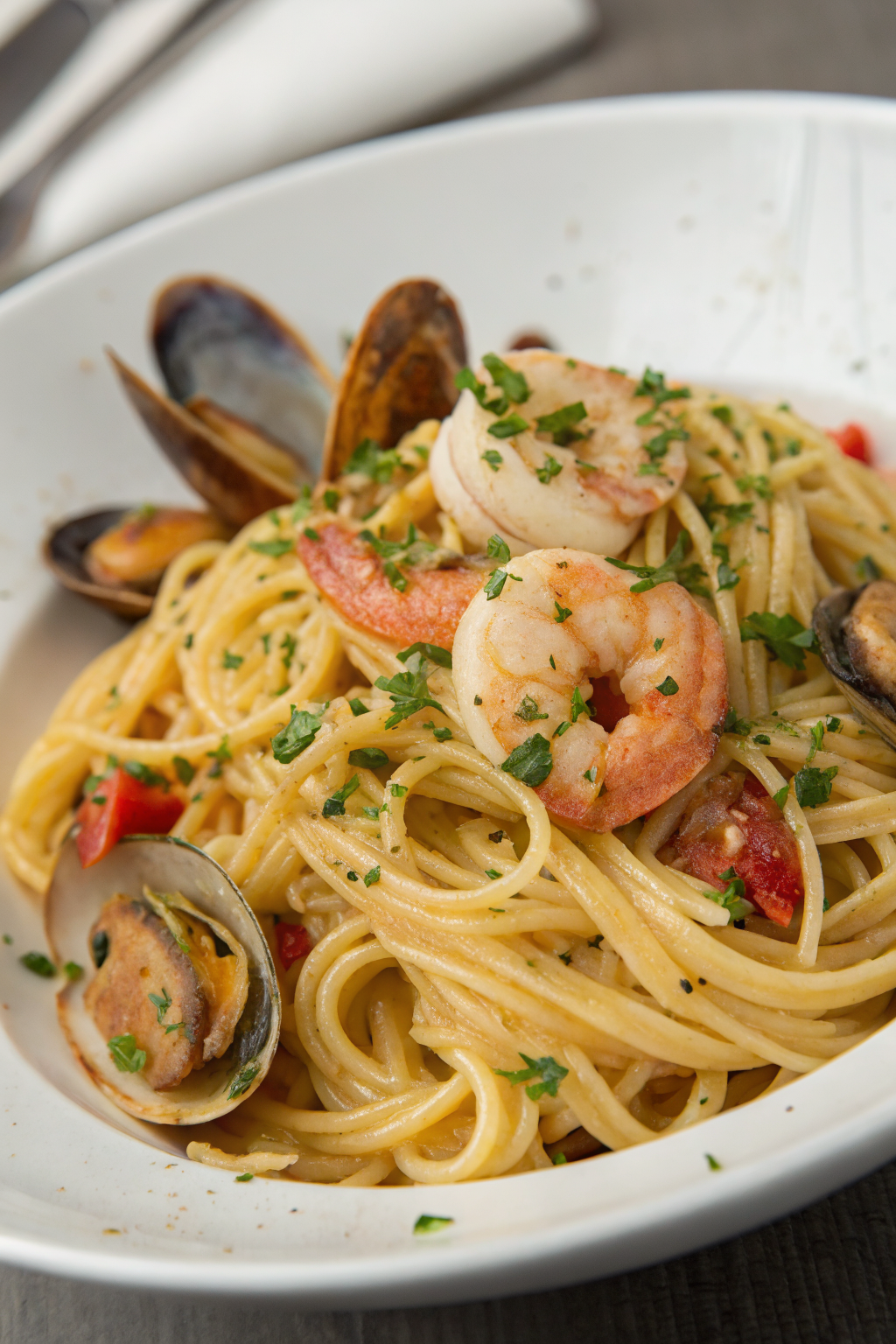
Seafood Pasta Recipe
Ingredients
Instructions
- Cook the pasta in a large pot of salted boiling water according to package directions until al dente. Reserve about 1/2 cup of pasta water, then drain.
- While the pasta cooks, heat the olive oil in a large skillet over medium heat. Add the minced garlic and red pepper flakes and sauté for 30–60 seconds until fragrant, without browning the garlic.
- Pour in the white wine, if using, and simmer for 2–3 minutes to reduce slightly. Add the crushed tomatoes and seafood or vegetable broth and bring to a gentle simmer.
- Season the sauce with salt and black pepper. Add the shrimp and scallops and cook for 3–4 minutes, turning once, until they begin to turn opaque.
- Add the mussels or clams to the skillet, cover, and cook for 4–5 minutes, or until the shells open. Discard any that do not open.
- Stir in the lemon juice and chopped parsley. Add the drained pasta to the skillet and toss gently to coat in the sauce, adding a splash of reserved pasta water if needed to loosen the sauce.
- Taste and adjust seasoning with additional salt, pepper, or lemon juice as desired. Serve hot, making sure each portion has a mix of shrimp, scallops, and shellfish.
Notes
Approximate per serving: 520 calories; fat 13 g; saturated fat 2 g; carbohydrates 68 g; fiber 4 g; sugars 6 g; protein 32 g; sodium 780 mg. Values will vary based on specific seafood mix, pasta type, brands, and portion size.
Leave a Reply