

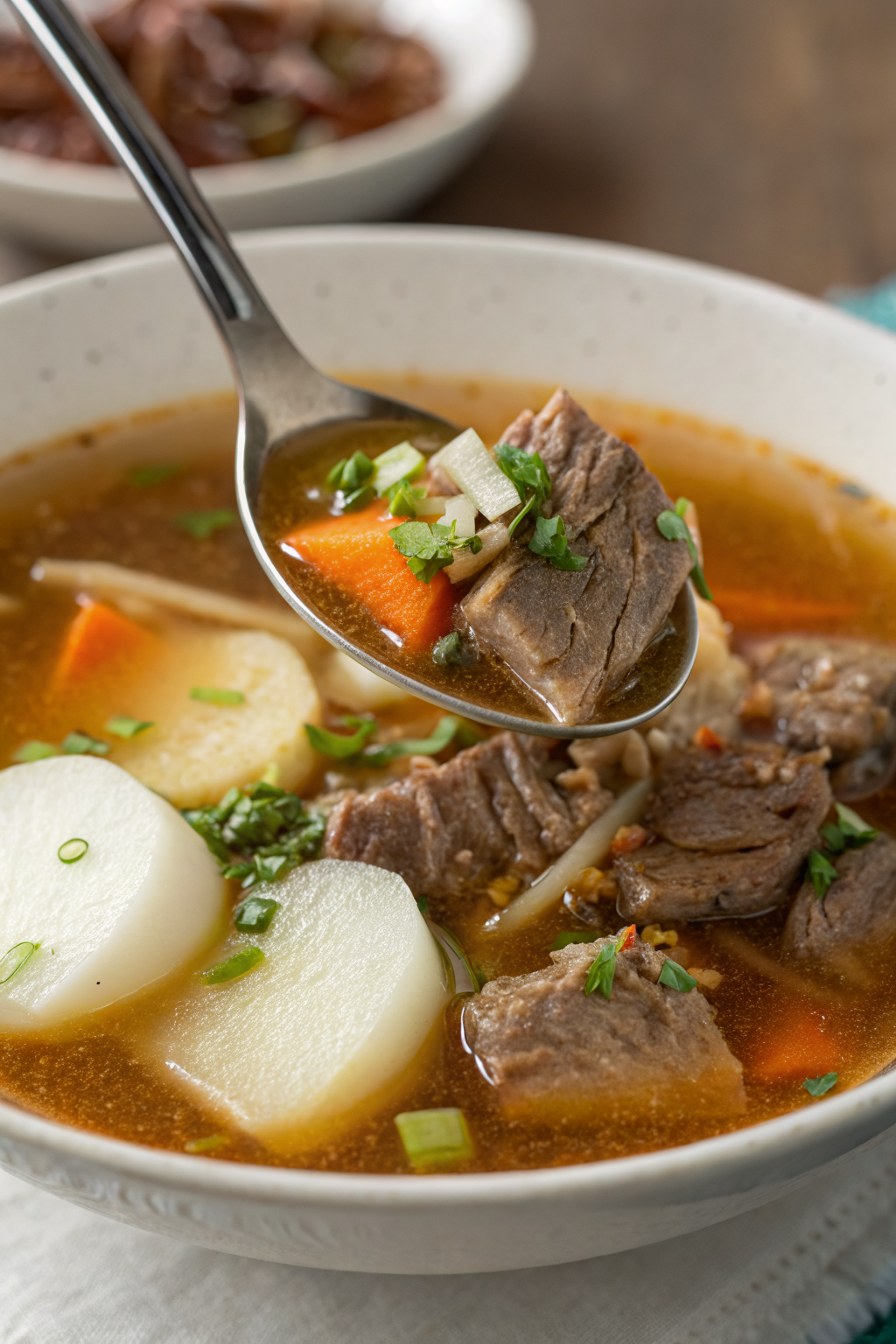
Tasty Korean Winter Soup Recipe tastes rich, savory, a little spicy, and deeply cozy, like a hug in a bowl on a freezing night. It works perfectly for busy weeknights, snow days, or simple meal prep, and you can get it on the table in about 40 minutes. I grew up in the Midwest, so I take winter soup very seriously, and this one passes the “frozen toes and grumpy mood” test every time.
Why Tasty Korean Winter Soup Recipe Is Worth It
This Korean winter soup layers flavor with simple steps, so every spoonful hits with broth, veggies, and tender protein. Gochujang and gochugaru bring gentle heat, while garlic, ginger, and sesame oil keep the broth bold and fragrant. You use one pot, basic knife work, and mostly pantry ingredients, so cleanup stays easy.
The recipe also scales well, so you can cook once and eat several times. Kids usually enjoy it if you dial back the chili, and spice lovers can crank it up at the table. It tastes even better the next day, which makes it perfect for lunch boxes and quick reheat dinners.
Cozy, spicy, and deeply comforting, this Tasty Korean Winter Soup Recipe warms you up faster than your favorite fuzzy socks ★★★★★
Ingredients You Need
Broth base
- 6 cups low sodium chicken broth or vegetable broth
- 1 cup water, more as needed to adjust thickness
- 2 tablespoons low sodium soy sauce or tamari for gluten free
- 1 tablespoon fish sauce, optional but adds deep savory flavor
- 1 tablespoon toasted sesame oil
Aromatics
- 1 tablespoon neutral oil such as avocado or canola
- 4 cloves garlic, minced
- 1 tablespoon fresh ginger, minced or grated
- 3 green onions, sliced, white and green parts separated
Korean flavor boosters
- 1 to 2 tablespoons gochujang (Korean chili paste, I like the Chung Jung One or Bibigo brands)
- 1 to 2 teaspoons gochugaru (Korean chili flakes, adjust to your heat level)
- 1 teaspoon sugar or honey to balance the spice
Protein options
Pick one or mix:
- 8 ounces thinly sliced beef (brisket, chuck, or hot pot beef)
- or 8 ounces boneless skinless chicken thighs, sliced thin
- or 8 ounces firm tofu, cubed, for a vegetarian version
- 1 egg per serving, optional, cracked directly into the hot soup or soft boiled on the side
Vegetables
- 1 small onion, thinly sliced
- 1 medium carrot, cut into matchsticks or thin half moons
- 1 cup napa cabbage, sliced, or green cabbage as a budget swap
- 1 cup sliced mushrooms (shiitake, cremini, or button)
- 1 small zucchini, halved and sliced
- 1 cup Korean radish (mu) or daikon, peeled and sliced thin, optional but very cozy
Noodles or starch
Pick one:
- 4 ounces Korean sweet potato glass noodles (dangmyeon)
- or 4 ounces cooked white rice or brown rice
- or 4 ounces udon noodles or ramen noodles
Toppings
- Extra sliced green onion
- Roasted seaweed strips (gim)
- Toasted sesame seeds
- Kimchi on the side
- A drizzle of extra sesame oil or chili oil if you like more heat
Pantry shortcuts and notes
- Use store bought low sodium broth to save time; homemade broth tastes great but stays optional.
- Squeeze ginger paste from a tube and minced garlic from a jar if you want a weeknight shortcut.
- Gochujang keeps for months in the fridge, so buy a tub and use it in marinades, stir fries, and sauces.
- Use pre sliced hot pot beef from Asian markets to skip knife work and speed up cooking.
Equipment list
- Large heavy pot or Dutch oven
- Cutting board and sharp knife
- Measuring spoons and cups
- Wooden spoon or heat safe spatula
- Ladle
- Small bowl for mixing the gochujang paste
Quick Tips & substitutions
- Use vegetable broth and tofu, and skip fish sauce, for a vegetarian version.
- Swap tamari for soy sauce to keep the soup gluten free.
- Soak glass noodles in warm water while you prep ingredients so they cook faster in the pot.
- Slice meat very thin so it cooks in just a couple of minutes and stays tender.
- Start with less gochujang and gochugaru, then add more at the end if you want extra heat.
- Add a spoonful of kimchi brine to the pot for extra tang and depth.
- Use leftover rotisserie chicken or cooked beef to save time; add it near the end so it does not dry out.
- Stir the soup after you crack eggs into it so they swirl into ribbons, or leave them undisturbed for poached style eggs.
How to Make Tasty Korean Winter Soup Recipe
Step 1: Prep ingredients
Slice all vegetables into thin, bite sized pieces so they cook evenly and quickly. Cut meat into thin strips across the grain, or cube tofu and pat it dry with a towel. Soak glass noodles in warm water if you use them, or cook rice or other noodles according to package directions.
Step 2: Build the flavor base
Heat the neutral oil in a large pot over medium heat. Add garlic, ginger, sliced onion, and the white parts of the green onions. Stir and cook 2 to 3 minutes until the aromatics smell fragrant and the onion softens slightly. Keep the heat moderate so the garlic does not burn.
Step 3: Toast the Korean chili paste
In a small bowl, mix gochujang, gochugaru, soy sauce or tamari, sugar, and a splash of broth into a loose paste. Scrape this mixture into the pot with the aromatics. Stir constantly for 1 to 2 minutes so the paste toasts and deepens in flavor. The mixture should smell spicy and rich, not scorched.
Step 4: Add broth and vegetables
Pour in the remaining broth and water, then add carrot, cabbage, mushrooms, zucchini, and radish if you use it. Stir well to combine everything and bring the soup to a gentle boil. Lower the heat to a lively simmer and cook 10 to 15 minutes until the vegetables turn tender but not mushy. Taste the broth and adjust salt or soy sauce as needed.
Step 5: Cook the noodles and protein
Add soaked glass noodles or other noodles directly to the pot and cook until they turn tender, usually 5 to 7 minutes for glass noodles. Slide in the sliced beef or chicken and stir so the pieces separate and cook evenly. Cook 3 to 5 minutes until the meat cooks through and stays tender, or simmer tofu cubes for about 5 minutes so they soak up flavor.
Step 6: Finish with seasoning and eggs
Stir in fish sauce if you use it and drizzle in sesame oil. Taste again and adjust with more gochujang, soy sauce, or a pinch of sugar if the soup tastes too sharp. Crack eggs directly into the simmering soup for a poached effect and cook 3 to 4 minutes, or whisk eggs in a bowl and stream them in while you stir for egg ribbons.
Step 7: Serve hot
Ladle the Tasty Korean Winter Soup Recipe into warm bowls, making sure each bowl gets broth, veggies, noodles, and protein. Top with green onion, sesame seeds, and seaweed strips. Serve kimchi on the side and let everyone adjust spice with extra chili flakes or gochujang at the table.
Recipe Variations
- Gluten free: Use tamari, gluten free gochujang, and rice or glass noodles.
- Vegan: Use vegetable broth, tofu, skip fish sauce, and add a splash of soy sauce and a bit of miso for depth.
- Low carb: Skip noodles and rice, add extra cabbage, mushrooms, and tofu.
- Extra hearty: Add small cubes of potato or sweet potato and simmer until tender.
- Mild version: Cut gochujang in half and skip gochugaru, then offer chili oil at the table.
- Extra spicy: Add more gochugaru and a spoonful of kimchi brine near the end.
Ways to Serve Tasty Korean Winter Soup Recipe
- Serve with hot steamed rice on the side for dunking and slurping.
- Add a small dish of kimchi, pickled radish, or cucumber salad for crunch.
- Pair with simple roasted vegetables or a green salad for more fiber.
- Top each bowl with extra tofu cubes or a soft boiled egg for more protein.
- Pack leftovers in a thermos for a warm work or school lunch.
Storage Success
Cool the Tasty Korean Winter Soup Recipe to room temperature, then transfer it to airtight containers and store it in the fridge for up to 4 days. Keep noodles separate if possible so they do not soak up all the broth and turn too soft. Reheat gently on the stove over medium heat and add a splash of water or broth if the soup thickens. Freeze the soup without noodles for up to 2 months, then thaw in the fridge and add fresh noodles when you reheat.
Tasty Korean Winter Soup Recipe
Ingredients
Instructions
- In a large pot over medium heat, add sesame oil, the white parts of the green onions, onion slices, garlic, and ginger. Sauté for 2–3 minutes until fragrant and slightly softened.
- Add the sliced beef and cook, stirring, until the beef is no longer pink on the outside, about 3–4 minutes.
- Stir in gochujang and soy sauce, coating the beef and aromatics. Cook for 1–2 minutes to deepen the flavor.
- Pour in the broth and bring to a gentle boil. Add daikon radish, carrot, and mushrooms. Reduce heat to a simmer and cook for 10 minutes.
- Add napa cabbage and tofu cubes. If using gochugaru, sprinkle it in now along with sugar. Simmer for another 10–12 minutes until the vegetables are tender and flavors meld.
- Taste the soup and season with salt and black pepper as needed. Adjust spiciness by adding more gochujang or gochugaru if desired.
- Stir in the green parts of the green onions just before serving. Ladle the hot soup into bowls and serve immediately, optionally with steamed rice on the side.
Notes
Approximate per serving (1/4 of recipe): 260 calories; fat 12 g; saturated fat 3 g; carbohydrates 16 g; fiber 3 g; sugars 6 g; protein 21 g; sodium 1050 mg. Values are estimates and will vary based on specific ingredient brands, exact amounts, and portion sizes.
Leave a Reply