
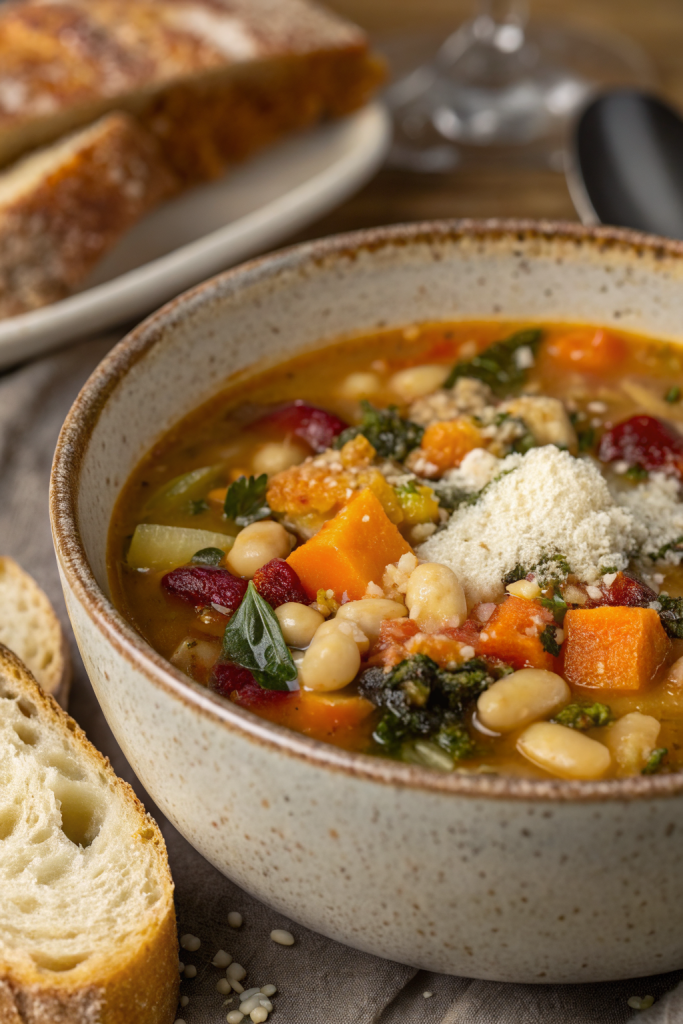
Winter Minestrone Soup Recipe tastes rich and tomatoey with tender vegetables, soft beans, and cozy herbs, like an Italian grandma hugged your cold winter evening. It works perfectly for busy families, meal preppers, and anyone who wants a full dinner in about 50 to 60 minutes, start to finish. I tested this version in my tiny kitchen while my kids asked if soup counts as a snack, so you know it passed the real-life test.
Why Winter Minestrone Soup Recipe Is Worth It
This Winter Minestrone Soup Recipe gives you a full meal in one pot, with vegetables, protein, and carbs all hanging out together like old friends. The broth tastes hearty and savory, with a little brightness from tomatoes and herbs, so it feels both comforting and fresh.
You can clean out your fridge and pantry with this soup and still end up with something that tastes restaurant level. It freezes well, reheats like a champ, and works for lunches, quick dinners, and snow-day comfort food.
“This Winter Minestrone Soup Recipe tastes like a cozy Italian-style vegetable stew that somehow makes you feel healthier and spoiled at the same time. ★★★★★”
Ingredients You Need
You can tweak this Winter Minestrone Soup Recipe with what you already have, but this list gives you the best flavor and texture.
Produce
- 2 tablespoons olive oil
- 1 large yellow onion, diced
- 2 medium carrots, diced
- 2 celery stalks, diced
- 3 garlic cloves, minced
- 1 small fennel bulb, cored and diced (optional but adds great flavor)
- 1 small zucchini, diced
- 1 small russet or Yukon gold potato, peeled and diced
- 2 cups chopped green cabbage or kale
- 1 small sprig fresh rosemary or 1 teaspoon dried rosemary
- 2 to 3 sprigs fresh thyme or 1 teaspoon dried thyme
- 1 bay leaf
Canned and pantry items
- 1 can (14 to 15 ounces) diced tomatoes, fire roasted if possible
- 1 can (14 to 15 ounces) cannellini beans, drained and rinsed
- 1 can (14 to 15 ounces) red kidney beans or chickpeas, drained and rinsed
- 6 cups low sodium vegetable broth or chicken broth
- 1 cup small pasta, like ditalini, small shells, or elbow macaroni
- 2 tablespoons tomato paste
- 1 teaspoon Italian seasoning
- 1 teaspoon kosher salt, plus more to taste
- 1 teaspoon black pepper
- 1 teaspoon sugar or honey to balance acidity, optional
- 1 small piece Parmesan rind, optional but amazing for flavor
Fresh finishers
- 1 to 2 tablespoons lemon juice
- 1 to 2 cups baby spinach or chopped kale
- Fresh parsley, chopped, for garnish
- Freshly grated Parmesan cheese, for serving
- Extra olive oil, for drizzling on top
Pantry shortcuts and brand notes
- Use jarred minced garlic if you feel tired; use 1 to 1.5 teaspoons.
- Use good quality canned tomatoes; brands like Muir Glen or Cento usually taste sweeter and less metallic.
- Use boxed broth with low sodium so you control the salt level.
- Use canned beans from any brand; rinse them well to remove extra starch and salt.
Substitutions
- Swap zucchini with extra carrot or celery if you do not have it.
- Use any white bean instead of cannellini, like great northern beans.
- Use small rice or quinoa instead of pasta if you want.
- Skip the Parmesan rind for a dairy free version, or use a vegan hard cheese rind if you find one.
Equipment list
- Large heavy pot or Dutch oven, at least 5 to 6 quarts
- Cutting board and sharp chef’s knife
- Wooden spoon or heat safe spatula
- Ladle
- Measuring cups and spoons
- Small bowl for holding prepped ingredients
Quick Tips & substitutions
- Chop vegetables in similar sizes so they cook evenly and feel nice in each spoonful.
- Sauté the vegetables until they get a little color to build flavor before you add broth.
- Add pasta near the end so it stays tender but not mushy.
- Cook pasta separately and add it to each bowl if you plan to store leftovers for several days.
- Taste the broth before serving and adjust salt, pepper, and lemon juice so the flavor pops.
- Use frozen mixed vegetables if you feel short on time; add them in the last 10 to 15 minutes.
- Swap cabbage with kale, Swiss chard, or collard greens.
- Use gluten free pasta or small diced potatoes instead of regular pasta for a gluten free version.
- Skip Parmesan and use extra olive oil and nutritional yeast for a vegan finish.
- Add a pinch of red pepper flakes if you like a little heat.
How to Make Winter Minestrone Soup Recipe
Step 1: Prep the vegetables
Wash and dry all your vegetables. Dice onion, carrots, celery, fennel, zucchini, and potato into small, even pieces, about 0.5 inch. Mince the garlic, chop the cabbage or kale, and roughly chop parsley for later.
Step 2: Sauté the flavor base
Heat olive oil in your large pot over medium heat. Add onion, carrot, and celery with a pinch of salt, then stir and cook until the vegetables soften and the onion turns translucent, about 6 to 8 minutes. Add fennel if you use it and cook 2 to 3 minutes more, until it smells sweet and aromatic.
Add the garlic and tomato paste. Stir and cook 1 to 2 minutes, until the tomato paste darkens slightly and the garlic smells fragrant but not burnt.
Step 3: Build the broth
Pour in the diced tomatoes with their juices and stir to scrape up any browned bits from the bottom of the pot. Add the potatoes, zucchini, cabbage or kale, Italian seasoning, rosemary, thyme, bay leaf, salt, and pepper. Stir everything so the vegetables and herbs mix well.
Pour in the broth and add the Parmesan rind if you use it. Stir again, then bring the pot to a gentle boil over medium high heat.
Step 4: Simmer until vegetables turn tender
When the soup reaches a gentle boil, lower the heat to medium low so it simmers steadily. Cover the pot partially, leaving a small gap, and cook for about 20 minutes. Stir a few times so nothing sticks to the bottom.
Check the potatoes and carrots with a fork. When they feel tender, move to the next step.
Step 5: Add beans and pasta
Stir in the rinsed cannellini beans and kidney beans. Add the small pasta and stir again so it spreads evenly. Keep the soup at a gentle simmer and cook until the pasta reaches al dente, usually 8 to 10 minutes, depending on the shape.
Taste the broth and add sugar or honey if the tomatoes taste too sharp. Adjust salt and pepper as needed.
Step 6: Finish with greens and lemon
When the pasta reaches al dente, stir in spinach or extra chopped kale. Cook 2 to 3 minutes, just until the greens wilt and turn bright. Remove the bay leaf, herb stems, and Parmesan rind.
Stir in lemon juice, starting with 1 tablespoon, then taste and add more if you want extra brightness. The lemon lifts the flavor and keeps the soup from tasting heavy.
Step 7: Serve
Ladle the Winter Minestrone Soup Recipe into warm bowls. Top each bowl with grated Parmesan, a drizzle of olive oil, and a sprinkle of fresh parsley. Serve with crusty bread or a simple green salad.
Recipe Variations
- Gluten free: Use gluten free pasta or small diced potatoes instead of regular pasta.
- Vegan: Use vegetable broth, skip Parmesan rind, and finish with nutritional yeast and extra olive oil.
- Low carb: Skip pasta and potatoes and add extra low carb vegetables like zucchini, cauliflower, and green beans.
- High protein: Add cooked chicken breast, turkey sausage, or extra beans.
- Spicy: Add red pepper flakes or a pinch of cayenne with the Italian seasoning.
- Extra hearty: Stir in cooked farro or barley instead of pasta, and simmer until grains turn tender.
- Kid friendly: Cut vegetables smaller and use tiny pasta shapes like stars or alphabet pasta.
Ways to Serve Winter Minestrone Soup Recipe
- Serve with warm crusty bread or garlic toast for dipping.
- Pair with a simple green salad with lemon vinaigrette.
- Top with extra Parmesan, fresh basil, or pesto for a flavor boost.
- Serve in mugs for a cozy couch dinner on cold nights.
- Offer a toppings bar with grated cheese, red pepper flakes, and extra herbs.
Storage Success
Let the Winter Minestrone Soup Recipe cool until it reaches room temperature, then store it in airtight containers in the fridge for up to 4 days. If you plan to keep it longer, freeze it for up to 3 months and leave a little space at the top of the container for expansion. Reheat gently on the stove over medium heat and add a splash of broth or water if it thickens too much. Add fresh lemon juice and a sprinkle of Parmesan after reheating to bring the flavor back to life.
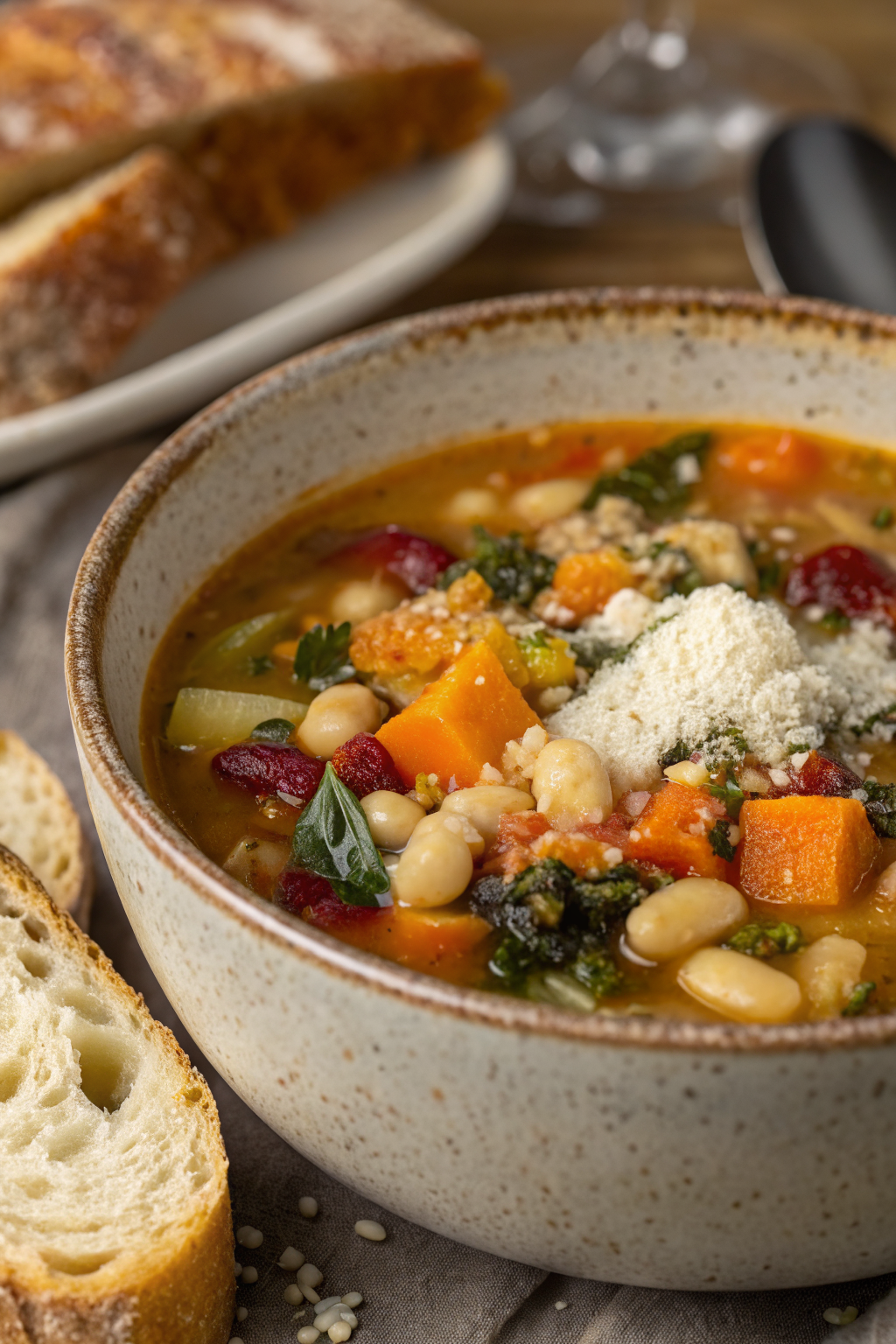
Winter Minestrone Soup Recipe
Ingredients
Instructions
- Heat the olive oil in a large pot over medium heat. Add the onion, carrots, and celery, and cook for 5–7 minutes, stirring occasionally, until the vegetables begin to soften.
- Stir in the garlic, butternut squash, and potatoes. Cook for 2–3 minutes until fragrant.
- Add the diced tomatoes with their juices, vegetable broth, cannellini beans, oregano, thyme, basil, bay leaf, and red pepper flakes if using. Season lightly with salt and pepper.
- Bring the soup to a boil, then reduce the heat to low, cover, and simmer for 20 minutes, or until the vegetables are tender.
- Stir in the pasta and cook uncovered according to package directions, usually 8–10 minutes, until the pasta is al dente.
- Add the chopped kale or Swiss chard and cook for 3–5 minutes more, until the greens are wilted and tender.
- Remove the bay leaf. Stir in the grated Parmesan cheese if using, and adjust seasoning with additional salt and pepper to taste.
- Ladle the winter minestrone soup into bowls and serve hot, with extra Parmesan on top if desired.
Notes
Approximate per 1 of 6 servings: 260–320 calories; fat 7–10 g; saturated fat 2–3 g; carbohydrates 40–46 g; fiber 8–10 g; sugars 7–10 g; protein 10–13 g; sodium 650–850 mg. Values will vary based on broth, Parmesan, pasta shape, and portion size.
Leave a Reply